Quick Answer: OEM camshafts provide the clearest brand-authorized sourcing and fitment path, while a qualified OE-equivalent aftermarket camshaft may reduce acquisition cost and lead time for an out-of-warranty engine. The right choice depends on OEM-number and engine-serial verification, product-specific inspection evidence, batch traceability, written warranty terms and total downtime risk — not the OEM or aftermarket label alone.
For an out-of-warranty heavy-duty diesel engine, the first camshaft replacement decision is usually whether to buy a genuine OEM part or a qualified alternative. The lower purchase price of a non-OE camshaft may be attractive, but fitment accuracy, profile control, material verification, and downtime risk ultimately determine the real value. Camshafts are one of the highest-value valvetrain components, and a mismatch can affect valve timing, injection synchronization, and engine braking performance — all of which translate into operational cost.
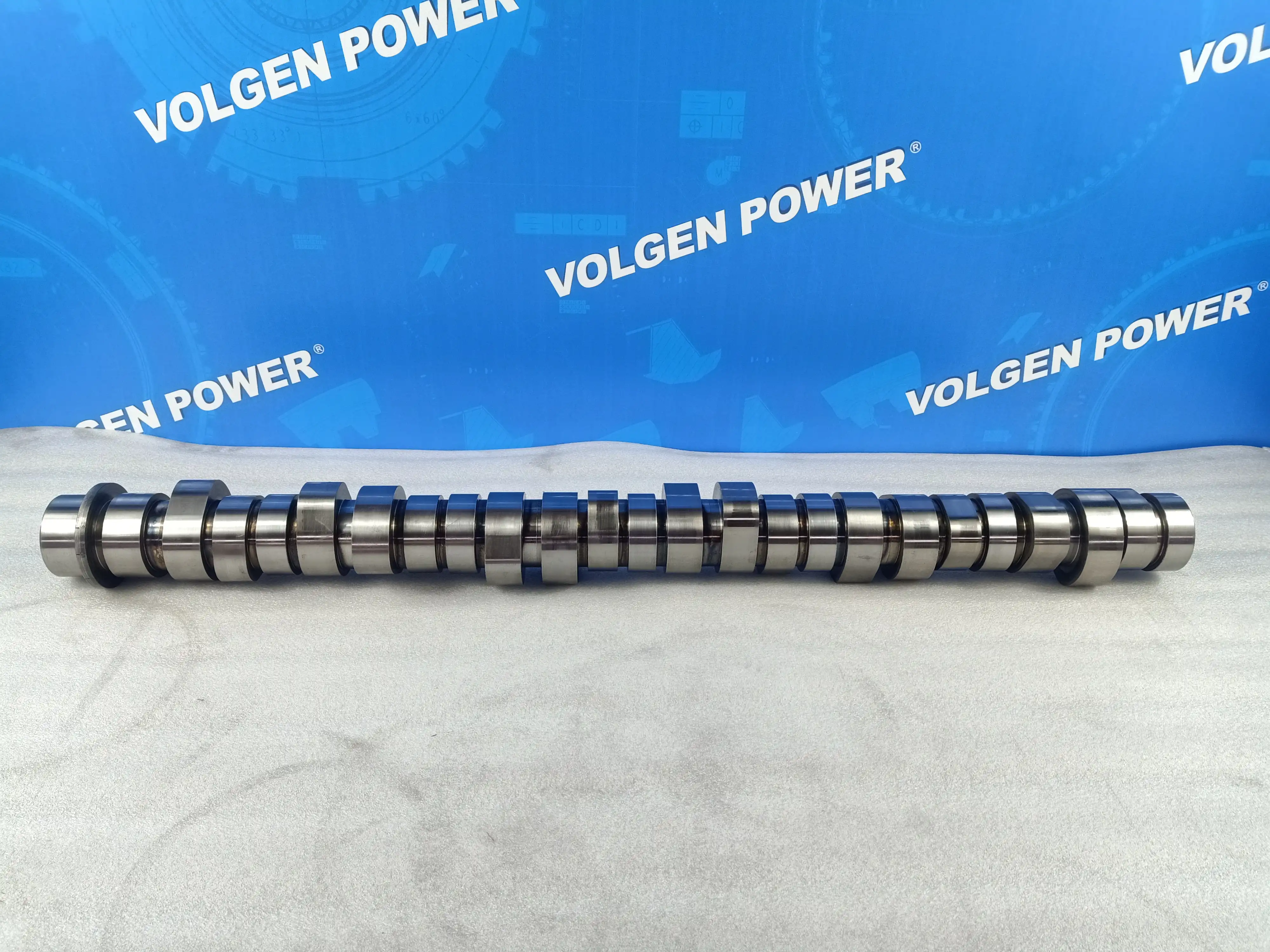
This guide provides a systematic framework for evaluating the OEM vs aftermarket camshaft sourcing decision. It does not treat aftermarket as a single quality tier and focuses on the evidence a buyer should request rather than general claims.
Three Camshaft Sourcing Categories, Not Two
The phrase "OEM vs aftermarket" oversimplifies the market. In practice, heavy-duty camshaft buyers encounter at least three distinct supply categories:
| Category | Description | Typical Channel |
|---|---|---|
| Genuine OEM / OE-Branded | Sold under the engine manufacturer's brand, part number, and packaging. | OEM dealer, authorized distributor |
| OES (OE-Supplier Sourced) | Manufactured by the original production supplier or a facility with verifiable OE supply-chain history. | Specialized aftermarket distributor, factory-direct |
| Independent Aftermarket | Covers a wide quality range: OE-equivalent, remachined, economy-grade, unbranded. | Aftermarket wholesaler, online marketplace, factory-direct |
The key insight: "Aftermarket" is not a quality grade. It is a sourcing category. Within the independent aftermarket, the gap between an OE-equivalent camshaft and a low-cost alternative can be larger than the gap between genuine OEM and a qualified OES replacement.
When evaluating a camshaft, the first question should not be "is it OEM?" but rather "what evidence does the supplier provide to demonstrate that this specific part number meets the material, dimensional, and surface-treatment requirements of the intended engine application?"
Price: Understanding What You Are Comparing
Price comparisons between OEM and aftermarket camshafts are only meaningful when the pricing basis is stated. The same camshaft can have different prices depending on supply channel, order quantity, and commercial terms.
Based on selected supplier quotations and public retail listings as of mid-2026. Prices vary by OEM number, order quantity, origin, stock location, warranty scope, and Incoterms.
| Platform | OEM Channel (Dealer) | Factory-Direct Aftermarket | Typical Savings |
|---|---|---|---|
| Cummins ISX15 / X15 | $1,200-$1,800 | $650-$1,000 | 35-50% |
| Volvo D13 (2013+) | $1,000-$1,500 | $550-$850 | 40-50% |
| DAF MX-13 / Paccar MX-13 (2245295) | $950-$1,400 | $520-$750 | 45-50% |
| Mercedes-Benz OM471 / OM473 | $1,400-$2,000 | $750-$1,200 | 35-45% |
| Scania DC13 | $1,100-$1,600 | $600-$950 | 40-50% |
| MAN D26 | $1,050-$1,550 | $580-$900 | 40-45% |
Important pricing notes:
- OEM channel prices represent authorized dealer list prices in North America and Western Europe.
- Factory-direct aftermarket quotations are typical EXW or FOB China pricing for 1-10 piece orders. These normally exclude international freight, import duties, local taxes, and installation labor.
- North American retail aftermarket pricing for the same OEM number may be significantly higher due to warehousing, distribution, and local liability costs. For example, public retail listings for the 2245295 camshaft in the US market show prices above $1,300 USD.
- Buyers should calculate total landed cost rather than compare unit price alone.
Total Landed Cost: A More Complete Comparison
A unit-price comparison captures only part of the sourcing decision. For fleet maintenance managers and procurement professionals, the relevant metric is total landed cost (TLC).
Camshaft Sourcing Cost = Part price + Freight + Duties + Installation labor + Related valvetrain parts + Expected downtime + Unplanned failure exposure + Claim processing overhead
| Cost Item | OEM Channel | Qualified Aftermarket |
|---|---|---|
| Camshaft unit price | $1,500 | $800 |
| Freight (express 5-7 days) | $0 (included) | $80 |
| Import duties (varies) | $0 (pre-paid) | $50-$150 |
| Installation labor (8-12h) | $800-$1,200 | $800-$1,200 |
| Related parts | $200-$400 | $200-$400 |
| Downtime (1 day) | $500 | $500 |
| Total landed cost | $3,000-$3,600 | $2,430-$3,130 |
| Savings | --- | 15-30% |
Quality: What Evidence to Request
A camshaft's quality cannot be determined by brand label alone. The relevant question is whether the manufacturing and inspection process produces a part that matches the engine manufacturer's design intent within defined tolerances.
| Verification Item | What the Buyer Should Request |
|---|---|
| Base material | Material grade or chemical composition report for the specific OEM number. Camshaft materials vary: forged steel, ductile iron, chilled cast iron, etc. |
| Cam profile | Lobe lift dimensions, base-circle diameter, and angular position report. Small deviations affect valve timing and engine braking. |
| Surface treatment | Process type and target hardness range with effective case depth stated. |
| Journal geometry | Diameter, roundness, runout tolerance, and surface finish for each journal. |
| Traceability | Heat or batch number linked to material certificate and inspection records. |
| Compatibility confirmation | Confirmed against OEM number, ESN, engine generation, model year, and brake/VVA config. |
What the quality evaluation process should include: Inspection scope should be confirmed for the specific part number and purchase batch before ordering. A supplier should be able to state which dimensional parameters are checked on every unit and which metallurgical tests are performed by lot sampling. For first-time purchases, a sample piece should be evaluated before committing to bulk procurement.
Warranty and Risk Allocation
| Coverage Aspect | OEM Channel | Independent Aftermarket |
|---|---|---|
| Standard warranty | 12-24 months | 6-12 months |
| Labor coverage | Often included | Parts/workmanship only (typically) |
| Claim route | Through dealer network | Direct or through distributor |
| Covered | Material and manufacturing defects | Material and manufacturing defects |
| Excluded | Installation error, related component wear, abuse | Same exclusions |
For engines under manufacturer warranty: Review the engine manufacturer's written warranty, extended-service agreement, and fleet contract before installing a non-genuine camshaft. The use of an aftermarket part does not automatically cancel every warranty obligation, but damage attributable to an incompatible or defective replacement part may be excluded from coverage. Commercial fleet agreements and local laws vary by jurisdiction. For more information, see the FTC Magnuson-Moss Warranty Act overview.
For out-of-warranty engines: Most heavy-duty diesel engines in operation are no longer under factory warranty. For these applications, the camshaft sourcing decision should be based on technical specifications, supplier evidence, and total landed cost, not warranty compliance.
Traceability: The Most Commonly Overlooked Step
The most frequent mistake in OEM vs aftermarket camshaft sourcing is ordering by engine model alone. Camshafts vary by engine generation, emissions standard, engine brake configuration, and VVA specification.
For example: a Volvo D13 2013 and D13TC 2020 use different cam profiles. An engine with a compression-release brake requires a specific cam lobe. VVA-equipped engines may have different phaser mounting interfaces.
Required RFQ Data --- Before requesting a quotation, provide:
- Existing OEM part number
- Engine serial number (ESN) or VIN
- Engine model and generation
- Model year
- Emissions certification level
- Engine brake or VVA configuration
- Required quantity
- Destination country
- Photos of old camshaft and identification plate (if available)
A supplier that cannot work from this data, or that offers a price without requesting this information, may not have a reliable matching process.
For a detailed OEM matching checklist, see the heavy-duty diesel camshaft parts buying guide.
Do You Need the Camshaft Only --- or a Matched Valvetrain Kit?
When replacing a camshaft, related components should normally be inspected and replaced at the same time. The incremental part cost is small compared to the labor and downtime of a second teardown.
| Component | Why It Matters |
|---|---|
| Camshaft bushings or bearings | Worn bushings change clearance and cause oil starvation. |
| Timing gear | Worn teeth affect cam-crank timing synchronization. |
| Tappets / followers | New lobes against worn followers = #1 cause of early failure. Replace as a set. |
| Rocker arm assembly | Worn contact surfaces affect valve lift. |
| Thrust plate and fasteners | Critical fasteners; many are single-use. |
| Seals and gaskets | Labor-intensive to reach; replace during cam work. |
| Cylinder head components | OHC designs need head-off for cam changes. Consider full head service. |
| Overhaul parts | Evaluate partial or full overhaul if engine is already opened. |
How to Evaluate a Camshaft Supplier
After determining that a qualified aftermarket alternative is appropriate, use this seven-point checklist:
| Evaluation Item | What to Verify |
|---|---|
| 1. Legal manufacturer identity | Which entity manufactures, issues quality docs, accepts liability claims. |
| 2. Certification scope | Check holder name, site address, validity, scope - covers camshaft mfg at producing site. |
| 3. OEM-number matching | Does process include OEM number, ESN, model year, emissions, brake/VVA? |
| 4. Part-specific specification | Request material grade, hardness, cam profile, journal tolerances, surface finish. |
| 5. Batch inspection evidence | Can inspection reports link to batch numbers? What is checked per unit vs per lot? |
| 6. First-article approval | Single-piece sample orders supported before bulk procurement? |
| 7. Written claim procedure | Time window, required evidence, liability scope, international process. |
Volgen Power supplies heavy-duty diesel camshafts through qualified manufacturing partners operating under ISO 9001:2015 and, where applicable, IATF 16949 quality-management systems. Manufacturing site and certification details are available for verification upon request. For specifications related to a specific OEM number, contact Volgen Power with the RFQ data listed in Section 6 above.
For a complete guide on verifying supplier documentation and part quality, see the Heavy-Duty Diesel Camshaft Verification Guide. For cross-border bulk procurement planning, see the Bulk Camshaft Sourcing from China guide.
FAQs.
Is OEM camshaft always better quality than aftermarket?
Not necessarily. Quality depends on the specific supplier's material selection, manufacturing process, and inspection protocol rather than the OEM vs aftermarket label. An OE-equivalent camshaft from a certified production site may have the same material grade and heat treatment as the genuine part. However, low-cost economy-grade aftermarket camshafts may use different materials and process specifications that affect durability.
How much can I save with a qualified aftermarket camshaft?
Based on factory-direct EXW pricing and public retail comparisons, the unit-price saving ranges from approximately 35% to 50% depending on engine platform, order quantity, and supply channel. A total-landed-cost comparison narrows the saving to approximately 15% to 30%.
Can an aftermarket camshaft affect warranty coverage?
It depends on the written warranty terms, the vehicle's use, the jurisdiction, and whether the aftermarket part is determined to be the cause of a failure. The use of an aftermarket part does not automatically cancel every warranty obligation, but damage attributable to an incompatible or defective replacement part may be excluded from coverage.
How do I verify that an aftermarket camshaft matches OEM specifications?
Request the supplier's part-specific specification sheet and compare against your OEM part number. Key verification points: material grade, lobe hardness target, effective case depth, journal runout tolerance, and surface finish specification.
What is the typical lead time for an aftermarket camshaft?
For popular platforms (Cummins X15, Volvo D13, DAF MX-13), stock items ship within 3-7 business days. Non-stock items typically require 15-30 days for production plus shipping. Sample orders may have a shorter lead time.
Can I buy a single aftermarket camshaft for sample testing?
Many aftermarket suppliers accept single-piece orders for quality evaluation. Confirm sample availability and whether the sample can be ordered against the specific OEM number rather than a generic listing.
Should I buy the camshaft alone or order a complete valvetrain kit?
If the engine is opened for camshaft replacement, the incremental labor cost to install related components (followers, bushings, seals, gaskets, timing gear) is much lower than a second teardown. For most applications, replacing the camshaft together with new followers, bushings, seals, and gaskets is more cost-effective.
Related Camshaft Products
Explore our range of heavy-duty diesel camshafts and related components:
- DAF MX-13 Camshaft OEM 2245295 — For Paccar MX-13 engines in Kenworth and Peterbilt trucks
- Cummins ISX15 / QSX15 Camshaft OEM 4059331 — For Cummins X15 and ISX15 heavy-duty engines
- Volvo D13 Camshaft OEM 20742610 — For Volvo D13 engines in FM and FH trucks
Request an OEM Compatibility & Specification Check
Send us the existing OEM number, engine serial number, engine model, production year, required quantity, and destination country. Volgen Power will help verify camshaft compatibility and recommend the related bushings, timing gears,s and valvetrain components required for your sourcing project.
Have the OEM number plate or engine serial ready? Include it with your inquiry for faster verification.