Keep rockers in their original positions when removing a shaft. Mixed positions on reassembly produce uneven wear and, on brake rockers, a brake that works on some cylinders and not others. Mark them before removal; a photograph of the shaft layout saves an hour of second-guessing.
Before adjusting, confirm the camshaft is at the correct base circle and that the rocker roller is on the lobe heel, not on the ramp. Adjusting on the ramp gives a false lash and a noisy engine.
Use the correct feeler gauge set and a torque wrench that is in calibration. A lash set with a worn gauge reads tight, and a rocker pedestal torqued by feel can crack or leak. Record the final lash values cylinder by cylinder; the next technician will need them, and a drifting value is an early warning of wear.
Common Mistakes
- Ordering a D11 rocker for a D13 because the shaft diameter looks the same.
- Fitting a standard rocker on a VEB engine and calling the inoperative brake a control fault.
- Adjusting lash without setting the valve bridge first.
- Using a generic clearance figure instead of the OEM figure for the variant.
- Reusing a worn rocker pad or roller to save a small amount against a repeat repair.
Also check the rocker shaft oil feed holes and the shaft bore clearance. A worn shaft leaks oil pressure to the top end, which shows up as a noisy valve train and, on VEB engines, a weak brake. A shaft that is scored or has blocked feed holes should be replaced with the rockers, not cleaned and reused.
Finally, confirm the valve cover and brake identification before ordering. The cover label and the engine plate together identify the brake generation; a truck that has been re-powered or had a replacement engine may not match its original paperwork. When the plate and the label disagree, stop and resolve it with the engine number rather than ordering on the badge.
Sourcing and Quality Inspection from Volgen Power
Volgen Power supplies Volvo D11 and D13 valvetrain parts through the Shiyan commercial vehicle supply chain. Because rocker numbers vary by position and brake generation, every order is matched against the engine number before packing rather than picked from a photo. For rockers and camshafts the inspection points are the ones that decide whether the top end stays quiet: pad hardness, roller fit, shaft bore and lobe profile.
- Number and position check. The rocker is matched to the engine number, position and brake variant.
- Pad and roller. Pad surface and roller rotation checked; a scored pad is rejected.
- Shaft fit. Bore diameter checked against the shaft; a loose rocker leaks oil pressure.
- Camshaft. Lobe profile and journal surfaces checked; a worn lobe is not reworked and sold.
- VCI packing. Machined surfaces protected for sea freight.
Related reading: Volvo D11 vs D13 camshaft parts guide · Diesel camshaft wear symptoms · Volvo engine parts
Frequently Asked Questions
Will a D11 camshaft fit a D13?
No. The camshafts differ in length, lobe layout and journals. The D11 and D13 are different displacements with different valve events; use the camshaft listed for the engine number.
Can I fit a standard rocker on a VEB engine?
No. The VEB rocker carries the brake control function. A standard rocker will let the engine run but the engine brake will not work, and the lash procedure no longer matches.
What is the correct lash setting?
It depends on the engine variant and whether the rocker is a brake rocker. Use the OEM figure for the exact engine number; do not apply a generic clearance.
Why set the valve bridge before the lash?
The bridge must sit square on both valve stems. If it is tilted, setting lash loads one valve, wears the guide and can crack the bridge.
Do rocker numbers differ by position?
Yes. Intake, exhaust and brake positions use different rockers. A rocker that fits the shaft can still be the wrong function; match the number to the position.
Need the Right Rocker for Your D13?
Send the engine plate photo, engine number, brake variant and the old rocker number. We will confirm the position and the correct reference, and quote the assembly with the valve bridge if needed.
WhatsApp our parts desk: +86 188 7263 0128 — include engine number and position.
The rocker numbers above are not a menu to choose from by appearance. Positions differ — intake, exhaust and brake — and a rocker that fits the shaft can still be the wrong function. Match the number to the position and the brake variant, and confirm with the engine plate.
When a used rocker is offered, check the pad for a wear step and the roller for flats. A re-ground pad can look acceptable and still change the lash geometry; measure the pad height against the specification if the history is unknown. On VEB rockers, inspect the control piston bore for scoring — a scored bore leaks control oil and weakens the brake.
Keep rockers in their original positions when removing a shaft. Mixed positions on reassembly produce uneven wear and, on brake rockers, a brake that works on some cylinders and not others. Mark them before removal; a photograph of the shaft layout saves an hour of second-guessing.
Before adjusting, confirm the camshaft is at the correct base circle and that the rocker roller is on the lobe heel, not on the ramp. Adjusting on the ramp gives a false lash and a noisy engine.
Use the correct feeler gauge set and a torque wrench that is in calibration. A lash set with a worn gauge reads tight, and a rocker pedestal torqued by feel can crack or leak. Record the final lash values cylinder by cylinder; the next technician will need them, and a drifting value is an early warning of wear.
Common Mistakes
- Ordering a D11 rocker for a D13 because the shaft diameter looks the same.
- Fitting a standard rocker on a VEB engine and calling the inoperative brake a control fault.
- Adjusting lash without setting the valve bridge first.
- Using a generic clearance figure instead of the OEM figure for the variant.
- Reusing a worn rocker pad or roller to save a small amount against a repeat repair.
Also check the rocker shaft oil feed holes and the shaft bore clearance. A worn shaft leaks oil pressure to the top end, which shows up as a noisy valve train and, on VEB engines, a weak brake. A shaft that is scored or has blocked feed holes should be replaced with the rockers, not cleaned and reused.
Finally, confirm the valve cover and brake identification before ordering. The cover label and the engine plate together identify the brake generation; a truck that has been re-powered or had a replacement engine may not match its original paperwork. When the plate and the label disagree, stop and resolve it with the engine number rather than ordering on the badge.
Sourcing and Quality Inspection from Volgen Power
Volgen Power supplies Volvo D11 and D13 valvetrain parts through the Shiyan commercial vehicle supply chain. Because rocker numbers vary by position and brake generation, every order is matched against the engine number before packing rather than picked from a photo. For rockers and camshafts the inspection points are the ones that decide whether the top end stays quiet: pad hardness, roller fit, shaft bore and lobe profile.
- Number and position check. The rocker is matched to the engine number, position and brake variant.
- Pad and roller. Pad surface and roller rotation checked; a scored pad is rejected.
- Shaft fit. Bore diameter checked against the shaft; a loose rocker leaks oil pressure.
- Camshaft. Lobe profile and journal surfaces checked; a worn lobe is not reworked and sold.
- VCI packing. Machined surfaces protected for sea freight.
Related reading: Volvo D11 vs D13 camshaft parts guide · Diesel camshaft wear symptoms · Volvo engine parts
Frequently Asked Questions
Will a D11 camshaft fit a D13?
Can I fit a standard rocker on a VEB engine?
What is the correct lash setting?
Why set the valve bridge before the lash?
Do rocker numbers differ by position?
Need the Right Rocker for Your D13?
Send the engine plate photo, engine number, brake variant and the old rocker number. We will confirm the position and the correct reference, and quote the assembly with the valve bridge if needed.
WhatsApp our parts desk: +86 188 7263 0128 — include engine number and position.
Quick Answer: The D11 and D13 share a family layout, not a parts bin. Camshafts and complete rocker-arm assemblies are not interchangeable across the two displacements, and VEB/VEB+ brake rockers add another variant on top. Within the D13, several rocker and camshaft references exist for different production periods. Identify the engine by plate and engine number, then match the rocker assembly to the brake system fitted — a standard rocker on a VEB engine will not give engine braking, and a VEB rocker on a non-VEB engine will not adjust correctly.
Table of Contents
What Actually Interchanges Between D11 and D13
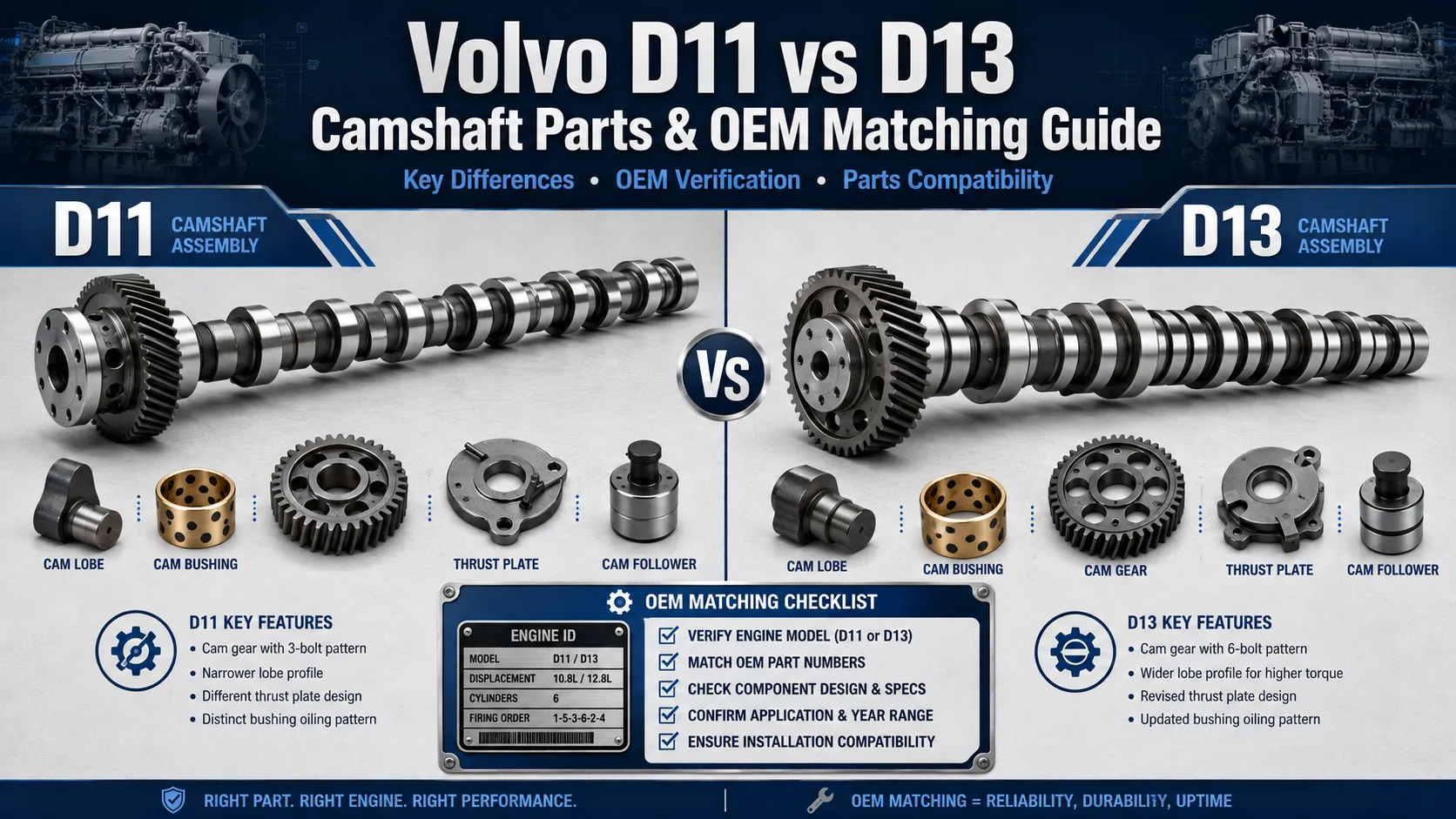
The two engines look similar at the top end: overhead camshaft, roller rockers, valve bridges and, on many units, a VEB engine brake.
The interchangeability question usually starts with a photograph. Two rockers can look identical from above and differ in pad width, roller offset or control bore. Measure the shaft bore and the overall length before comparing part numbers, and treat a visual match as a lead, not a conclusion.
That similarity is exactly what causes wrong orders. The cylinder head casting, camshaft length and rocker shaft layout are engine-specific, and the brake system changes the rocker design.| Component | D11 → D13 | Why |
|---|---|---|
| Camshaft | Not interchangeable | Different length, lobes and bearing journals |
| Complete rocker assembly | Not interchangeable | Shaft and pedestal layout follow the head casting |
| VEB brake rocker | Variant-specific | Brake rocker adds a control function; standard rocker cannot substitute |
| Valve bridge | Check by part number | Bridge height and adjuster design vary with head and valve train |
| Rocker shaft | Not interchangeable | Length and oil feed positions differ |
For the identification side — casting numbers, camshaft numbers and the basic matching logic — our Volvo D11 vs D13 camshaft parts guide covers the numbers. This article goes one layer down: the rocker assembly, the valve bridge and the adjustment procedure that decides whether the top end is quiet and the brake works.
How the VEB/VEB+ Rocker Works
A normal rocker opens one valve per cam lobe event. A VEB rocker adds a small extra lift on the exhaust valve during the compression stroke, turning the engine into a compressor and absorbing energy. The brake rocker carries a control piston or solenoid that enables that extra lift only when the brake is requested.
That extra function is why a brake rocker is not a cosmetic variant. If a standard rocker is fitted where a VEB rocker belongs, the engine runs but the brake does not work — a fault that shows up on the first long descent, not in the workshop. If a VEB rocker is fitted to a non-VEB engine, the control function has nothing to actuate and the lash procedure no longer matches the valve events.
VEB+ adds a second stage of braking on some variants, with a different control strategy and sometimes a different rocker or actuator arrangement. When a truck is specified with VEB+, order by the engine number and the brake specification, not by the badge on the valve cover. A VEB rocker and a VEB+ rocker can look similar on the bench and behave differently on a descent.
Wear Symptoms at the Top End
| Symptom | Likely cause | Check |
|---|---|---|
| Ticking or heavy clatter | Lash out of adjustment, worn pad or roller | Feeler gauge at the valve bridge; roller rotation |
| Rough idle, misfire | Worn cam lobe or rocker pad | Lobe lift and pad surface |
| Brake weak or inoperative | VEB rocker control fault, wrong rocker | Brake control circuit and rocker part number |
| Valve bridge tilted or cracked | Worn guide or incorrect adjustment | Bridge contact pattern and guide clearance |
| Oil leak at rocker shaft | Worn shaft or seals | Shaft play and seal condition |
Adjustment Procedure
Step 1 — Confirm the engine and brake variant. Read the plate and the valve cover label. Record the rocker and camshaft numbers before ordering or adjusting.
Step 2 — Rotate to the specified position. Use the engine's firing order and the OEM procedure to set each cylinder at its adjustment position. Do not adjust by ear or by counting turns from an unknown start.
Step 3 — Set the valve bridge first. The bridge must sit square on both valve stems and the adjuster must be set before the rocker lash. A bridge that is tilted loads one valve and causes guide wear.
Step 4 — Set lash with a feeler gauge. Use the OEM clearance for the engine variant and the brake type. Slide the gauge with light drag; a tight gauge gives a quiet but leaking valve, a loose one gives noise and hammering.
Step 5 — Check the brake rocker setting. VEB rockers have their own clearance or control setting. Follow the OEM procedure; do not apply the standard rocker figure to a brake rocker.
Use a torque wrench on every pedestal and do not rely on the previous mark. A pedestal that is under-torqued leaks oil and lets the shaft move; one that is over-torqued distorts the shaft and changes the lash on the neighbouring cylinders.
Step 6 — Re-check after the first run. Warm the engine, re-check lash on a sample of cylinders, and confirm the brake engages. A top end that is set cold and never re-checked is a comeback waiting to happen.
When the brake is weak but the lash is correct, check the control circuit before condemning the rocker. A solenoid that does not see the request, a restricted oil feed to the brake circuit, or a worn actuator can all produce a weak brake with a mechanically sound rocker. Test the electrical command and the oil feed separately; replacing a rocker to fix a wiring fault is an expensive guess.
Rocker and Camshaft References
| Reference | Part | Note |
|---|---|---|
| 22004720 | D13 rocker arm | Confirm brake variant and position |
| 21132207 | D13 rocker arm reference | Check against the old number |
| 21023377 | D13 rocker arm reference | Production-period dependent |
| 20749290 | D13 rocker arm reference | Confirm with engine number |
| 20571251 | D13 rocker arm reference | Confirm with engine number |
| 20397755 | D13 rocker arm reference | Confirm with engine number |
| 7422004720 | Service reference | Aftermarket cross-reference BF 7050124004BF |
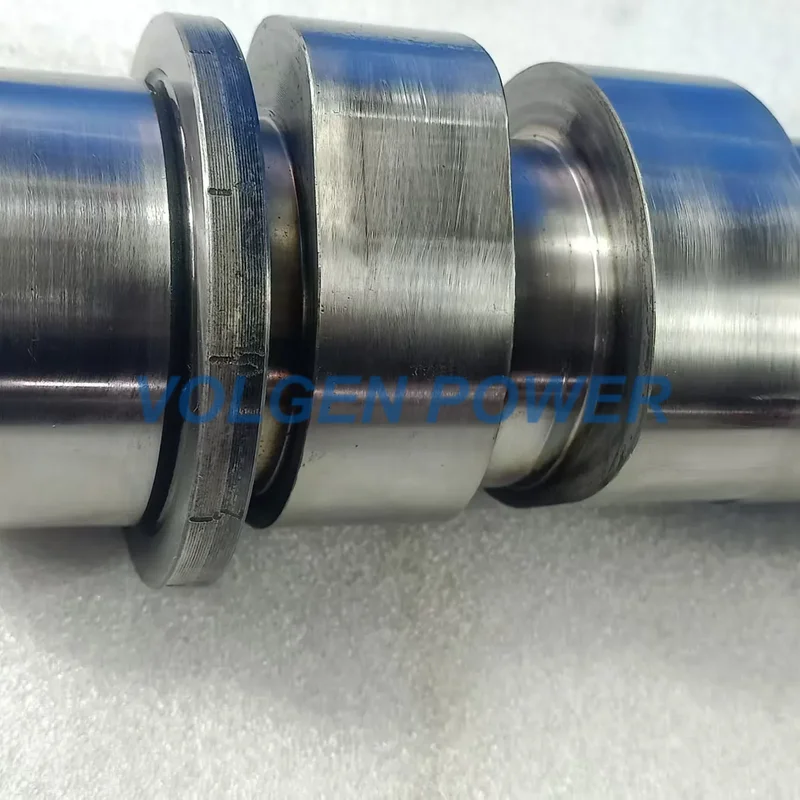
| 21189194 / 20742610 | D11 / D13 camshaft references | See the D11 camshaft product page |
The rocker numbers above are not a menu to choose from by appearance. Positions differ — intake, exhaust and brake — and a rocker that fits the shaft can still be the wrong function. Match the number to the position and the brake variant, and confirm with the engine plate.
When a used rocker is offered, check the pad for a wear step and the roller for flats. A re-ground pad can look acceptable and still change the lash geometry; measure the pad height against the specification if the history is unknown. On VEB rockers, inspect the control piston bore for scoring — a scored bore leaks control oil and weakens the brake.
Keep rockers in their original positions when removing a shaft. Mixed positions on reassembly produce uneven wear and, on brake rockers, a brake that works on some cylinders and not others. Mark them before removal; a photograph of the shaft layout saves an hour of second-guessing.
Before adjusting, confirm the camshaft is at the correct base circle and that the rocker roller is on the lobe heel, not on the ramp. Adjusting on the ramp gives a false lash and a noisy engine.
Use the correct feeler gauge set and a torque wrench that is in calibration. A lash set with a worn gauge reads tight, and a rocker pedestal torqued by feel can crack or leak. Record the final lash values cylinder by cylinder; the next technician will need them, and a drifting value is an early warning of wear.
Common Mistakes
- Ordering a D11 rocker for a D13 because the shaft diameter looks the same.
- Fitting a standard rocker on a VEB engine and calling the inoperative brake a control fault.
- Adjusting lash without setting the valve bridge first.
- Using a generic clearance figure instead of the OEM figure for the variant.
- Reusing a worn rocker pad or roller to save a small amount against a repeat repair.
Also check the rocker shaft oil feed holes and the shaft bore clearance. A worn shaft leaks oil pressure to the top end, which shows up as a noisy valve train and, on VEB engines, a weak brake. A shaft that is scored or has blocked feed holes should be replaced with the rockers, not cleaned and reused.
Finally, confirm the valve cover and brake identification before ordering. The cover label and the engine plate together identify the brake generation; a truck that has been re-powered or had a replacement engine may not match its original paperwork. When the plate and the label disagree, stop and resolve it with the engine number rather than ordering on the badge.
Sourcing and Quality Inspection from Volgen Power
Volgen Power supplies Volvo D11 and D13 valvetrain parts through the Shiyan commercial vehicle supply chain. Because rocker numbers vary by position and brake generation, every order is matched against the engine number before packing rather than picked from a photo. For rockers and camshafts the inspection points are the ones that decide whether the top end stays quiet: pad hardness, roller fit, shaft bore and lobe profile.
- Number and position check. The rocker is matched to the engine number, position and brake variant.
- Pad and roller. Pad surface and roller rotation checked; a scored pad is rejected.
- Shaft fit. Bore diameter checked against the shaft; a loose rocker leaks oil pressure.
- Camshaft. Lobe profile and journal surfaces checked; a worn lobe is not reworked and sold.
- VCI packing. Machined surfaces protected for sea freight.
Related reading: Volvo D11 vs D13 camshaft parts guide · Diesel camshaft wear symptoms · Volvo engine parts
Frequently Asked Questions
Will a D11 camshaft fit a D13?
Can I fit a standard rocker on a VEB engine?
What is the correct lash setting?
Why set the valve bridge before the lash?
Do rocker numbers differ by position?
Need the Right Rocker for Your D13?
Send the engine plate photo, engine number, brake variant and the old rocker number. We will confirm the position and the correct reference, and quote the assembly with the valve bridge if needed.
WhatsApp our parts desk: +86 188 7263 0128 — include engine number and position.