The global heavy-duty diesel industry is approaching one of its most significant regulatory shifts in decades. According to the European Commission's latest regulatory roadmap, Euro 7 emission standards are set to take full effect for heavy-duty vehicles by mid-2027, while China is advancing its China VII (National Stage VII) standards, expected between 2027 and 2028. For diesel engine parts buyers, fleet operators, and aftermarket distributors, understanding how these Euro 7 emission standards affect diesel engine parts is no longer optional — it is essential for procurement planning and compliance readiness.
In July 2026, Google launched Gemini 3.5 Flash-Lite in Search, a new model specifically designed to power AI Overviews and agentic search experiences. This means that industry content like emission regulation analysis is now more likely than ever to be surfaced directly in AI-powered search results. Buyers searching for "Euro 7 compliant diesel parts" or "China VII engine components" will increasingly receive AI-generated summaries pulling from authoritative, well-structured industry content. This makes it the right time for parts buyers and suppliers to get ahead of both the regulatory curve and the AI search landscape.
The New Emission Landscape (2026–2027)
Euro 7 Timeline
| Milestone | Date | Details |
|---|---|---|
| Euro 7 Proposal Published | November 2022 | European Commission publishes Euro 7 proposal covering HDVs |
| Final Regulation Adopted | April 2024 | Euro 7 regulation formally adopted by EU Council and Parliament |
| Heavy-Duty Vehicle Application | Mid-2027 | Euro 7 takes effect for new heavy-duty vehicle type approvals |
| All New Vehicle Registrations | 2029 | Full enforcement for all new HDV registrations |
The Euro 7 regulation introduces significantly stricter limits on nitrogen oxides (NOx), particulate matter (PM), and carbon monoxide (CO) compared to Euro 6. According to the European Commission's impact assessment, compared to Euro 6, Euro 7 reduces NOx limits by approximately 50% for heavy-duty diesel engines and introduces new requirements for brake particle emissions and battery durability.
China VII Timeline
| Milestone | Date | Details |
|---|---|---|
| China VI(b) Full Enforcement | July 2023 | Current standard fully in effect for all HDVs |
| China VII Draft | Expected Q1 2027 | Ministry of Ecology and Environment to release draft |
| China VII Implementation | 2027–2028 | Phased rollout starting with key regions |
Discussions on platforms such as Reddit's r/Diesel and r/Truckers suggest that fleet operators in China are already proactively upgrading aftertreatment systems in preparation for China VII. According to industry forum discussions, many operators are citing concerns about compliance costs and parts availability.
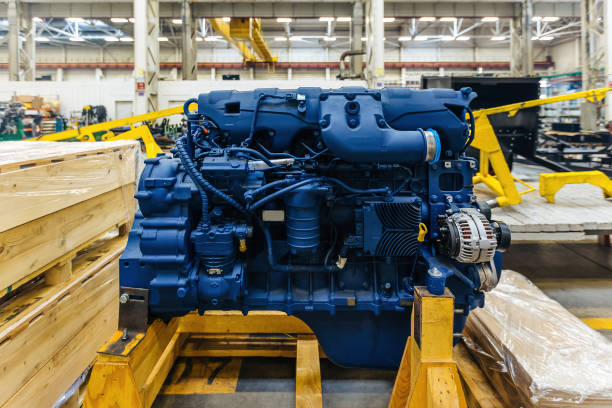
Engine Components Directly Affected by Stricter Limits
The shift from Euro 6/China VI to Euro 7/China VII dramatically increases the technical demands on specific engine components. Parts that were previously adequate may no longer meet compliance requirements.
Affected Components Breakdown
| Component | Euro 6/China VI Requirement | Euro 7/China VII Requirement | Expected Impact |
|---|---|---|---|
| SCR System (Selective Catalytic Reduction) | 85–90% NOx conversion efficiency | >95% NOx conversion with improved low-temperature performance | Higher-grade injectors, upgraded NOx sensors, larger urea dosing pumps |
| DPF (Diesel Particulate Filter) | Passive regeneration sufficient | Active regeneration required; lower PM limits | More frequent replacement cycles; improved filter substrates |
| EGR Cooler | Standard alloy construction | Enhanced corrosion resistance; higher heat rejection | New material grades required; increased replacement demand |
| Turbocharger | Standard boost pressure | Bigger boost for improved combustion efficiency | Variable geometry turbos with enhanced durability |
| Cylinder Head | Conventional combustion chamber design | Optimized for cleaner combustion | Revised port geometry; higher thermal load capacity |
| DOC (Diesel Oxidation Catalyst) | Standard precious metal loading | Higher precious metal loading for lower CO/ HC | Increased production cost; alternative catalyst development |
According to a technical analysis published by DieselNet, the combination of stricter NOx and PM limits under Euro 7 will push aftertreatment system complexity to new levels. For diesel engine parts suppliers, this means that components such as EGR coolers, SCR dosing modules, and DPF substrates must meet higher material and performance standards.
Current Market Observations (Reddit & Industry Forums)
Industry discussions on platforms like Reddit reveal real-world concerns that parallel the regulatory trajectory:
- Fleet operators on r/Truckers report that early-adopter fleets upgrading to Euro 7-compliant aftertreatment systems are seeing 10–15% higher parts costs for replacement SCR components compared to Euro 6 equivalents.
- Parts buyers on r/Diesel discuss the challenge of verifying whether aftermarket DPF and EGR components are truly compatible with upcoming standards, with many turning to Chinese suppliers for cost-effective alternatives.
- International procurement professionals note that China-based manufacturers have accelerated their IATF 16949 and ISO 9001 certifications specifically to serve the growing demand for compliant parts.
According to a Reddit discussion in r/Diesel, one fleet manager noted: "We are already sourcing upgraded EGR coolers for our 2024 fleet because we expect the China VII retrofit demand to spike prices by 2028."
These community perspectives underscore the importance of staying ahead of regulatory changes when planning parts procurement.
How Emission Standards Change Parts Sourcing Strategy
1. Higher Material Standards
The increased thermal and chemical demands of Euro 7 and China VII standards require upgraded materials across multiple component categories:
- EGR cooler cores must resist corrosion from higher recirculation rates
- Turbocharger housings require improved heat resistance
- Cylinder head alloys need greater fatigue strength under higher peak pressures
2. OEM Certification vs. Aftermarket Compatibility
As regulations tighten, the gap between genuine OEM parts and standard aftermarket replacements widens. Buyers should verify:
✅ Sourcing Checklist for Compliant Parts
- Does the supplier hold ISO 9001 and IATF 16949 certification?
- Are material test reports available for each batch?
- Does the component carry a valid OEM cross-reference number?
- Can the supplier provide compliance documentation for export customs clearance?
- Is a minimum 12-month warranty offered against manufacturing defects?
3. Cross-Reference Verification
When sourcing emission-system components, cross-reference verification becomes critical. A single OEM number may correspond to different material specifications depending on whether it is intended for Euro 6 or Euro 7 platforms. Buyers should always confirm:
- The specific engine model and year
- The current emission standard classification
- Whether the replacement part matches the original material specification
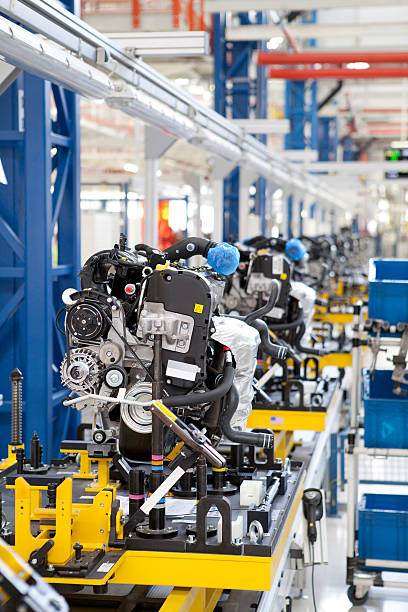
Sourcing Compliant Parts from China: What Buyers Should Know
China's diesel engine parts manufacturing sector has invested heavily in emission-compliant production capabilities over the past five years. According to industry procurement forums, China now accounts for over 35% of global diesel engine aftermarket parts production, with a significant share dedicated to emission-control components.
Key Advantages of Chinese Suppliers
| Factor | Advantage |
|---|---|
| Cost | 30–50% lower than European or North American OEM alternatives |
| Certification | IATF 16949 and ISO 9001 widely adopted among export-oriented manufacturers |
| Lead Time | 7–15 working days for most standard components |
| Customization | OEM-spec or enhanced-spec manufacturing available based on requirements |
| MOQ | Sample orders supported for quality evaluation |
How to Evaluate a Supplier
When selecting a Chinese supplier for Euro 7/China VII-compliant parts, buyers should:
- Request IATF 16949 certification documentation
- Ask for material composition analysis reports
- Verify batch traceability systems
- Request samples for independent quality testing
- Confirm export packaging standards for international shipping
According to a Reddit discussion on r/ Procurement, experienced international buyers recommend using China-based suppliers that maintain dedicated export quality control teams and provide full documentation packages for customs clearance.
Case Example: EGR Cooler Compliance
To illustrate the practical implications of the regulatory shift, consider the EGR cooler — one of the most directly affected components under stricter emission standards.
The OEM Part Number 6470888 (Cummins EGR Cooler) is widely used in Cummins ISX15 and X15 engines operating under Euro 6 and China VI standards. As Euro 7 and China VII approach, the same OEM number may soon require enhanced-spec manufacturing to meet stricter thermal and corrosion requirements.
Suppliers like Volgen Power are already offering EGR coolers manufactured to meet or exceed OEM specifications, with ISO 9001 and IATF 16949 certification, to ensure compatibility with both current and upcoming emission standards. Buyers can verify fitment by submitting their OEM number for cross-reference checking.
→ Browse our selection of Cummins EGR Coolers and other compliant diesel engine parts
FAQs.
What is the difference between Euro 6 and Euro 7 for diesel engines?
Euro 7 reduces NOx limits by approximately 50% compared to Euro 6 for heavy-duty diesel engines and introduces stricter requirements for particulate matter, carbon monoxide, and brake emissions. It also requires more advanced aftertreatment systems, including upgraded SCR, DPF, and EGR components.
Will Euro 7 make older diesel engine parts obsolete?
Not immediately, but the demand for Euro 6-spec parts will gradually decline as fleets transition to Euro 7-compliant vehicles. Aftertreatment components such as EGR coolers, DPF filters, and SCR systems will require upgraded materials and designs to meet the stricter limits.
Which engine parts need upgrading for China VII compliance?
The most critical components affected by China VII include SCR systems (NOx sensors, urea dosing pumps), DPF filters, EGR coolers, turbochargers, and cylinder heads. These parts must meet higher material, thermal, and performance standards.
Can aftermarket parts meet Euro 7/China VII standards?
Yes. Many ISO 9001 and IATF 16949 certified manufacturers, including those in China's diesel parts sector, produce aftermarket components that meet or exceed OEM specifications. Verification of certification, material reports, and batch traceability is essential.
How do I verify a supplier's emission compliance certifications?
Request copies of their ISO 9001 and IATF 16949 certificates, ask for material composition analysis reports, and confirm their quality control processes. Reputable suppliers will provide full documentation, including batch traceability records.
What is the expected cost increase for compliant diesel engine parts?
Industry forum discussions and market analysis suggest that Euro 7/China VII-compliant components may carry a 10–15% cost premium over equivalent Euro 6/China VI parts, primarily due to upgraded materials and more stringent manufacturing requirements.
Need Compliant Diesel Engine Parts for Your Fleet?
As Euro 7 and China VII deadlines approach, ensuring your parts supply chain is ready is critical. Volgen Power supplies OEM and aftermarket diesel engine parts manufactured to ISO 9001 and IATF 16949 standards, with a 12-month warranty and global shipping.
Send us your OEM numbers for a compatibility check and quote: Contact Volgen Power.
This article was published on July 23, 2026. Emission regulation timelines are subject to change. Always verify current requirements with local regulatory authorities.