Quick Answer: Safe bulk camshaft sourcing from China requires control over eight procurement dimensions: the contracting party's legal and manufacturing identity, the OEM-number and ESN matching process, sample-to-production consistency, payment and inspection milestones, Incoterms® rule selection and named place, total landed cost vs. total cost of ownership, packaging and customs clearance, and the written claim procedure. The lowest unit price does not guarantee the lowest total procurement cost.
For fleet maintenance managers, aftermarket distributors, and engine rebuilders with established procurement needs, still deciding between genuine OEM and qualified aftermarket? See the OEM vs Aftermarket Camshaft Guide.
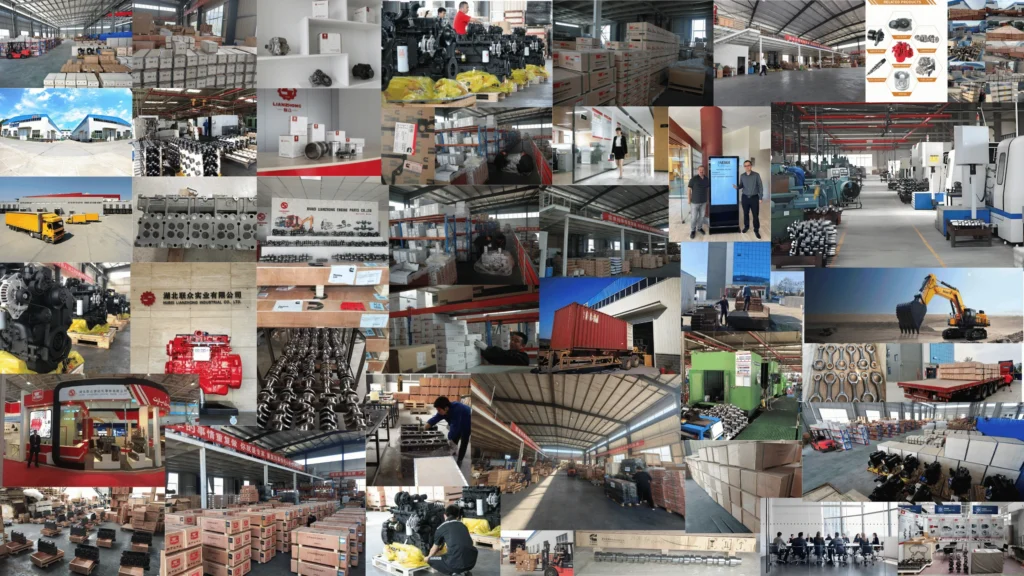
Is China Sourcing Right for Your Order?
Cross-border camshaft sourcing from China is a supply strategy, not a spot purchase decision. It fits specific buyer profiles and order conditions.
When It Works
- You have sustained or predictable procurement needs for specific engine platforms.
- You need coverage across multiple OEM numbers and engine models.
- You can accommodate sample orders, trial runs, and production verification cycles.
- You have import clearance capacity or a freight forwarder arrangement.
- You can provide OEM numbers, ESNs, and quality requirements in writing.
- You can plan safety stock or annual procurement volumes.
When It Does Not
- You need a single emergency replacement camshaft that cannot wait 3–8 weeks.
- The engine is under manufacturer warranty requiring genuine OEM parts.
- The OEM number and engine version have not been confirmed.
- You do not have import clearance, inspection capability, or claim handling experience.
- The landed cost of a single piece via air freight is close to your local distributor shelf price.
This section helps filter low-quality inquiries and ensures the China supply chain is evaluated by buyers who can actually benefit from it.
Know Who You Are Buying From
A supplier’s legal type and the channel through which you contact them are two separate questions. Each affects documentation access, contract structure, and claim enforceability differently.
Contracting Supplier Type
| Supplier Model | Actual Role | What the Buyer Must Confirm |
|---|---|---|
| Manufacturer and exporter | Owns production lines and exports, invoices, and receives payment under the same legal entity | Factory address, production capability, certification scope, bank account matching legal entity |
| Manufacturer-backed export supplier | Contracts and manages the export order through a disclosed qualified manufacturing partner | Who produces, who inspects, who issues documentation, who accepts claims |
| Independent trading company | Sources from multiple upstream factories; does not manufacture | Whether upstream sources are disclosed, change control, quality responsibility |
| Broker or undisclosed intermediary | Facilitates transactions without controlling production or quality systems | Original production source, chain of custody, liable entity |
Engagement Channel
- Direct inquiry — Contacted the supplier directly; can verify identity before discussing terms.
- B2B marketplace — Platform listing; verify the supplier’s legal identity and manufacturing capability before ordering.
- Local distributor — The distributor holds inventory locally; verify the source and documentation.
- Sourcing agent — A third party negotiates with factories on your behalf; confirm the agent’s relationship with the production site.
- Brokered transaction — An intermediary introduces buyer and seller; the highest risk of documentation gaps and claim difficulty.
Key principle: “Manufacturing partner” is not a standalone supplier type. If a supplier describes itself this way, clarify: who is the legal contracting entity, who receives payment, who issues the commercial invoice, who owns the product specification, who is responsible for quality documentation, and who accepts warranty claims.
Build a Complete Camshaft RFQ Package
Before requesting quotations, assemble the following data. A supplier that provides a price without requesting this information may not have a reliable matching process.
- Existing OEM part number (from the camshaft or parts catalog)
- Engine serial number (ESN) or VIN
- Engine model, generation, and model year
- Emissions certification level
- Engine brake or VVA configuration
- Sample quantity, trial batch quantity, and estimated annual quantity
- Target unit price if known for specification matching
- Destination country and port
- Preferred Incoterms® rule + named place or port + version (e.g., FCA Jinan, China, Incoterms® 2020; FOB Qingdao Port, China, Incoterms® 2020; CIF Hamburg Port, Germany, Incoterms® 2020; DAP buyer warehouse, Incoterms® 2020)
- Required documentation level (material cert, dimensional report, batch traceability, full documentation)
- Third-party inspection required (yes/no, and by whom)
- Target delivery date
For a detailed OEM matching checklist and camshaft specification parameters, see the heavy-duty diesel camshaft parts buying guide.
Verify the Supplier and Manufacturing Source
Supplier verification follows three distinct layers, each with different evidence requirements.
Layer 1: Legal Identity
Confirm the supplier’s legal existence through the Chinese National Enterprise Credit Information Publicity System (national corporate credit information publicity system). Key fields to verify:
- Company legal Chinese name and Unified Social Credit Code
- Registration status (active, cancelled, or under investigation)
- Registered address
- Legal representative
- Business scope — must include automotive parts or engine component manufacturing.
- Whether listed in the business exception list or serious untrustworthy list
What the business license proves: The company exists as a legal entity. It does not independently prove that the company owns a camshaft production line, performs its own heat treatment and grinding, supplies a specific OEM number, or has stable production capability.
Layer 2: Manufacturing Identity
Confirm the actual production site:
- Request the factory address — this may differ from the registered business address.
- Confirm which manufacturing processes are performed in-house and which are outsourced.
- For bulk procurement, request a virtual or third-party audit of the production site.
- Verify that certification scope covers the producing site address.
Layer 3: Commercial Responsibility
Confirm the contracting and payment chain:
- The beneficiary bank account must match the contracting seller’s legal identity, unless a documented and commercially reasonable relationship explains the difference.
- Do not send payment to a salesperson’s personal account, an unexplained third-party company, or an account changed at the last minute without documented justification.
Simplified Certification Check
For a detailed certificate and batch-document audit process, see the Heavy-Duty Diesel Camshaft Verification Guide.
Minimum check for China sourcing:
- Certificate holder name matches the business license legal entity.
- Site address on the certificate matches the factory address.
- Certificate scope covers camshaft manufacturing, engine components, or valvetrain components — the exact wording varies, but the scope, address, and actual production activity must correspond.
- Certificate is valid. ISO certificates may be checked through the issuing certification body or IAF CertSearch. IATF certification should be associated with an IATF-recognized certification body.
Note: ISO 9001:2015 remains the current version as of July 2026. A new edition is planned for publication in September 2026.
Approve the Sample — and Control the Bulk Order
The most common cross-border sourcing failure is not a rejected sample — it is an approved sample followed by a production batch that uses different materials, processes, or a different factory. Sample approval is not supplier approval, and supplier approval is not automatic approval of every future production batch.
Five-Stage Control Process
- Technical Sample. Verify fitment, basic dimensions, machining quality, and documentation capability against the specific OEM number.
- First Article Inspection. Confirm part number, controlled specification revision, critical dimensions, material and heat-treatment evidence, batch marking, and packaging method.
- Approved Master Sample. Both parties retain an approved master sample or approved inspection record as the reference baseline for subsequent orders.
- Pilot Batch. Run a trial production batch at the intended order quantity or a mutually agreed fraction, rather than jumping directly to full production.
- Mass-Production Release. Release the bulk order only after document review, first-piece inspection, packaging confirmation, and pre-shipment approval are completed.
Recommended contract clause: “No change of manufacturing site, material source, camshaft specification, heat-treatment process, or approved subcontractor without prior written buyer approval.”
Sample cost: Typically 100–150% of the bulk unit price. Most suppliers deduct the sample cost from the first bulk order. Confirm this before placing the sample order.
Contract, Payment, and Inspection Milestones
Incoterms® allocate transport risk, cost, and customs responsibility. They do not determine product specification, payment terms, ownership transfer, warranty, or dispute resolution. These must be covered in the purchase order or contract.
What Should Be Written Into the Purchase Order
- Contracting seller’s legal identity
- Manufacturing source or approved production site
- OEM number and application
- Controlled specification revision
- Approved sample or first-article reference
- Required documents list
- Inspection plan and acceptance criteria
- Packaging and corrosion-protection standard
- Incoterms® rule, named place, and version
- Payment milestones
- Delivery deadline
- Warranty and exclusions
- Nonconformance and claim procedure
- Prohibition on unapproved source or process changes
- Governing law and dispute mechanism
Payment Structure (Indicative Risk Tiers)
| Order Stage | Considered Payment Structure |
|---|---|
| Sample order | Small advance, platform escrow, or mutually agreed secure payment method |
| First pilot order | Staged T/T with remaining balance linked to inspection, document approval, or pre-shipment release |
| Larger first order | Documentary credit (L/C), escrow, or other bank-supported structure |
| Repeat orders | Credit terms or more flexible conditions negotiated based on fulfillment history |
Important: Under UCP 600, banks examine documents for compliance with the letter of credit, not product quality. Quality reports, inspection results, and shipping release conditions must be correctly written into the purchase contract and documentary requirements.
Calculate TLC Before Comparing Quotes
Total Landed Cost (TLC) covers costs from factory to arrival at the buyer’s designated location: unit price, inland freight, export charges, international freight and insurance, import duties and taxes, customs brokerage and port charges, destination delivery, and banking or FX costs.
Total Cost of Ownership (TCO) adds post-acquisition costs: inventory carrying cost, installation labor, warranty administration, rejection and rework, failure exposure, and downtime risk.
Note: Import duty rates vary by HS code classification, country of origin, preferential trade agreements, and temporary trade measures. The importing party or customs broker should confirm the applicable rate before shipment.
| Cost Dimension | China-Based Qualified Supplier | Local Aftermarket Distributor | Authorized OEM Dealer |
|---|---|---|---|
| Quote basis | FCA/FOB/CIF/DAP — must specify named place and Incoterms® 2020 | Typically local delivered price | Typically local retail price |
| Import handling | Buyer or shared responsibility | Usually already completed | Usually already completed |
| Lead time | Stock or production cycle + transit | Local stock (1–2 weeks) | Dealer stock or order (1–4 weeks) |
| MOQ | Sample and batch tiers available | Usually single-piece | Usually single-piece |
| Documentation | Confirmed per SKU and batch | Depends on upstream source | Brand channel documentation |
| Warranty route | Cross-border supplier | Local distributor | Authorized dealer |
| Best fit | Planned bulk procurement with verification capability | Emergency, small-batch, local aftermarket | Genuine OEM or warranty requirements |
Note: China-based sourcing may reduce unit acquisition cost for planned bulk orders, but the advantage should be evaluated only after freight, duties, inspection, financing, inventory, and claim-handling costs are included. For single-unit orders, the landed cost may be comparable to local distributor pricing.
Choose the Correct Incoterms® and Shipping Method
Incoterms® rules define the transfer point of risk, cost, and responsibility between seller and buyer. They do not determine product quality, payment terms, or warranty. Each rule must be written as the rule + named place + version.
- FCA (Free Carrier) — Seller delivers to carrier at a named place. Recommended for multi-modal shipments involving road or rail plus sea, which is common for containerized camshaft exports.
- FOB (Free On Board) — Seller delivers goods on board the vessel at the named port of loading. Used for pure port-to-port sea freight. Not correct for "factory FOB" — FOB applies at the named port, not the factory gate.
- CIF (Cost, Insurance and Freight) — Seller covers cost, freight, and insurance to the named destination port. Risk transfers at the port of loading, not the destination.
- DAP (Delivered at Place) — Seller delivers, and bears risk to the named destination. Buyer handles import clearance and pays duties.
- DDP (Delivered Duty Paid) — Seller bears all costs and risk, including import clearance and duties. Requires the seller to be capable of legal import declaration in the destination country. Not a default "hassle-free" option.
Illustrative Order Planning Model — Actual terms vary by part number, weight, stock status, and destination:
| Order Context | Typical Quantity | Common Shipping Method | Common Payment Terms | Typical Lead Time |
|---|---|---|---|---|
| Sample/qualification | 1–5 pcs | DHL/FedEx/UPS (3–7 days) | Small advance, platform escrow, T/T | 3–7 days |
| Trial batch/pilot | 10–50 pcs | Express or air freight | Staged T/T with milestones | 15–30 days |
| Production/bulk | 50+ pcs | Sea freight LCL or FCL (25–40 days) | L/C, T/T, or bank-supported | 30–45 days |
Note: Shipping mode depends on camshaft weight, length, unit price, platform availability, packaging, destination, and urgency. Fifty small-engine camshafts may still suit air freight; ten oversized industrial camshafts may require sea freight.
Packaging, Customs, and Delivery Acceptance
Packaging Standard
- Individual VCI (Vapor Corrosion Inhibitor) anti-corrosion wrap
- Foam-lined inner support to prevent bending
- Export-grade outer carton or plywood crate for sea freight
- Palletized for bulk orders
- Part number and batch number clearly marked on each package
Customs Classification
The HS code for camshafts falls under Chapter 84 (machinery and mechanical appliances). The exact six-digit heading and national tariff line depend on the specific camshaft design and application. The importing party or customs broker should confirm the classification before shipment, because duty rates, preferential origin treatment, and temporary trade measures vary by country and period.
Delivery Acceptance
- Inspect packaging integrity before signing the delivery receipt.
- Quarantine incoming parts and label as "HOLD" until inspection is complete.
- For first shipments, complete 100% part identity, quantity, visible condition, and batch marking verification.
- File a written claim within the contracted inspection period if damage or nonconformance is found. Installation, machining, or alteration may limit remedy options.
Build a Repeat-Order Supply Program
For buyers moving beyond a single bulk order, a repeat-order program shifts the focus from transaction-by-transaction qualification to ongoing supply management:
- Annual demand forecast — Share estimated annual volumes to improve production planning and pricing stability.
- Batch-level documentation — Require material certs, dimensional reports, and batch traceability for every production lot.
- Safety stock agreement — Negotiate consignment or buffer stock held at the supplier’s facility for critical OEM numbers.
- Supplier performance tracking — Log on-time delivery, documentation completeness, inspection pass rates, and claim history per batch.
- Annual audit or review — Schedule a periodic production site review or third-party audit to confirm manufacturing capability and quality system continuity.
FAQs.
Q1: Can I order one sample before committing to bulk production?
Yes. Single-piece sample orders are standard practice for first-time procurement. The sample cost is typically 100–150% of the bulk unit price and is often deducted from the first bulk order.
Q2: Is a trading company always riskier than a factory?
Not automatically. A reputable trading company with disclosed upstream sources and documented chain of custody may provide acceptable verification. The risk depends on whether the upstream factory is disclosed, whether documents are linked to the actual production batch, and who accepts quality and claim responsibility.
Q3: Should I use FOB or FCA for camshaft shipments?
FCA is generally more appropriate for containerized camshaft exports involving road transport to the port plus sea freight. For the official Incoterms rules, see the ICC Incoterms 2020 publication. For the official Incoterms® 2020 rules, see the ICC Incoterms® 2020 publication. FOB applies only at the port of loading when goods are placed on board the vessel. "Factory FOB" is not a correct Incoterms expression.
Q4: How should I pay a new Chinese supplier?
For first orders, consider staged payment with milestones linked to inspection, document approval, or pre-shipment release. For larger amounts, consider documentary credit (L/C). Do not send payment to personal accounts or unexplained third-party beneficiaries.
Q5: What documents should be approved before I release payment?
At minimum: commercial invoice, packing list, bill of lading or air waybill, material certificate or heat-treatment report linked to the batch, dimensional inspection report for the specific OEM number, and pre-shipment photos or inspection report.
Q6: How do I prevent the bulk order from differing from the sample?
Use the five-stage control process in Section 5: technical sample, first-article inspection, approved master sample, pilot batch, and mass-production release. Contractually prohibit manufacturing site or process changes without written buyer approval.
Q7: Is China sourcing economical for a single urgent camshaft?
Typically not. The total landed cost of a single camshaft via express air freight plus import clearance may approach or exceed local distributor pricing. China sourcing is most economical for planned bulk orders.
Request a Bulk Camshaft Compatibility & Sourcing Review
Send your OEM number list, engine applications, required quantities, annual demand, destination country, and preferred delivery terms. Volgen Power will review compatibility requirements, documentation availability, packaging, production lead time, and the appropriate sourcing route for your order.
For related reading:
- OEM vs Aftermarket Camshaft Guide — Choose your sourcing category.
- Camshaft Authenticity and Quality Verification Guide — Verify supplier documents and part quality.
- Camshaft Parts Buying Guide — OEM matching checklist and valvetrain ordering.
- DAF MX-13 Camshaft OEM 2245295
- Cummins M11/ISM11 Camshaft OEM 4059893 — For Cummins M11, ISM11, and QSM11 engines
- Cummins QSK23 Camshaft OEM 4334460 — For Cummins QSK23 industrial engines
- Volvo D13 Camshaft OEM 20758404 — For Volvo D13 engines — Example product specifications.