Quick Answer: Observable symptoms such as rough running, power loss, valvetrain noise, or hard starting may indicate a camshaft concern, but they do not confirm camshaft lobe or journal wear. Mechanical evidence — including lobe pitting, spalling, profile loss, journal scoring, follower or roller damage, and excessive bushing clearance measured against the applicable OEM service limits — is required before ordering a replacement. Procurement teams should prepare the engine model, serial number, OEM part number, and supporting photos before contacting a supplier.
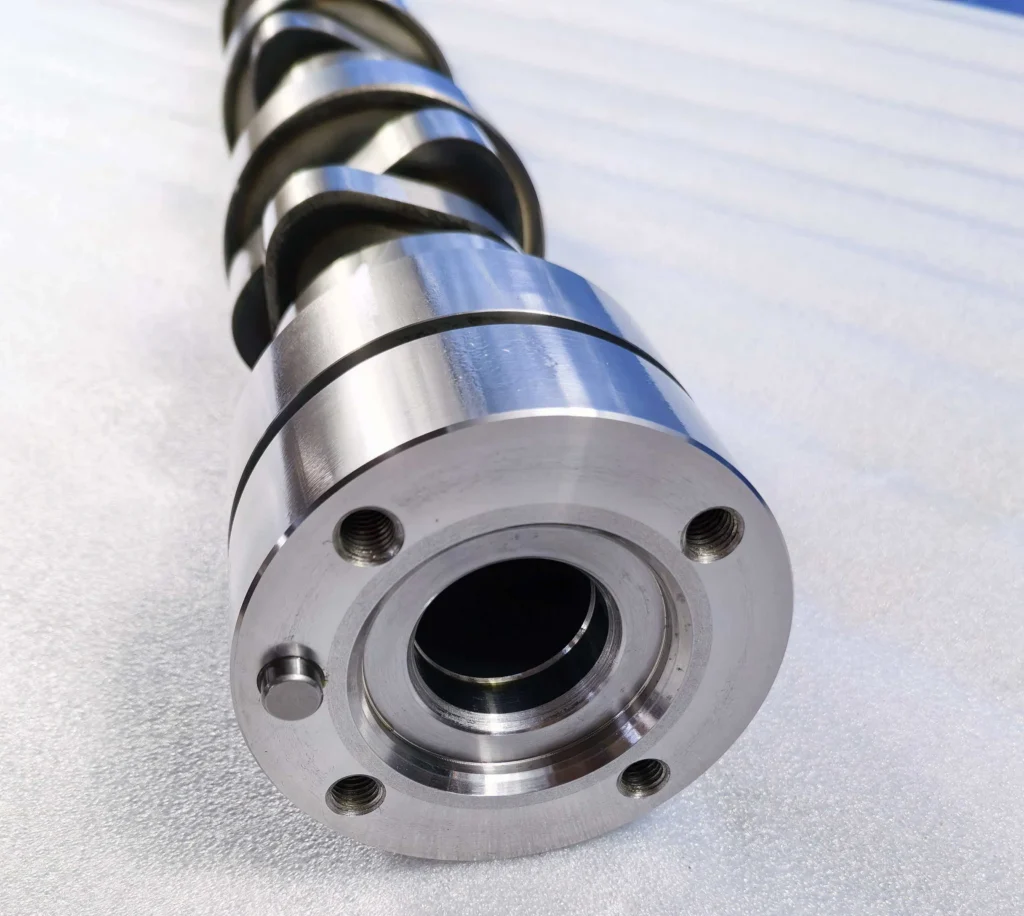
Heavy-duty diesel camshaft wear symptoms are often confused with electrical faults, timing-drive problems, and fuel system issues. This guide explains how to identify the mechanical evidence that confirms camshaft wear, and what information to prepare before ordering replacement parts.
Table of Contents
Who This Guide Is For
This guide is written for:
- Engine rebuilders and machine shops servicing heavy-duty diesel engines
- Fleet maintenance teams managing in-house engine repairs
- Repair workshops and independent service centers
- Parts distributors supporting aftermarket camshaft sales
- Industrial and marine engine buyers sourcing replacement components
This page is a technical identification resource, not a repair manual. For installation procedures, torque values, and clearance specifications, consult the engine manufacturer service information for the exact engine model and variant.
Symptoms vs. Mechanical Evidence: What to Distinguish
The following table compares observable operating symptoms with possible mechanical evidence of camshaft wear. Symptoms alone are not sufficient to confirm camshaft damage — they indicate that further investigation is warranted. Mechanical evidence, verified against the applicable OEM service limits, is what confirms the need for replacement.
| Observation | Possible Camshaft Connection | Other Causes to Investigate | What to Confirm |
| Rough idle or cylinder imbalance | Uneven valve lift from lobe wear | Injector fault, compression loss, wiring issue, sensor signal, valve adjustment | Compression test, cylinder contribution test, injector diagnostics |
| Reduced power under load | Reduced effective valve lift affects cylinder filling | Air/fuel system restriction, turbocharger fault, aftertreatment derate, sensor error | Boost pressure, fuel pressure, commanded vs. actual torque, fault code freeze-frame |
| Abnormal valvetrain noise (tapping, clicking) | Increased clearance between lobe and follower due to wear | Valve lash out of adjustment, worn rocker, failed follower, injector actuation noise | Valve cover inspection, follower/rocker condition, lash measurement |
| Hard starting or extended crank | Cam/crank correlation affected by position or timing variation | CKP/CMP sensor, tone wheel, battery/cranking speed, fuel pressure, ECU calibration | Sensor signal waveform, cam/crank correlation data, fuel system prime |
| Abnormal engine brake operation | Camshaft lobe profile mismatch for engine brake system | Engine brake solenoid, actuator, wiring, valve lash adjustment for brake | Engine brake system diagnostic, camshaft spec vs. engine brake type |
| Fault codes (P0016, P0017, cam/crank correlation) | Possible correlation error from mechanical timing variation | Stretched timing chain, worn gear, sensor failure, wiring, tone wheel damage, ECU calibration | Diagnostic system data for the specific engine model — these codes do not confirm lobe wear |
Note: Camshaft- or crankshaft-related fault codes may indicate a synchronization, sensor, wiring, tone-wheel, or mechanical-timing issue, but they do not confirm camshaft lobe wear. Always use the diagnostic system and service information specified for the exact engine model.
Direct Mechanical Wear Evidence
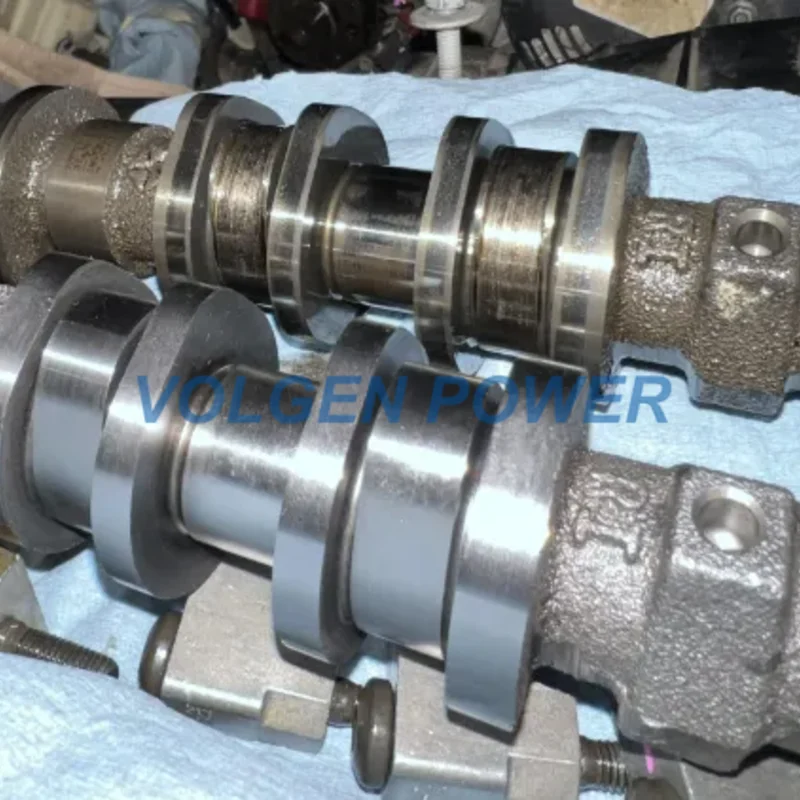
The following signs, when inspected directly on the camshaft and related valvetrain components, constitute mechanical evidence of camshaft wear. These findings should be measured against the applicable OEM service limits for the specific engine model.
- Lobe pitting or spalling — Surface fatigue on the lobe face, visible as small pits, cracks, or flaking. Commonly caused by lubrication failure, contaminated oil, or excessive contact pressure.
- Lobe profile loss — Measurable reduction in lobe lift height compared to the OEM specification. Affects effective valve lift and timing.
- Journal scoring or discoloration — Circular scratches, grooves, or heat discoloration on the camshaft bearing journals. Indicates inadequate lubrication, contaminated oil, or excessive clearance.
- Follower or roller damage — Pitting, spalling, flat-spotting, or seizure on the cam follower, roller, or rocker arm contact surface. Worn followers are often the first indicator of camshaft lobe degradation.
- Excessive bushing clearance — Camshaft journal-to-bushing clearance measured outside the OEM service limit. Allows the camshaft to deflect under load, concentrating contact pressure on one edge of the lobe.
- Excessive end play — Camshaft axial movement beyond the OEM specification. Indicates thrust surface or thrust plate wear.
- Metallic debris in oil — Ferrous particles found in the oil filter or oil pan during inspection. May indicate camshaft, follower, or bearing wear.
Common Root-Cause Categories
Camshaft wear in heavy-duty diesel engines typically falls into one of the following root-cause categories. These are presented as categories rather than ranked causes, because the predominant cause varies by engine design, operating conditions, and maintenance history.
- Lubrication failure or contamination — The most frequently documented root cause across all engine platforms. Includes low oil pressure, incorrect oil viscosity, fuel or coolant dilution, soot loading, and extended oil change intervals beyond the OEM recommendation.
- Related follower or rocker damage — Worn followers, rollers, or rocker arms that transfer abnormal contact patterns to the camshaft lobe. Followers and rockers should be inspected whenever camshaft wear is suspected.
- Incorrect part or application — Installation of a camshaft with the wrong lobe profile, engine brake configuration, or valvetrain type for the specific engine variant.
- Timing-drive or engine-brake mismatch — Timing-drive condition (gear train, chain, or sprocket depending on engine design) that affects cam/crank correlation. Engine brake configuration (compression release, exhaust brake, VEB/VEB+) that requires a specific camshaft lobe profile.
- Installation or previous repair issue — Incorrect torque, improper assembly lubrication, reuse of worn followers on a new camshaft, or failure to replace related wear components during a previous service.
Before Ordering a Replacement Camshaft
Follow these steps to confirm the correct replacement camshaft for your application before contacting a supplier:
- Confirm the engine identity — Record the engine model, variant, serial number, and vehicle VIN. The engine variant (e.g., D11K, D13F, ISX15, MX-13) determines the applicable camshaft specification.
- Record existing part markings — Note the OEM part number stamped on the existing camshaft, the casting or forging number, and any engine brake identification marks.
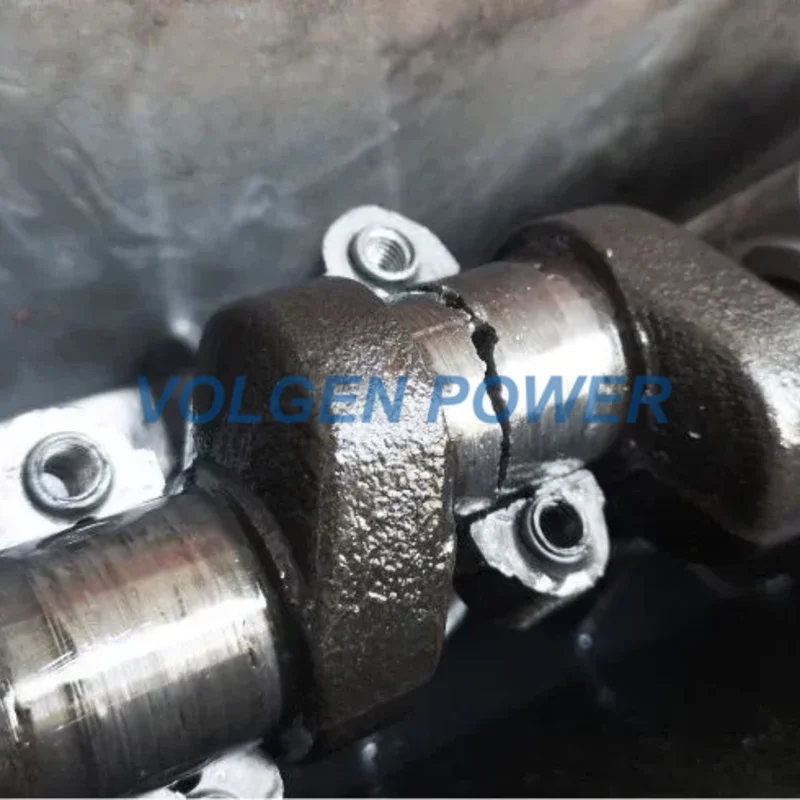
- Inspect the complete valvetrain — Examine the camshaft lobes, journals, followers, rocker arms, bushings, thrust plate, and timing-drive components. Compare measurements against the OEM service limits for the specific engine model.
- Verify the engine brake configuration — For engines with compression release or exhaust brake systems, confirm the brake type (e.g., VEB, VEB+, Jacobs, CRB) and whether the camshaft is specific to that brake system.
- Prepare a complete parts and RFQ list — Identify all components that require replacement based on inspection findings, not assumptions. Include the OEM part number, engine details, supporting photos, required quantity, and destination country.
What May Need to Be Ordered Together
The scope of replacement parts depends on the inspection findings. The following table provides guidance based on common inspection outcomes:
| Inspection Finding | Possible Procurement Scope |
| Isolated verified camshaft damage (lobe or journal) | Camshaft plus required installation items (gaskets, seals, fasteners) |
| Follower or rocker damage | Camshaft and matched valvetrain components (followers, rockers, rollers) |
| Bushing or journal wear | Camshaft, bushings or bearings, and thrust plate |
| Timing-drive damage | Camshaft plus verified timing gears, chain, sprockets, or related components (depending on engine design) |
| Complete engine overhaul | Model-specific valvetrain kit or overhaul package |
Note: These recommendations are based on typical inspection outcomes. The actual scope of replacement should be determined by the inspection findings and the applicable OEM service limits for the specific engine model. Inspect cam followers, tappets, rollers, and rocker contact surfaces whenever a camshaft is replaced. Replace components that are outside the applicable service limits or where the manufacturer requires matched replacement. Do not assume the same replacement rule applies to every valvetrain design.
OEM Matching Checklist
To ensure accurate camshaft matching, prepare the following information before contacting your supplier:
- OEM part number stamped on the existing camshaft
- Complete engine model and variant (e.g., D13F, ISX15, MX-13)
- Engine serial number
- Vehicle VIN
- Engine brake configuration (VEB, VEB+, Jacobs, CRB, or none)
- Photo of the engine nameplate
- Photo of the camshaft part number and casting marks
- Photo of camshaft lobes and bearing journals
- Required quantity
- Destination country
- Whether ancillaries are needed: camshaft bushings, thrust plate, cam followers, rocker arms, timing components, gaskets
Related Product Categories
Volgen Power supplies camshafts and related valvetrain components for Cummins, Volvo, Detroit, PACCAR, MAN, DAF, and Mercedes-Benz heavy-duty diesel engines. Explore our product categories for camshaft matching and procurement:
- Heavy-Duty Diesel Camshaft Buying Guide — OEM matching, quality verification, and sourcing best practices
- Volvo D11 vs D13 Camshaft Parts & OEM Matching Guide — Engine variant identification, VEB/VEB+ configuration, and OEM number cross-reference
- Camshaft Position Sensor Symptoms — Electrical vs. mechanical fault identification
- P0340 Code Diagnosis Guide — Sensor circuit and timing analysis
- Contact Volgen Power — Submit your engine model and OEM number for compatibility verification
Frequently Asked Questions
How do I confirm the correct camshaft for my engine?
Confirm the engine model and variant, record the OEM part number stamped on the existing camshaft, note the engine serial number and VIN, and verify the engine brake configuration. Submit these details together with photos of the camshaft markings and engine nameplate to your supplier for compatibility verification.
Can I order a camshaft by engine model alone?
Not reliably. The same engine model may use different camshafts depending on the production year, emission generation, engine brake configuration, and valvetrain design. Always provide the OEM part number from the existing camshaft and the engine serial number.
Which related parts should be inspected when camshaft wear is suspected?
Inspect cam followers, rocker arms, camshaft bushings, thrust plate, timing-drive components (gears, chain, or sprockets depending on engine design), and oil condition. Replace components that are outside the applicable service limits or where the manufacturer specifies matched replacement.
Can you match a camshaft without an OEM part number?
Matching accuracy is significantly reduced without the OEM part number. If the number is illegible or missing, provide the engine serial number, VIN, engine nameplate photo, and clear photos of the camshaft including any casting or forging marks. The supplier may be able to cross-reference the engine details against available records, but the risk of incorrect fitment is higher.
What information is needed for stock, MOQ, and quotation?
Provide the OEM part number, engine model and variant, required quantity, destination country, and preferred shipping method. For fleet-level orders, indicate whether ancillary components (bushings, thrust plate, followers, rocker arms, timing components, gaskets) are needed to receive a complete package quotation.
Submit Your Camshaft for Compatibility Check
If you have identified camshaft wear on your heavy-duty diesel engine, submit your engine model, serial number, OEM part number, and supporting photos. Our team will verify compatibility and provide a quotation with available stock and lead time.
Check Camshaft Compatibility → Send Engine Model and Inspection Findings →