Quick Answer: The purchase price of a cylinder head is the smallest number in the decision. For a rebuild shop, total cost of ownership is head cost + parts + machining hours + consumables + rework probability × rework cost + downtime × bay-day cost. A bare head wins only when you already own the machining capacity, your labour rate is low and the bay is not the constraint. A loaded assembly wins when downtime costs more than the machining difference, or when the shop cannot guarantee seat concentricity and leak-free assembly on the first attempt.
Table of Contents
- Why the Head Price Decides Almost Nothing
- The Cost Buckets
- The Machine-Shop Hour Is the Hidden Line Item
- Parts Attrition: Loose Parts Cost More Than the Kit
- Rework Probability Is a Real Cost Line
- Downtime: The Number That Usually Decides
- Worked Example 1: Volvo D13 Head 21342245 / 85003217 / 21337975
- Worked Example 2: Cummins ISX15 4962732
- Building Your Own Model
- Sourcing and Quality Inspection from Volgen Power
- Core Charges and Returns
- Frequently Asked Questions
- Need a Head Quote With the Build Level Spelled Out?
Why the Head Price Decides Almost Nothing
A bare head looks cheaper on the invoice because the machining and the small parts are not in it. Those costs do not disappear; they move into your shop. The correct comparison is not "bare price versus complete price" but "all-in cost to put a sealed, tested head on the engine, including the days the bay is occupied".
This is a costing article, not a definitions article. If you need the basic difference between a bare casting and a loaded assembly, read our bare vs complete cylinder head guide first. What follows assumes you already know the difference and need the numbers that decide the purchase.
The Cost Buckets
| Cost bucket | Bare head | Complete assembly |
|---|---|---|
| Head purchase | Lower | Higher |
| Valves, springs, retainers, keepers, seals | Bought separately; some parts are not reusable | Included |
| Guide and seat work | Press-fit guides, seat cutting, concentricity check | Done and checked |
| Deck resurfacing | Often required; thickness must stay in spec | Finished to spec |
| Pressure and vacuum test | Your shop or a subcontractor | Done before packing |
| Assembly labour | Valve train assembly, lash set | Bolt-on |
| Rework risk | Higher; a failed vacuum test reopens the job | Lower; supplier warranty route |
| Bay downtime | Days of machining and waiting for parts | Hours to a day |
The Machine-Shop Hour Is the Hidden Line Item
Guide replacement, seat cutting and valve grinding are skilled operations. A shop that owns the equipment still pays for the hour; a shop that subcontracts pays a machine shop rate plus freight and queue time. The hours below are typical planning figures for a heavy-duty six-cylinder head, not a quotation — replace them with your own measured times.
| Operation | Planning hours | What it protects |
|---|---|---|
| Strip, clean, crack test | 1.5 | Avoids machining a cracked casting |
| Deck check and resurface | 1.5 | Gasket seal and flatness |
| Guide removal and press-fit | 2.0 | Valve stem control and seat life |
| Seat cutting and concentricity | 2.5 | Compression seal and valve life |
| Valve grind and assembly | 2.0 | Sealing and lash |
| Pressure and vacuum test | 1.0 | Leak-free delivery |
At a USD 70 shop rate, ten and a half hours is USD 735 before a single part is bought. At USD 45 in-house, the same work is USD 472 — but only if the bay and the machinist are genuinely free. If the machinist is also the person who would otherwise be rebuilding the engine, the "cheap" hour is being taken from billable work.
Parts Attrition: Loose Parts Cost More Than the Kit
Buying valves, springs, retainers and keepers individually looks controllable until one part is missing or on backorder. The engine sits on the stand, the bay is blocked, and the labour saving disappears. A complete assembly removes that failure mode: the parts are already matched and installed.
There is also a quality risk. Mixed-brand valve train components can differ in spring rate and retainer fit. A head assembled from unmatched parts may pass a vacuum test and still produce noise or uneven wear. A loaded assembly from one supplier keeps the valve train as a matched set.
Rework Probability Is a Real Cost Line
Every machined head carries a probability of failing the first leak or vacuum test. The cost of that event is not only the rework itself: it is the second disassembly, the second set of gaskets and seals, and another day of bay time. A shop that tracks its own first-pass yield can put a number on this; a shop that does not is estimating with optimism.
Use this formula: rework cost = failure probability × (labour to redo + parts consumed + bay-day cost). A 15 percent failure rate on a USD 450 rework event adds USD 67.50 to every bare head, even the ones that pass. A loaded assembly with a 3 percent rate adds USD 13.50. The difference is small per unit and large across a year.
Downtime: The Number That Usually Decides
Bay downtime is the cost of the truck or engine occupying a slot without producing revenue. For a fleet shop it is the cost of a truck out of service; for a rebuild shop it is the margin lost on the next job. A bare head that needs machining, parts and a re-test can hold a bay for three to five working days. A loaded assembly is typically a one-day fit, plus the surrounding engine work.
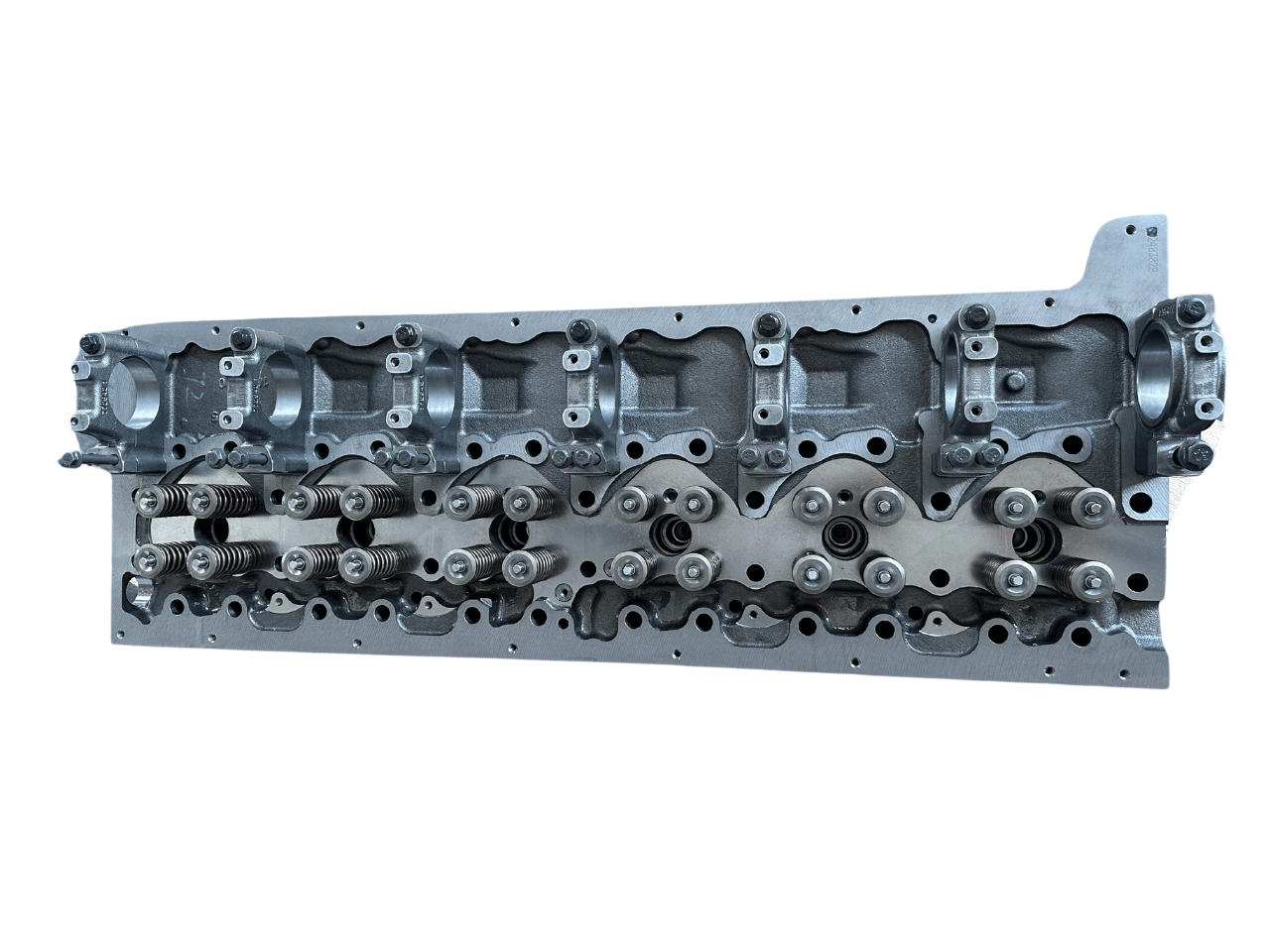
Worked Example 1: Volvo D13 Head 21342245 / 85003217 / 21337975
Take a D13 head from our range, the 21342245 / 85003217 cylinder head for Volvo D13. Assume a bare casting at USD 1,450, a valve-train parts kit at USD 520, 10.5 machine hours at USD 70, consumables at USD 60, a 15 percent rework probability at USD 450, and five bay days at USD 400 per day.
- Bare all-in: 1,450 + 520 + 735 + 60 + 67.5 + 2,000 = USD 4,832.50
- Complete assembly at USD 2,950, 3 percent rework, 1.5 bay days at USD 400: 2,950 + 13.5 + 600 = USD 3,563.50
- Difference in favour of the complete assembly: about USD 1,269 per unit
Change one assumption and the answer can flip. A shop with its own machining capacity, a USD 45 rate and a bay-day cost of USD 250, and a three-day bare turnaround, lands near USD 3,097 for bare versus USD 3,325 for complete. At that point bare is marginally cheaper — but only because the shop is not charging its own capacity at market rate.
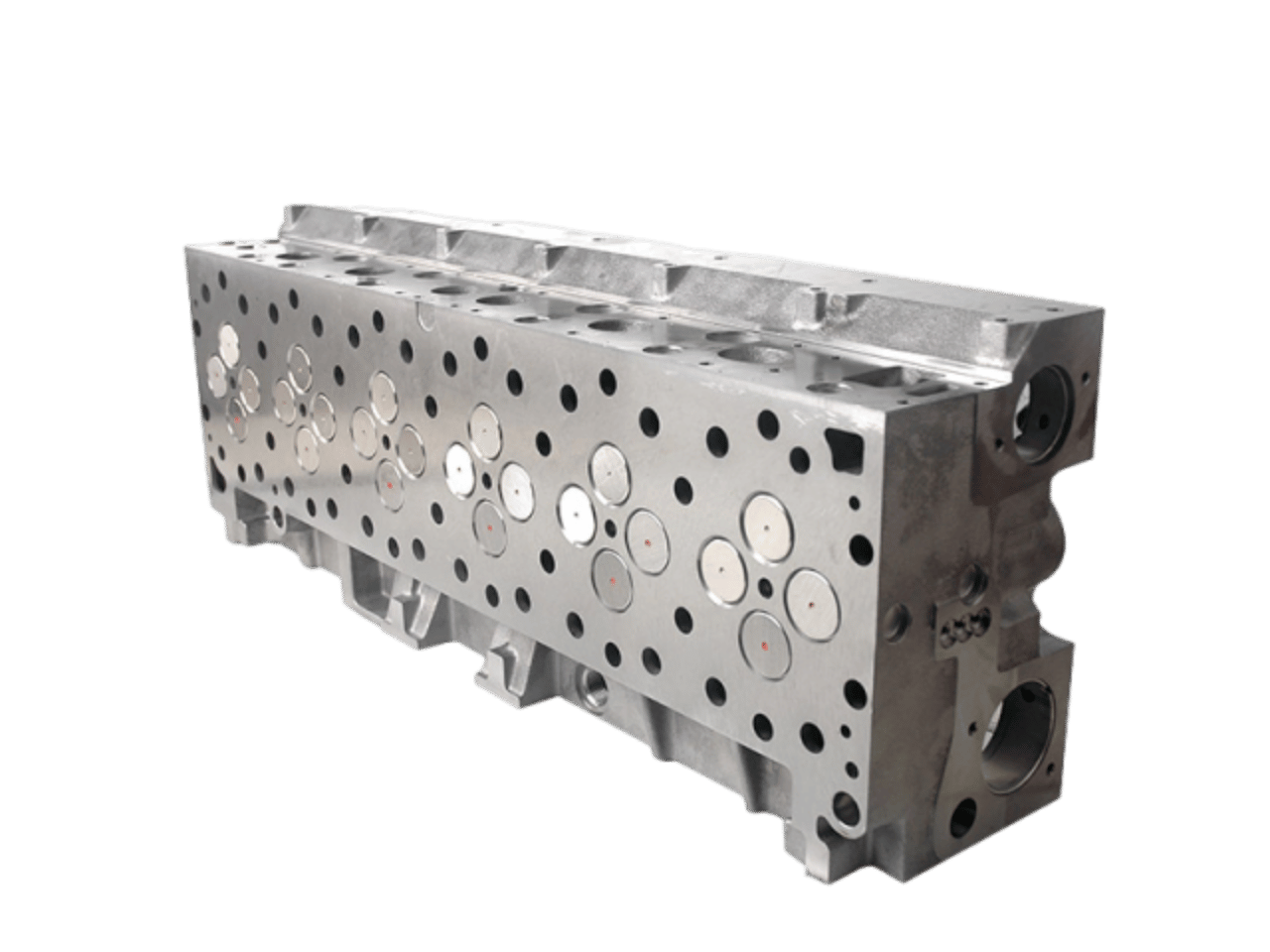
Worked Example 2: Cummins ISX15 4962732
The ISX15 head adds a second variable: injector cups and a valve bridge that must be right the first time. For the number differences between ISX head variants, see our Cummins ISX series cylinder head guide. Use the same model with the Cummins ISX15 / QSX15 cylinder head assembly. If a bare casting needs cups, seats, guides and a resurface, the machining hours rise and the rework probability rises with them. For a fleet that bills downtime at USD 600 per day, the complete assembly almost always wins.
| Shop profile | Likely winner | Why |
|---|---|---|
| Owns seat machine and press; machinist has spare hours | Bare | Machining cost is real but capacity is genuinely idle |
| Subcontracts all machining | Complete | Machine shop rate + freight + queue time |
| Bay is the bottleneck | Complete | Downtime dominates every other line |
| High-volume, repeat same head | Bare with a standard parts kit | Learning curve lowers hours and rework |
| One-off or warranty job with a deadline | Complete | Predictable delivery, single warranty route |
Building Your Own Model
Put six columns in a spreadsheet: head cost, parts, machining hours × rate, consumables, rework probability × rework cost, and bay days × day cost. Fill them from your last ten jobs, not from a supplier's brochure. Then run both options for the same head. The model is only as good as the downtime number, so measure what a bay day actually costs you before arguing about the purchase price.
Add two smaller lines if you want the model to survive an audit: warranty exposure and inventory carrying cost. A bare head ties up capital in a casting plus a parts kit that may sit on the shelf; a loaded assembly ties up more capital per unit but is ready to fit. Warranty exposure is the cost of a claim you cannot pass back to a supplier — higher when you assembled the head yourself, lower when a single supplier covers the complete unit.
Sourcing and Quality Inspection from Volgen Power
Volgen Power supplies both bare and loaded heads for Volvo, Cummins and Mercedes applications through the Shiyan commercial vehicle cluster. For a TCO decision, the useful question is what is included and what is verified: casting identity, seat and guide work, pressure test, valve train parts and packing.
- Casting and number check. The head is matched to the OE reference before machining or packing.
- Seat and guide work. Concentricity and guide clearance measured, not assumed.
- Pressure test. Water jacket tested before dispatch; a failed head is scrapped, not reworked and sold.
- Valve train. Loaded assemblies use a matched set of valves, springs and retainers.
- VCI packing. Deck and seats protected for sea freight.
Core Charges and Returns
A core charge is part of the TCO, not a deposit you forget. If the old head is cracked, has a damaged deck or is missing valve-train parts, the core credit shrinks or disappears. Price the core at its realistic value before comparing offers: a complete assembly with a generous core credit can be cheaper than a bare casting with no core value at all.
Return freight is the other half. A head that fails inspection on arrival costs the return leg, the re-inspection and the delay. Photograph the head before packing and inspect the crate on delivery; a documented arrival condition is what makes a claim possible.
Frequently Asked Questions
Is a bare head always cheaper than a complete assembly?
Only on the invoice. Once machining hours, parts, rework probability and bay downtime are included, a bare head is often more expensive for a shop that subcontracts its machine work or bills downtime at a high rate.
What downtime cost should I use in the model?
Use your own measured bay-day cost, not a market average. For a fleet it is the cost of a truck out of service; for a rebuild shop it is the margin lost on the next job.
How do I estimate rework probability?
Track your last 20 heads and count how many failed the first pressure or vacuum test. That ratio, multiplied by the cost of redoing the job, is the rework line in the model.
When does a complete assembly clearly win?
When the bay is the bottleneck, when machining is subcontracted, or when the job has a fixed deadline. In those cases the price difference is smaller than the cost of an extra three to four days.
Does this model apply to ISX15 and D13 heads equally?
The structure is the same, but the hours and rework risk differ. ISX15 heads add injector cup and valve bridge work; D13 heads have their own seat and guide requirements. Use measured times per head family.
Need a Head Quote With the Build Level Spelled Out?
Send the engine model, the OE number and whether you want bare or loaded. We will quote both levels and state exactly what is included — seats, guides, valves, springs, cups, pressure test — so the TCO comparison is made on the same scope.
WhatsApp our parts desk: +86 188 7263 0128 — include engine model and OE number.