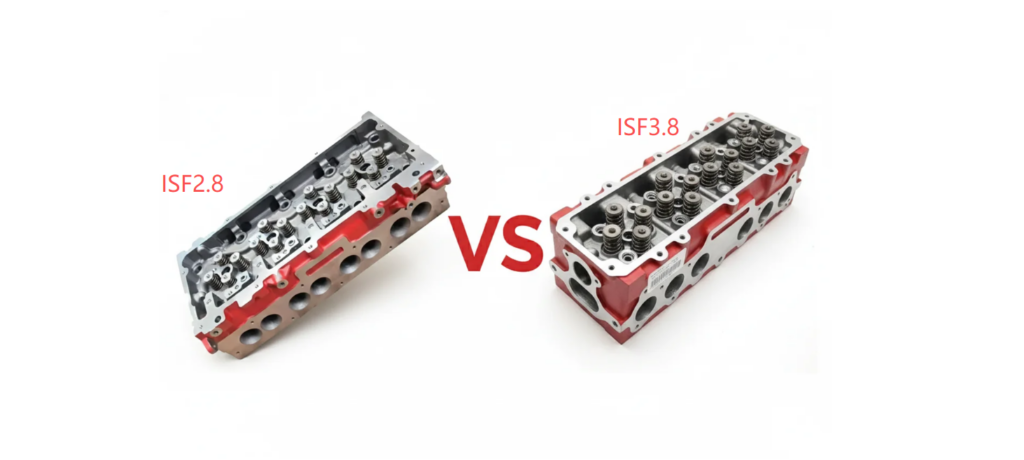
In the competitive world of light and medium-duty commercial logistics, the Cummins ISF engine platform is a legend. Powering everything from Foton Tunland pickups and GAZelle Next vans to urban delivery trucks and industrial machinery, the ISF series (2.8L and 3.8L) represents the heartbeat of global last-mile delivery.
For workshop owners, fleet managers, and parts distributors, sourcing the right replacement cylinder head is not just about fixing an engine—it’s about preventing future downtime. This comprehensive guide will take you deep into the engineering of Cummins ISF 2.8 and ISF 3.8 cylinder heads, outlining the critical differences, failure analysis, and how to choose aftermarket components that rival OEM performance.
Table of Contents
Anatomy of the Cummins ISF Engine Family
Before diving into the cylinder head specifics, it is crucial to understand the architecture these components serve. The ISF family was developed by Cummins to offer high performance with low weight and operating costs.
The Role of the Cylinder Head in ISF Engines
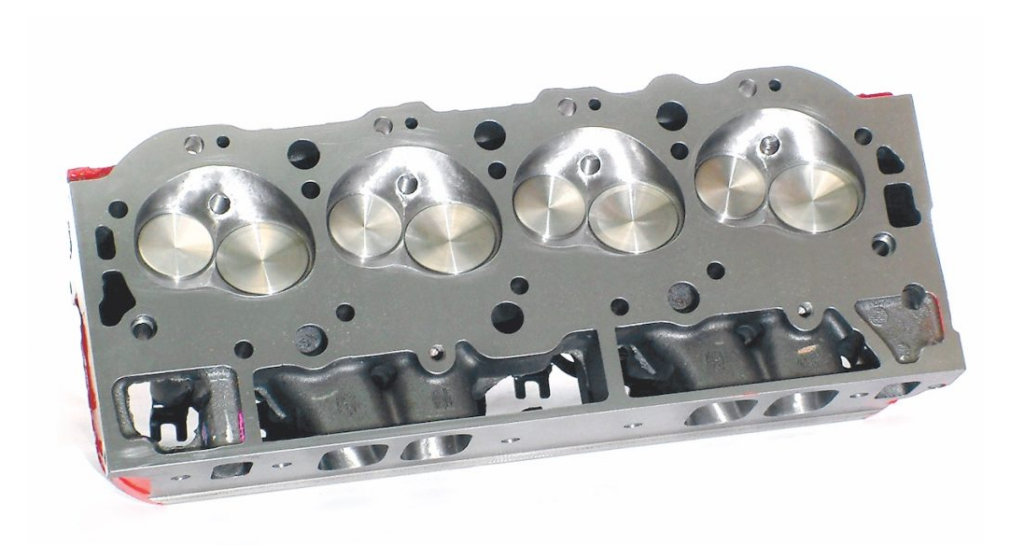
The cylinder head in an ISF engine is a complex piece of engineering. It is not merely a lid for the cylinders; it houses:
- The Valvetrain: Intake and exhaust valves, springs, and retainers.
- Injector Bores: Precision-machined slots for Common Rail injectors.
- Cooling Galleries: Intricate pathways designed to dissipate extreme heat from the combustion chamber.
Unlike older diesel engines, the ISF series often features Overhead Camshaft (OHC) designs and 4 valves per cylinder (16 valves total), maximizing airflow efficiency.
Technical Insight: To understand the fundamental mechanics of how these components interact with the block, refer to our foundational guide:
[What Is a Cylinder Head]. It covers the basics of metallurgy and design that apply to all diesel platforms.
ISF 2.8 vs. ISF 3.8 Cylinder Heads – The Critical Differences
One of the most common questions we receive at Volgen Power is: "Are ISF 2.8 and 3.8 cylinder heads interchangeable?"
The short answer is no.
The long answer lies in the engineering specifics that define their distinct operational roles.
1. Displacement and Thermal Load Management
- ISF 2.8 (Light Duty): Designed for high-speed, lighter load applications (pickup trucks, vans). The cylinder head is compact, focusing on rapid heat dissipation for stop-and-go traffic.
- ISF 3.8 (Medium Duty): Built for sustained heavy loads (3-4 ton trucks, buses). The 3.8L engine generates significantly more torque and heat. Consequently, the ISF 3.8 cylinder head (5271866) features reinforced casting walls and larger water jackets to handle a higher thermal rejection rate.

2. Physical Dimensions and Casting
While they share a family resemblance, the physical dimensions differ:
- Bore Spacing: The distance between cylinder centers is wider on the 3.8.
- Deck Surface Area: The 3.8 head has a larger surface area to mate with the larger engine block.
- Valve Sizes: The intake and exhaust valves in the 3.8 head are larger to facilitate the increased air volume required for 3.8 liters of displacement.
3. Injector and Sensor Configuration
This is a common trap for inexperienced buyers. Even within the same displacement (e.g., two different ISF 3.8 engines), cylinder heads can vary based on Emission Standards (Euro 3 vs. Euro 4/5).
- Euro 3: Mechanical simplicity, often different injector bore angles.
- Euro 4/5: These heads often accommodate advanced EGR (Exhaust Gas Recirculation) systems and different common rail injector lengths.
Pro Tip: Installing a Euro 3 head on a Euro 5 engine will result in injector sealing issues and catastrophic combustion inefficiency.
Deep Dive – Technical Specifications & Metallurgy
What makes a "good" cylinder head? It comes down to the quality of the iron and the precision of the machining.
Material Science: Gray Iron vs. Alloyed Iron
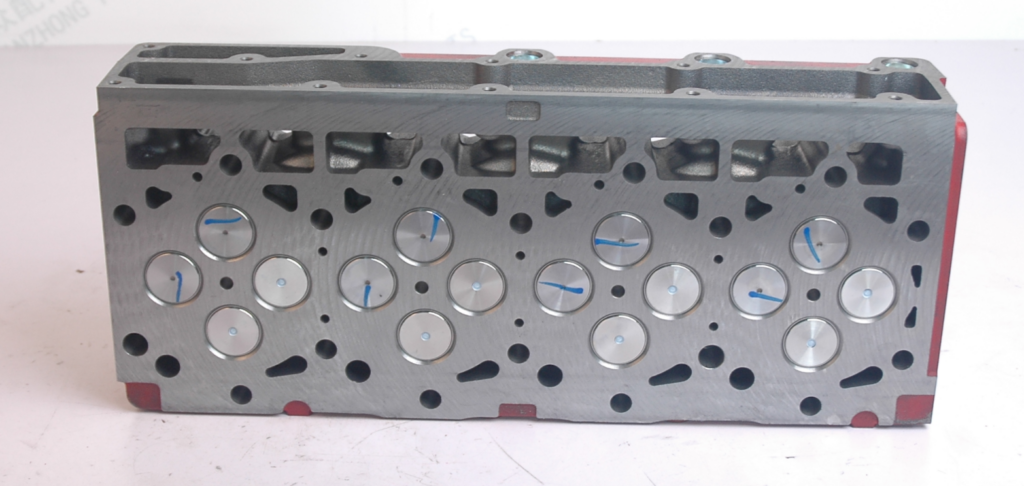
Standard aftermarket heads often use basic Gray Cast Iron. However, high-performance suppliers like Volgen Power utilize Molybdenum-Nickel Alloyed Cast Iron for their ISF cylinder heads.
- Why it matters: The addition of Molybdenum increases tensile strength at high temperatures. This is critical for preventing cracks between the valve seats—a common failure point in standard iron heads.
Precision Machining Tolerances
For a Cummins ISF engine to run smoothly, tolerances must be measured in microns.
- Deck Flatness: Must be within 0.05mm to ensure the Multi-Layer Steel (MLS) gasket seals correctly.
- Valve Guide Concentricity: If the valve guide is not perfectly centered with the valve seat, the valve will not seal, leading to compression loss and burnt valves.
Diagnosing ISF Cylinder Head Failures
Why do these heads fail? Understanding the root cause is essential to ensure your replacement part doesn't suffer the same fate.
1. Overheating and Warpage
The most common killer of ISF 2.8 heads is cooling system failure. If the water pump fails or the radiator clogs, the head temperature spikes. Aluminum and iron expand at different rates. If the head warps beyond the flatness tolerance, the head gasket will blow.
- Symptom: White smoke, sweet smell from exhaust, bubbling in the coolant reservoir.
2. Cracking Between Valves (Thermal Shock)
In heavy-duty cycles (like a delivery truck climbing hills fully loaded), the exhaust gas temperatures (EGTs) soar. Rapid cooling (shutting the engine off immediately after a hard run) causes thermal shock.
- Result: Micro-cracks form in the narrow "bridge" of metal between the intake and exhaust valves.
- The Volgen Power Solution: This is why we emphasize casting density. A denser casting with proper alloy mix resists this thermal fatigue significantly longer than cheaper, porous recycled iron castings.
3. Cavitation Erosion
Although more common in wet-sleeve engines, ISF heads can suffer from electrolysis or cavitation if the coolant is not maintained. This eats away at the aluminum or iron around the water ports, eventually breaching the seal.
The Buying Guide – OEM vs. Aftermarket
For distributors and fleet owners, the decision often comes down to: Cost vs. Reliability.
The OEM Route (Cummins)
Buying directly from Cummins guarantees a perfect part. However, the price point is high, and lead times can be long depending on your region.
The "White Box" Aftermarket
The market is flooded with unbranded, low-cost cylinder heads.
- The Risk: These often lack pressure testing. We have seen cases where a "cheap" head has porous castings that leak oil into the coolant immediately upon startup.
- The Hidden Cost: The cost of the head is low, but the cost of redoing the labor when it fails is astronomical.
The Professional Aftermarket: The Volgen Power Standard
There is a middle ground that savvy fleet managers prefer: Engineered Aftermarket.
At Volgen Power, we position our products to bridge the gap between OEM quality and aftermarket pricing. We don't just "copy" the shape; we analyze the failure points of the original design and aim to improve them.
What to look for in a supplier:
- Pressure Testing: Every single ISF cylinder head must be pressure tested to check for leaks in the water jacket. (Volgen Power performs this on 100% of inventory).
- Valve Seat Material: Ensure the seats are made of high-grade Stellite or equivalent hardened material to handle low-sulfur diesel fuels.
- Warranty: Does the supplier stand behind their casting?
Comparison: If you are managing a mixed fleet, you might also be interested in our analysis of larger engine families. Check our
[Cummins ISX / QSB Cluster]page to see how we apply these same quality standards to heavy-duty platforms.
Installation Best Practices for ISF Cylinder Heads
You have sourced a high-quality cylinder head from Volgen Power. Now, how do you ensure the installation is flawless?
Step 1: Surface Preparation
The engine block deck must be surgically clean. Use a scraper and brake cleaner. Do not use abrasive pads on an air die grinder, as this can create uneven spots on the block surface.
Step 2: Gasket Selection
ISF engines typically use Multi-Layer Steel (MLS) gaskets.
- Thickness Matters: You must measure the piston projection (how far the piston sticks out of the block at Top Dead Center). Select the gasket thickness (noted by notches or holes on the gasket tab) that corresponds to this measurement. Using a gasket that is too thin will cause the piston to hit the valves.
Step 3: The Torque Sequence
The clamping force is critical. Cummins ISF bolts are usually Torque-to-Yield (TTY).
- Never reuse old head bolts. They have already been stretched and will break or fail to hold torque.
- Lubricate: Apply clean oil to the threads and the underside of the bolt head.
- Sequence: Tighten from the center out (follow the specific diagram for ISF 2.8 or 3.8).
- Staged Torque:
- Stage 1: Torque to a low value (e.g., 30 Nm - check manual).
- Stage 2: Torque to a higher value.
- Stage 3: Turn 90 degrees.
- Stage 4: Turn another 90 degrees.
Note: Always consult the official service manual for the exact Newton-meter values for your specific engine serial number.
Maintenance Tips to Extend Cylinder Head Life
Once your new head is installed, pass these tips on to the vehicle operator:
- Idling Protocols: Allow the engine to idle for 2-3 minutes before shutting down after a highway run. This circulates oil and coolant, cooling the head gradually and preventing thermal shock cracks.
- Coolant Quality: Use the correct OAT (Organic Acid Technology) coolant recommended by Cummins. Change it annually to prevent internal corrosion.
- Fuel Filtration: Poor-quality fuel causes high combustion temperatures and injector issues, which can create "hot spots" on the cylinder head face.
Sourcing from Volgen Power – A Strategic Advantage
For parts distributors and engine workshops, the supply chain is as important as the part itself.
Volgen Power has established itself as a premier partner for Cummins ISF aftermarket support. We understand that when an engine is down, revenue stops.
Why partner with Volgen Power?
- Inventory Depth: We stock both Bare Cylinder Heads (casting only) and Complete Cylinder Heads (assembled with valves, springs, seals).
- Quality Control: Our rigorous QC process includes vacuum testing valves and pressure testing castings, ensuring a defect rate near zero.
- Technical Support: We don't just sell parts; we know engines. We can help you identify the correct casting number for your specific Euro 3, 4, or 5 application.
Ready to Upgrade Your Supply Chain?
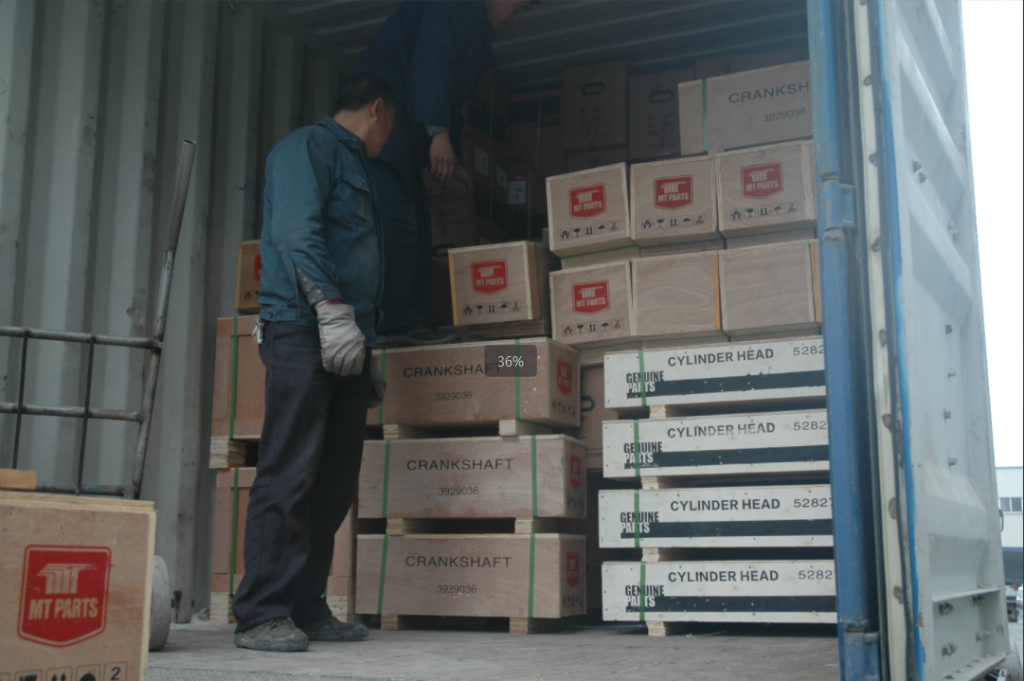
Don't gamble with unverified castings. Ensure your fleet or your customers receive components that are built to last.
- View our Catalog: Explore our
[Complete Cylinder Head Assembly]options for ready-to-install solutions. - Contact Us: Reach out to the Volgen Power team for bulk pricing, specifications, and shipping logistics.
FAQs.
Are ISF 2.8 and ISF 3.8 cylinder heads interchangeable?
No. Despite similar architecture, differences in casting, cooling design, and injector configuration prevent direct interchangeability.
Can ISF cylinder heads be repaired after cracking?
Minor cracks may be repairable, but cracks near the injector or valve areas typically require replacement.
How long does an ISF cylinder head last?
With proper maintenance, ISF cylinder heads can last the full engine lifecycle under normal operating conditions.
Is it better to replace the head during an engine overhaul?
In many cases, yes. Replacement reduces long-term risk compared to reusing a fatigued head.
Is it better to replace the head during an engine overhaul?
In many cases, yes. Replacement reduces long-term risk compared to reusing a fatigued head.
Related Products
-

190351X Cummins OEM Exhaust Outlet Connection
Request a Quote -

208149 Cummins NT855 OEM Oil Cooler Core
Request a Quote -

2864514 Cummins QSM11 OEM ECM Wiring Harness
Request a Quote -

2867147 / 0986435900 Cummins QSK19/QSK38/QSK50 OEM Fuel Injector (Bosch)
Request a Quote
Conclusion
The Cummins ISF 2.8 (5271176)and ISF 3.8 are workhorses of the modern economy. Their cylinder heads are feats of engineering that require respect, precise maintenance, and high-quality replacements.
Whether you are rebuilding a delivery van or stocking a warehouse, understanding the technical nuances between the 2.8 and 3.8 platforms—and choosing a supplier that prioritizes metallurgy and precision, like Volgen Power—is the key to long-term profitability.
Stop settling for subpar parts. Equip your engines with the durability they deserve.