Quick Answer: Camshaft phaser replacement in heavy-duty diesel engines is rarely a simple swap. Symptoms such as rattle, rough idle, reduced power, and cam/crank correlation fault codes (P0016, P0017) can originate from the phaser itself, the oil control solenoid (OCV), variable valve timing (VVT) actuator, camshaft timing gear, timing chain tensioner, or incorrect oil pressure. For procurement teams and repair shops sourcing replacement parts, the correct approach is to verify the engine platform (Cummins ISX, Volvo D13, Detroit DD15, etc.), confirm OEM part numbers, inspect oil control circuits, and order from suppliers who provide traceable camshaft phaser assembly kits rather than individual unknown-origin components.

Why Camshaft Phaser Replacement Matters for Heavy-Duty Diesel Engines
According to Heavy Duty Trucking's fault code analysis, P0016 and P0017, which relate to cam/crank correlation, are among the most frequently logged diagnostic events on modern heavy-duty diesel engines. While these codes can originate from a failing camshaft phaser, they can also result from stretched timing chains (a known wear item on medium and heavy-duty engines), worn camshaft timing gears, or oil supply restrictions affecting the phaser control circuit.
For fleet procurement managers, repair shop owners, and engine rebuilders, replacing a camshaft phaser without confirming the root cause can lead to repeat downtime, higher warranty costs, and incorrect parts sourcing. This guide explains how camshaft phasers function in heavy-duty diesel engines, which symptoms indicate phaser failure, and how to match the correct replacement camshaft parts for your application.
What Is a Camshaft Phaser in Heavy-Duty Diesel Engines?
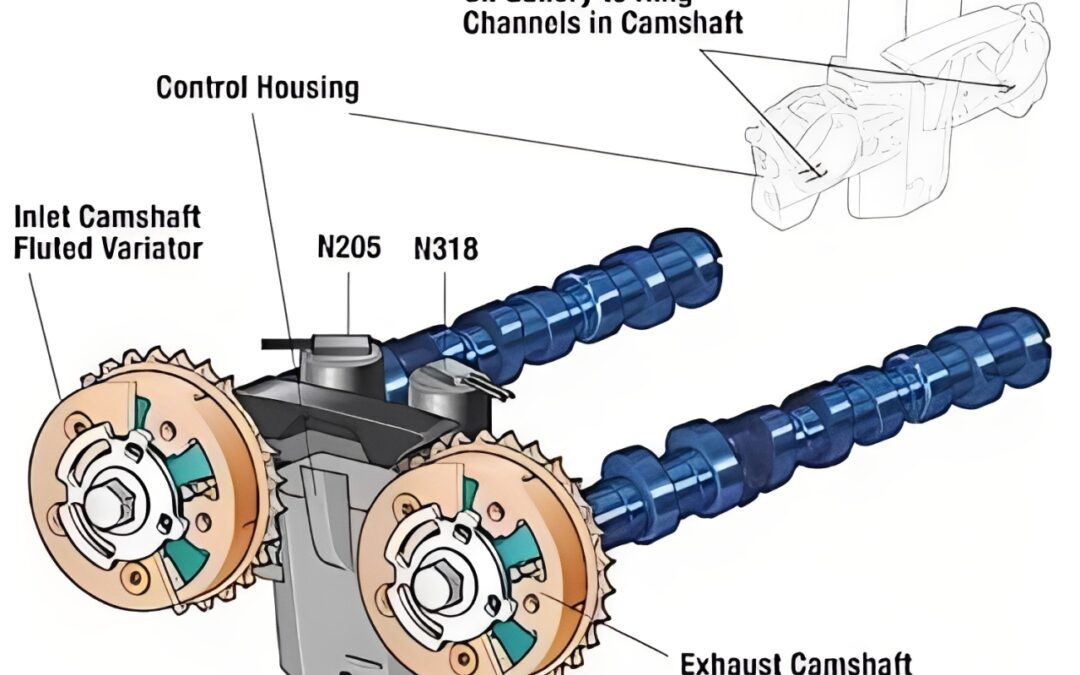
A camshaft phaser is a hydraulically actuated component mounted on the camshaft timing gear. It adjusts the rotational relationship between the camshaft and crankshaft to vary valve timing. In heavy-duty diesel engines, the camshaft phaser works as part of a variable valve timing (VVT) system that optimizes combustion timing across different RPM and load ranges.
The phaser assembly typically includes: the phaser body (which rotates relative to the gear hub), an oil control valve (OCV) that regulates oil flow into the phaser chambers, and sealing components that maintain hydraulic pressure.
Unlike passenger car VVT systems, heavy-duty diesel phasers must withstand higher oil temperatures, sustained vibration, and longer service intervals. A phaser failure on a Cummins ISX, Detroit DD15, or Volvo D13 engine is often not an isolated component failure — it can be related to oil contamination, worn timing chain, incorrect oil viscosity, or a failing OCV solenoid.
| Engine Platform | Common Phaser Application | Typical Failure Mileage |
| Cummins ISX / X15 | VVT phaser on camshaft gear | 500,000 – 800,000 miles |
| Volvo D13 (2012+) | VVT phaser assembly with solenoid | 400,000 – 700,000 miles |
| Detroit DD15 | Cam phaser on intake cam gear | 450,000 – 750,000 miles |
| PACCAR MX-13 | VVT actuator on camshaft | 400,000 – 650,000 miles |
| MAN D26 / D2676 | Cam phaser with hydraulic control | 500,000+ miles |
Common Camshaft Phaser Failure Symptoms in Heavy-Duty Engines
Identifying a failing camshaft phaser in a heavy-duty engine requires more than listening for a rattle. The following symptoms are commonly observed across multiple engine platforms:
- Engine rattle or knocking from the front gear train — A worn phaser may produce a metallic rattle, especially at idle or low RPM. However, this sound can also come from a worn timing chain, camshaft gear backlash, or a stretched chain tensioner.
- Check engine light with timing correlation codes — P0016 (cam/crank correlation bank 1) and P0017 are the most common codes. These can indicate phaser failure, but should be cross-referenced with oil pressure, camshaft position sensor data, and timing chain condition.
- Reduced power and poor acceleration — When the phaser cannot hold commanded timing, the ECU may limit fueling. This is often accompanied by an engine derate or reduced power mode.
- Rough idle or unstable RPM — A stuck phaser (in either advanced or retarded position) will affect idle quality. Verify by comparing commanded timing vs actual cam position with a diagnostic tool.
- Hard starting or extended crank time — The ECU requires a valid cam/crank correlation signal to begin injection. If the phaser position is outside the expected range, the engine may crank longer before starting.
- Increased fuel consumption — Off-spec valve timing reduces combustion efficiency. If the engine cannot achieve the optimal phaser angle, fuel economy may drop by 5–10%.
- Oil consumption or contamination — Worn phaser seals can allow oil to bypass, affecting oil pressure to other components. Check oil condition and level before concluding phaser failure.
Diagnosis Before Ordering Camshaft Phaser Replacement Parts
Before sourcing a replacement camshaft phaser, perform a step-by-step diagnosis to confirm the phaser is the root cause. This reduces the risk of ordering incorrect parts and repeat repair labor.
-
Read and record fault codes — Note all active and stored codes. If P0016 or P0017 are present, check the freeze-frame data for engine speed, load, and coolant temperature at the time of the fault.
Inspect oil level, pressure, and condition — The phaser depends on consistent oil pressure. Low oil level, dirty oil, or incorrect viscosity (e.g., 15W-40 vs 5W-40 in cold climates) can prevent the phaser from functioning correctly.
Monitor commanded vs actual cam position — Using a diagnostic tool (Cummins INSITE, Detroit Diagnostic Link, Volvo Tech Tool), compare the camshaft position target angle with the actual angle. A difference of more than 5–10 degrees at steady RPM may indicate phaser sticking.
Check the oil control solenoid (OCV) — A faulty OCV can mimic phaser failure. Test the solenoid resistance and actuation. According to Cummins camshaft service literature, OCV faults are a known cause of VVT diagnostic codes on ISX and X15 platforms.
Inspect timing chain and camshaft timing gear — Chain stretch (measured by timing chain tensioner extension) or worn gear teeth can cause correlation faults independent of the phaser. If the camshaft timing gear shows visible wear or backlash, the gear and related components should be replaced as part of the phaser service.
Verify the phaser solenoid connector and wiring — Oil intrusion in the connector harness is a common failure point on heavy-duty engines. Repair or replace the harness if oil is present in the connector cavity.
Camshaft Phaser Replacement Sourcing Checklist
Once the phaser is confirmed as the correct part to replace, use this checklist when contacting suppliers or preparing an RFQ:
-
Engine platform and model year — Different generations of the same engine (e.g., Cummins ISX15 vs X15) use different phaser assemblies.
OEM camshaft phaser part number — Cross-reference the number stamped on the phaser body, not just the engine model.
Phaser assembly type — Some engines use a bolt-on phaser; others require a complete phaser-and-gear assembly. Confirm before ordering.
OCV solenoid number — The OCV is often replaced together with the phaser. Order as a matched set when recommended by the OEM.
Timing chain and tensioner kit — For engines above 500,000 miles, replacing the timing chain and guides simultaneously with the phaser reduces the risk of a repeat repair.
Photos of the original part — Include photos showing the phaser body, mounting face, bolt pattern, and connector when sending an RFQ. This helps suppliers verify fitment.
Required quantity and lead time — For fleet-level orders, confirm MOQ, stock availability, and estimated shipping time.
Volgen Power supplies heavy-duty diesel engine components including camshaft phasers, VVT solenoids, camshafts, timing gears, and related valvetrain parts for Cummins, Volvo, Detroit, PACCAR, and MAN engines. Submit your engine model and OEM part number for a compatibility check.
Note: Camshaft phaser replacement cost for heavy-duty diesel engines typically ranges from 200 to 500 per phaser, depending on the engine platform, OEM vs aftermarket sourcing, and whether peripheral components (OCV, timing chain, camshaft gear) are included in the service. Bulk procurement discounts are available for fleet-level orders.
FAQs.
Can a bad camshaft phaser damage a heavy-duty diesel engine?
Yes. A failed phaser can cause cam/crank correlation errors that lead to injection timing offset, misfires, and reduced lubrication to valvetrain components. Over time, this can accelerate camshaft journal wear, valve-to-piston contact in severe cases, and increased timing chain stress. Prompt diagnosis and replacement using matched components reduces the risk of secondary engine damage.
What is the difference between a camshaft phaser and a camshaft position sensor?
A camshaft phaser is a mechanical component that adjusts valve timing by rotating the camshaft relative to its drive gear. A camshaft position sensor is an electrical component that monitors the camshaft rotational position and sends a signal to the ECU. The two components work together: the ECU uses the sensor signal to verify that the phaser has achieved the commanded timing position.
Can you drive with a bad camshaft phaser?
For heavy-duty diesel engines, continuing to operate with a failed phaser is not recommended. The engine may enter derate mode, reducing power by 25–40%. Continued operation with a severely worn phaser can also damage the timing chain, camshaft gear, and valvetrain components. If a phaser fault is detected, schedule inspection and replacement before the next major service interval.
How do I know if I need a camshaft phaser, OCV solenoid, or both?
If the diagnostic tool shows the phaser is mechanically stuck (commanded position differs from actual by more than 10 degrees), the phaser itself is likely damaged. If the OCV solenoid circuit shows high resistance or open-circuit faults, replace the solenoid. Many heavy-duty engine OEMs recommend replacing the OCV together with the phaser as a matched set to ensure consistent hydraulic control.
Do I need to replace the timing chain when replacing the camshaft phaser?
Not always, but it is recommended on engines above 500,000 miles. A worn timing chain reduces cam/crank timing accuracy, which can cause a new phaser to work outside its intended range. Many fleet maintenance programs replace the timing chain kit (chain, tensioner, guides) at the same time as the phaser to avoid a repeat repair within the service interval.
Can a camshaft phaser be repaired, or must it be replaced?
Camshaft phasers are sealed hydraulic units and are not serviceable. They must be replaced as an assembly. The OCV solenoid can sometimes be replaced separately if the phaser body is still functional.
What information does a supplier need to match the correct camshaft phaser?
Include the engine platform and model year, OEM phaser part number (stamped on the body), engine serial number, OCV part number (if known), photos of the original phaser and mounting area, and the required quantity. For fleet-level orders, confirm MOQ and lead time with the supplier before purchase order issuance.
Conclusion: Make Informed Camshaft Phaser Replacement Decisions
Camshaft phaser replacement in heavy-duty diesel engines is a precision task that requires accurate diagnosis, correct part matching, and careful procurement. Blind replacement based on fault codes alone leads to repeat repairs, unnecessary downtime, and higher total cost of ownership.
By following a structured diagnostic process — confirming fault codes, inspecting oil pressure and OCV function, monitoring cam position data, and evaluating timing chain condition — fleet teams and repair shops can order the correct heavy-duty diesel camshaft parts the first time.
Volgen Power provides camshaft phasers, VVT components, camshafts, timing gears, camshaft bushings, and related valvetrain parts for Cummins, Volvo, Detroit, PACCAR, MAN, and other heavy-duty diesel engines. Contact our team with your engine model and OEM part number for compatibility verification and a quotation.