Quick Answer: Line boring is the right repair when the block is structurally sound and the damage is confined to the main bore alignment: a spun bearing, stretched caps, fretting under the caps or thermal distortion. Replace the block when the casting is cracked, when the cam bore has moved with the mains, when the timing-gear centre distance is out, or when the cost of caps, boring, oversize bearings and machine time exceeds a new OEM block. Measure first; the decision is made by numbers, not by the price of the block alone.
Table of Contents
- What Line Boring Actually Fixes
- When the Block Is a Boring Candidate
- The Machining Path
- The Replacement Path
- Decision Matrix
- The TCO Comparison
- Inspection Before the Decision
- Examples From the Fleet Range
- Sourcing and Quality Inspection from Volgen Power
- Frequently Asked Questions
- Need a Block or a Boring Decision?
What Line Boring Actually Fixes
Line boring restores the main bearing bore to a straight, round, correctly sized tunnel. The usual sequence is: inspect and crack-test the block, resurface or replace the main caps, torque them to spec, bore the tunnel to the next oversize outside diameter, then fit bearings with a matching oversize OD and the standard or undersize ID for the crank.
It does not fix a cracked casting, a distorted cam bore, or a block whose deck height and gear-centre distance have moved. Those are the boundaries that decide replacement, and they are the ones a shop discovers late if it only measures the mains.
When the Block Is a Boring Candidate
| Condition | Boring candidate? | Why |
|---|---|---|
| Spun main bearing, bore lightly scored | Yes | The tunnel can be restored if the cap and block are sound |
| Stretched or fretted main caps | Yes, with cap resurfacing or replacement | Cap crush and bore alignment can be restored |
| Fretting marks under the caps | Usually yes | Clean up and re-torque, then bore |
| Heat distortion after an overheat | Sometimes | Only if the cam bore and deck are still in line |
| Crack in the water jacket or main web | No | Replacement |
| Cam bore out of line with the mains | No, unless the shop can bore both | Valve timing and gear mesh are affected |
| Deck height or gear-centre distance out | No | Cannot be corrected by line boring alone |
The Machining Path
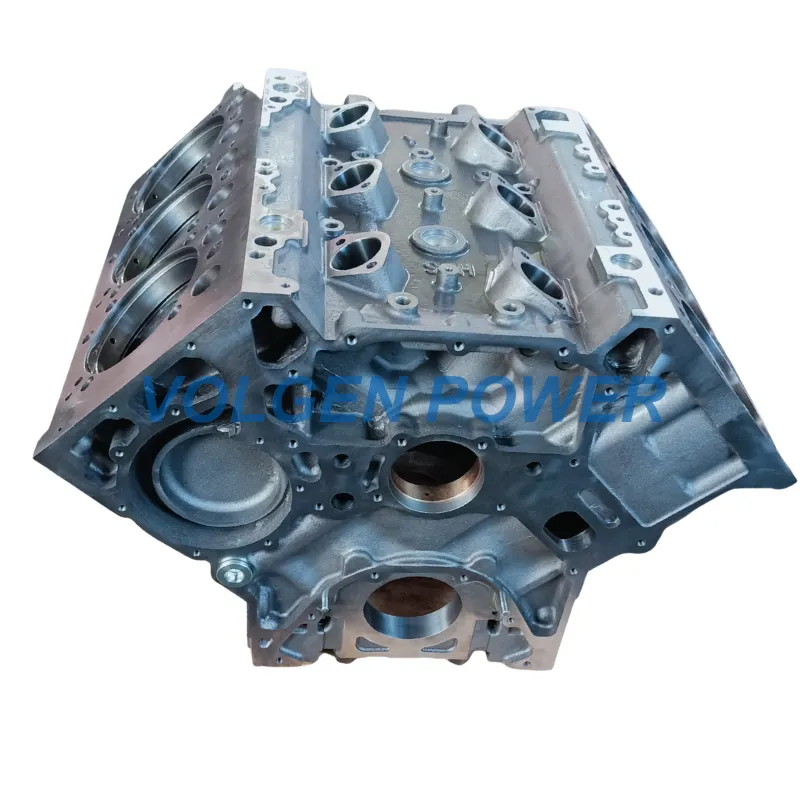
Step 1 — Strip and clean. Remove all plugs, galleries and caps. Hot-tank the block and crack-test the main webs and water jacket before spending machine time.
Step 2 — Check the caps. Measure cap thickness and look for fretting. Caps that have lost crush or been filed by hand are replaced, not reused. Cap register fit matters as much as the bore.
Step 3 — Torque and measure. Assemble the caps with the specified bolts and torque, then measure bore alignment, roundness and size. Record the readings before boring.
Step 4 — Bore to the next oversize. The shop removes the minimum material that restores alignment. The finished bore must match an available oversize bearing OD; boring to a size with no bearing available is a scrap block.
Step 5 — Check the rest of the block. After boring, re-check cam bore alignment, deck flatness and cylinder liner seats. If any of those moved, the block may no longer be viable.
Fretting under the caps is often the hidden reason a bore will not stay aligned. The cap and block fret against each other, the register loses its fit, and the cap moves under load even after torquing. Cleaning and re-torquing without addressing the register is a temporary fix. Measure the register and replace caps that have lost their fit.
Cap stretch is the other failure mode. Bolts that have been over-torqued or the caps themselves can deform, changing crush and bore shape. A cap set is cheap relative to a repeat failure; do not machine a stretched cap back into service without checking its thickness and register.
The Replacement Path
A new OEM standard block removes the machining risk and restores the original geometry: main tunnel, cam bore, deck height and gear-centre distance all as designed. It also comes with a known casting and a warranty route. The trade-off is price, availability and freight, and the need to transfer everything from the old block.
Replacement is usually the better decision for a fleet that bills downtime, for a block with more than one defect, and for an engine where the cam bore or deck has moved. It is not automatically the better decision for a shop with in-house machining and a sound core.
Before choosing replacement, confirm that the block you intend to buy is the correct reference for the engine serial, not just the engine family. Blocks change across emission variants, and a block that fits the mountings can still have a different deck height or accessory drilling. Compare the casting number and the engine plate, not only the model name.
Decision Matrix
| Scenario | Line bore | Replace | Deciding factor |
|---|---|---|---|
| One spun main, sound casting, local machine shop | Recommended | Not necessary | Bore is restorable; cost below new block |
| Two or more mains damaged, caps fretted | Possible | Often better | Cap set + boring + bearings approaches block price |
| Cracked main web or water jacket | No | Required | Casting is scrap |
| Cam bore out of line | Only with cam boring capability | Usually | Valve timing and gear mesh |
| Fleet truck with fixed deadline | Only if machine slot is free | Usually | Downtime dominates |
| Rare engine, no block available | Required | Not possible | Availability |
The TCO Comparison
Build the comparison from six lines: block or core cost, cap set, machine work, oversize bearings, labour to strip and reassemble, and bay downtime. The numbers below are illustrative planning figures, not a quotation.
- Line bore: core 900 + caps 300 + boring 650 + oversize bearings 420 + labour 500 + 4 bay days at 400 = USD 4,370
- New block: block 3,200 + bearings 260 + labour 600 + 2 bay days at 400 = USD 4,860
In that example the boring path wins by about USD 500, but only because the machine slot was free and the caps were available. Add a second damaged main, a cap set at a higher price, or two extra days of downtime, and replacement wins. The model is sensitive to downtime and to the number of defects, not to the headline block price.
Add the cost of a failed first attempt if you are comparing a shop without a proven boring process. A bore that is out of round or sized to an unavailable bearing turns a repairable block into scrap, and the loss includes the machine time already spent. For a fleet, the safer comparison includes the probability of that outcome, not only the best-case machine bill.
Freight and core handling belong in the comparison too. A replacement block is heavy and must be crated and lifted correctly; a boring job moves only the block to the machine shop and back. If the machine shop is off-site, add transport twice and the risk of damage in transit.
Inspection Before the Decision
- Crack-test main webs and the water jacket before machining.
- Measure main bore alignment, roundness and size with caps torqued.
- Measure cam bore alignment; compare with the mains.
- Check deck flatness and deck height.
- Check the timing-gear bore and centre distance if the gear train is in the block.
- Check liner seats and counterbores for fretting.
Record every measurement with the caps torqued and the block at a stable temperature. A bore measured cold with caps loose, or with the block still warm from the hot tank, reads differently and can send the decision the wrong way. Keep the sheet with the engine record so the machine shop and the owner are working from the same numbers.
Examples From the Fleet Range

The decision plays out differently by engine. For a Scania DC12, the 2055383 cylinder block is a known replacement reference; for a Mercedes OM501, the 5410102005 block is the standard service part. For a Volvo D13, identify the block by casting and engine number before comparing options, as covered in our DC13 block identification guide.
The full block range sits under the cylinder block category. Use the category to compare available references, then confirm the exact number against the engine plate before ordering.
For a high-mileage fleet engine, the decision also depends on the rest of the overhaul. If the head, crank and liners are being renewed anyway, a replacement block removes the risk of a second strip-down; if the block is the only defect, boring is easier to justify. Compare the block decision with the whole rebuild scope, not in isolation.
Other references in the category follow the same rule: a Cummins KTA19 block, an OM366 block or a Volvo D13 block is identified by casting and engine number, not by the model badge alone. When a replacement is being considered, compare the deck height, main bore size and accessory drilling before assuming the block will accept the existing head and accessories.
Sourcing and Quality Inspection from Volgen Power
Volgen Power supplies new and service blocks through the Shiyan commercial vehicle supply chain. For a block, the inspection points are casting identity, deck and bore geometry, and protection for sea freight.
Confirm the warranty terms for a machined block as well. A block that has been line bored by a third party may not carry the same coverage as a new OEM casting; clarify that before the machine work starts, not after the engine is back in the truck.
Ask for the measurement sheet with the block, not only a photo. Deck flatness, main bore size and liner seat depth are the numbers that decide whether the block can be assembled without another machining step at your end.
- Casting check. Casting number and material verified against the order and the engine record.
- Geometry. Deck flatness, main bore and liner seats measured before dispatch.
- Crack test. Main webs and water jacket checked; a cracked block is not shipped.
- Packing. Deck face protected, passages drained, block bolted to a pallet.
Frequently Asked Questions
When should a block be line bored instead of replaced?
When the casting is sound and the damage is limited to main bore alignment or cap condition. Cracks, cam bore distortion or deck/gear-centre changes point to replacement.
What are oversize OD bearings?
Bearings with a thicker shell outside diameter, matched to a main tunnel bored oversize. The inside diameter still matches the crankshaft journal, standard or undersize.
Can a cracked main web be repaired?
No. A crack in a main web or water jacket is a replacement decision. Welding or stitching a loaded main web is not a reliable repair for a fleet engine.
Why check the cam bore after boring the mains?
Boring changes the main tunnel reference. If the cam bore is out of line, valve timing and gear mesh are affected, and the block may no longer be viable.
Does line boring always save money?
Not always. It wins when the core is sound, caps are available and the machine slot is free. With multiple defects or expensive downtime, a new block is often cheaper overall.
Need a Block or a Boring Decision?
Send the engine model, serial, photos of the main bore and caps, and the measurements you have. We will tell you which replacement references exist and whether the damage pattern points to boring or replacement.
WhatsApp our parts desk: +86 188 7263 0128 — include engine model and serial.