If you are sourcing a replacement Scania DC13 cylinder block, starting with “I need a DC13 block” is usually not enough.
DC13 identifies an engine family, but you should match a replacement cylinder block using more specific information, such as the full engine type, engine serial number, existing component references, visible block markings, application information, and photographs of the original block.
Scania's published DC13 documentation states that the engine serial number is stamped on the top of the cylinder block at the front right. The engine data plate provides additional information, including the engine type and engine number.
This guide explains what to check before requesting a quotation for a Scania DC13 replacement cylinder block.
Quick Answer:
To identify a Scania DC13 cylinder block, first record the complete engine type and engine serial number. Then check the old block for readable part references or casting markings and take clear photographs of the engine data plate, serial-number area and complete block. Do not rely on “DC13” or one visible number alone to confirm compatibility.
- Where Is the Scania DC13 Engine Serial Number Located?
- How to Read a Scania DC13 Engine Type
- Engine Type, Engine Serial Number, Part Number and Casting Mark Are Not the Same Thing
- Why “Scania DC13” Alone Is Not Enough to Order a Cylinder Block
- What Photos Should You Send for Scania DC13 Cylinder Block Identification?
- What If the Original Cylinder Block Number Cannot Be Read?
- Common Scania DC13 Cylinder Block Identification Mistakes
- FAQs.
- Need Help Matching a Scania DC13 Cylinder Block?
If you already know which block reference you need, you can check the current Volgen Power listings in the engine parts Product Directory before preparing an enquiry.
Where Is the Scania DC13 Engine Serial Number Located?
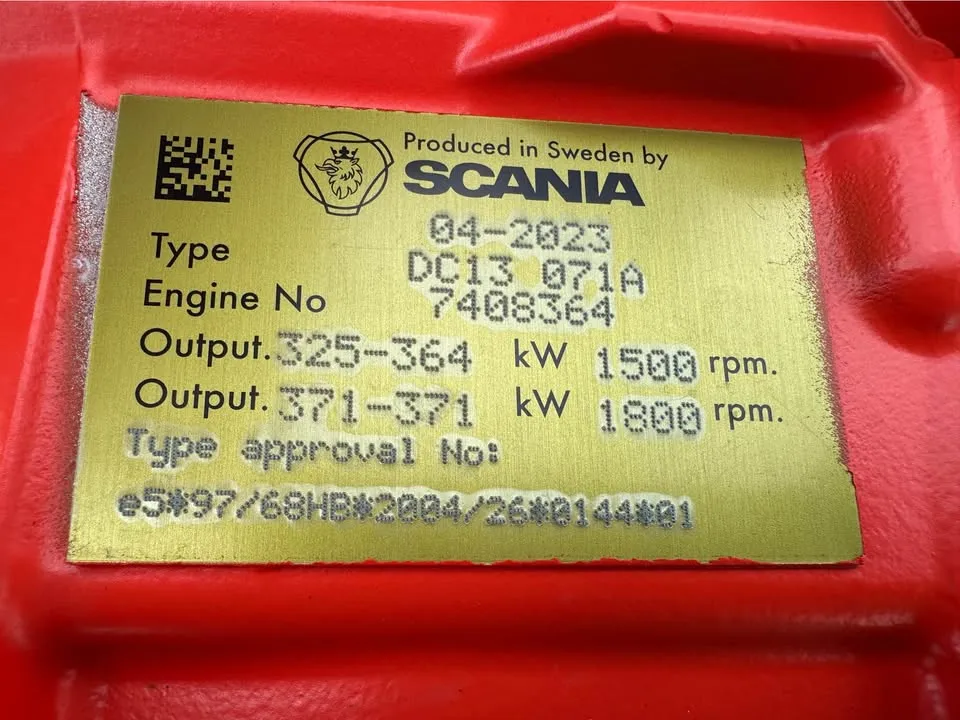
The engine serial number is one of the most useful starting points when identifying a DC13 engine.
Scania's current DC13 industrial-engine documentation states that the engine serial number is stamped on the top of the cylinder block at the front right. Scania's component-identification documentation also distinguishes the engine serial number from the engine data plate.
When inspecting the engine, record:
- the complete engine serial number;
- the complete engine type;
- the information shown on the engine data plate;
- any readable numbers on the existing cylinder block;
- the application or vehicle information;
- photographs showing both the number and its physical location.
Do not photograph only the characters themselves.
A wider photograph showing where the number is located can help prevent a casting mark, workshop marking, or component reference from being mistaken for the engine serial number.
What if the serial number is dirty or difficult to read?
Clean the area carefully enough to expose the characters without damaging the marking.
Take:
- one close-up photograph;
- one wider location photograph;
- a second image from a different angle if corrosion, paint or reflection affects readability.
If part of the number is unreadable, do not guess the missing characters.
Send the incomplete number together with the other identification evidence.
How to Read a Scania DC13 Engine Type
The term DC13 provides useful engine-family information, but the complete engine type gives more detail.
Scania documentation includes examples such as:
DC13 074A
DC13 084A
DC13 501A
In Scania's published documentation, the code is explained approximately as follows:
| Identification field | Meaning in the cited Scania documentation |
|---|---|
| DC | Turbocharged diesel-engine designation with charge-air cooling |
| 13 | Displacement class in whole cubic decimetres |
| 074 / 084 / 501 | Performance and certification code |
| A | Application code; in these examples, general industrial use |
Scania explains that the numerical performance/certification code works together with the application code to identify the engine configuration described by the plate.
Why does the full engine type matter when buying a cylinder block?
Because:
DC13 ≠ complete component identification.
A quotation that says only:
Scania DC13 cylinder block
still leaves important questions unanswered.
For example:
- Which exact engine version is involved?
- What component reference is on the original block?
- What application is the engine used in?
- Is the supplier quoting the same block configuration?
- Is the offered item a bare block or supplied with additional components?
The complete engine type is therefore an important matching reference, although it should not replace the cylinder-block part reference itself.
Engine Type, Engine Serial Number, Part Number and Casting Mark Are Not the Same Thing
A major source of errors in heavy-duty engine parts purchasing is treating every visible number as if it were an OE part number.
Different markings can serve different purposes.
| Identifier | What it helps identify | Can it confirm the replacement block by itself? |
|---|---|---|
| Engine family | Broad engine family, such as DC13 | No |
| Complete engine type | Engine configuration/application information | Usually not by itself |
| Engine serial number | The specific engine | Important evidence |
| OE/service part reference | Component identification | Very important |
| Casting mark | Physical casting identification | Supporting evidence |
| Supplier SKU | Seller's internal stock reference | No |
| VIN/chassis information | Vehicle/application | Supporting evidence |
The safest rule is:
Never decide what a number means only because of its size, location or appearance.
A large number cast into the cylinder block may be valuable for identification, but it should not automatically be called an OE part number.
Likewise, a sticker added during a previous repair may contain a workshop or supplier reference rather than a Scania component number.
Why “Scania DC13” Alone Is Not Enough to Order a Cylinder Block
Searching by engine family is useful when beginning the sourcing process.
It is not sufficient evidence for final compatibility confirmation.
When a buyer sends only:
Need Scania DC13 block, send price.
the supplier still needs to determine:
- the exact engine identification;
- the existing block reference;
- the application;
- the required supply scope;
- whether the offered block corresponds to the buyer's original component.
A more reliable cylinder-block enquiry should combine several pieces of evidence.
When you are ready to compare suppliers, it helps to compare parts quotations on the same identification requirements rather than on the engine family alone.
Minimum information to check
| Check | Why it matters |
|---|---|
| Complete engine type | Narrows the engine configuration |
| Engine serial number | Identifies the individual engine |
| Existing block reference | Helps identify the component being replaced |
| Casting or visible markings | Provides secondary matching evidence |
| Application | Helps verify engine use |
| VIN/chassis, if relevant | Provides additional vehicle context |
| Old-block photographs | Helps resolve uncertain markings |
| Required quantity | Needed for quotation |
| Required supply scope | Prevents quote-to-quote differences |
The objective is not to collect numbers for their own sake.
The objective is to create enough evidence that the supplier can answer:
Is this the same cylinder block requirement I am quoting?
What Photos Should You Send for Scania DC13 Cylinder Block Identification?
A complete identification photo set is usually more useful than repeatedly sending individual numbers through email or WhatsApp.
For an overview of what Volgen Power supplies for this engine family, see Scania DC12 and DC13 engine parts.
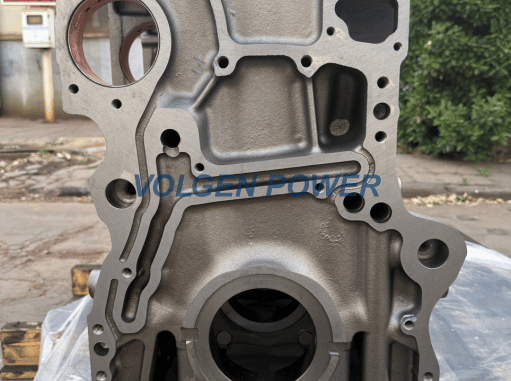
Photo 1: Engine data plate
Make sure the complete plate is visible.
The characters should be readable at full image size.
Photo 2: Engine serial number
Take:
- one close-up;
- one wider location photograph.
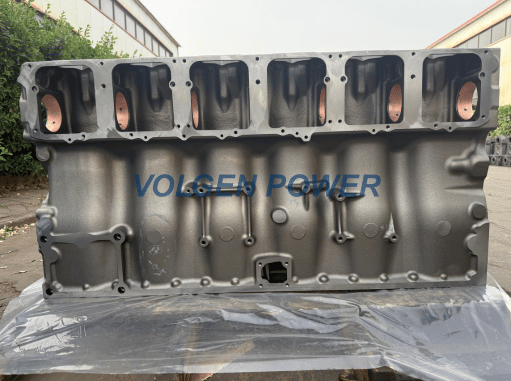
Photo 3: Complete cylinder block — first side
Show the full block without cropping the ends.
Photo 4: Complete cylinder block — opposite side
This helps compare external configuration and visible features.
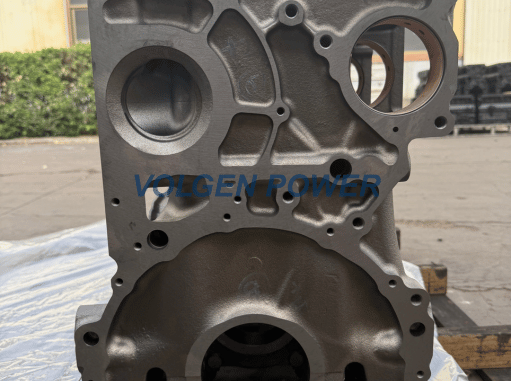
Photo 5: Front face
Keep the complete face inside the image.
Photo 6: Rear face
Avoid extreme angles that hide mounting details.
Photo 7: Part or casting markings
Photograph each readable marking separately while retaining enough surrounding area for context.
Photo 8: Damaged area, if relevant
If the existing block has failed, photographs of the damage can provide useful context.
However, damage photos should supplement identification information rather than replace it.
What If the Original Cylinder Block Number Cannot Be Read?
Unreadable component numbers do not necessarily stop the sourcing process.
Instead, build the identification package from the remaining evidence.
Step 1 — Record the full engine type
Do not submit only “DC13.”
Step 2 — Record the engine serial number
Scania identifies the serial number separately on the cylinder block, making it an important source of engine-level identification.
Step 3 — Photograph the engine data plate
Do not transcribe it from memory.
Step 4 — Provide vehicle or equipment information
Depending on the application, useful information can include:
- vehicle series;
- VIN/chassis information;
- industrial equipment model;
- production information available to the buyer.
Step 5 — Photograph all visible block markings
Even a partial number can help when combined with other evidence.
Step 6 — Send complete block photographs
If no useful component reference survives, physical configuration becomes more important as supporting evidence.
Step 7 — Ask what additional evidence is required
A professional supplier should be willing to say:
More information is required before compatibility can be confirmed.
That is preferable to making an unsupported match from a low-quality photograph.
Common Scania DC13 Cylinder Block Identification Mistakes
Mistake 1: Ordering only by “DC13”
The engine family is too broad for confident component matching.
Better: provide engine type + serial number + block reference.
Mistake 2: Assuming the largest visible number is the part number
It may be a casting mark or another identifier.
Better: photograph the number and describe where it appears.
Mistake 3: Sending only a close-up photograph
The supplier sees the number but cannot tell where it came from.
Better: send both close-up and location photographs.
Mistake 4: Assuming similar-looking blocks are interchangeable
External appearance alone is weak evidence.
Better: compare references and engine information before confirming the order.
Mistake 5: Treating a supplier SKU as an OE reference
A previous seller may have created its own stock number.
Better: label it as a supplier reference unless its origin is verified.
Volgen Power currently lists DC13 cylinder blocks such as the Scania DC13 cylinder block 2364500 / 2364375, and each listing should still be verified against the specific engine before an order is finalized.
Mistake 6: Comparing prices before confirming the same block
A lower quotation is meaningless if the suppliers are not quoting the same component or supply scope.
Better: standardize the identification requirement first, then compare quotations.
This tells the supplier almost nothing beyond the general engine family.
Better RFQ
Required part: Scania DC13 cylinder block
Engine type: DC13 ______
Engine serial number: ______
Existing block reference: ______
Visible casting/other marking: ______
Application: ______
Quantity: 2 pcs
Destination: ______
Photos attached: engine data plate, serial number and old cylinder blockPlease verify the reference and compatibility before quotation.
The second enquiry gives the supplier enough information to begin a meaningful compatibility review.
FAQs.
Where is the Scania DC13 engine number located?
Scania's published DC13 documentation states that the engine serial number is stamped onto the top of the cylinder block at the front right.
Is “DC13” enough information to order a cylinder block?
No.
DC13 identifies the engine family, but replacement cylinder block matching should use additional information such as the complete engine type, serial number, existing component reference, application, and photographs.
Is the engine serial number the same as the cylinder block part number?
No.
The engine serial number identifies the engine. A part/reference number identifies a part or service component.
They should be recorded separately.
Is a casting number always a Scania part number?
No.
A casting mark and a service/OE part reference may serve different purposes.
An unidentified number cast into the block should therefore be treated as supporting identification evidence until its meaning is verified.
Can I identify a Scania DC13 cylinder block from a photograph?
Photos are useful, particularly when markings are readable, but appearance alone should not be used as proof of compatibility.
Combine photographs with engine and component-reference information.
What should I send if the old block number is unreadable?
Send:
complete engine type;
engine serial number;
engine data plate;
vehicle/equipment information;
all remaining visible markings;
clear photos of every side of the old block.
Ask the supplier whether additional evidence is required before compatibility is confirmed.
What Scania DC13 cylinder block references does Volgen Power currently list?
Volgen Power currently has DC13 cylinder-block listings associated with references including 2364500, 2364375, 2929222, and 2225331. These should still be verified against the specific engine and application before an order is finalized.
Need Help Matching a Scania DC13 Cylinder Block?
If you already have a Scania DC13 engine number, data plate, cylinder block reference, or photographs of the old component, send the information together rather than relying on the DC13 family designation alone.
For the most efficient review, provide:
- complete engine type;
- engine serial number;
- existing part/reference number;
- visible casting or other markings;
- quantity;
- destination country;
- engine data plate photo;
- old cylinder block photos.
Volgen Power can use these details as the starting point for a Scania DC13 cylinder block compatibility and quotation review.