For logistics operators running along the North-South Expressway (PLUS), the East Coast Highway (LPT), or navigating the steep gradients of the Titiwangsa Range, the Scania truck is the undisputed king of the road. Whether it’s a PGR-series or the New Truck Generation (NTG), Scania’s reliability is legendary.
However, operating in Malaysia presents a unique set of challenges that European engineers do not always account for:
- Extreme Thermal Cycling: Malaysia’s ambient temperature averages 32°C, with road surface temperatures exceeding 50°C. A fully loaded prime mover hauling 40+ tons up the Genting Sempah incline pushes the engine coolant temperature to its limit.
- Humidity and Fuel Quality: High humidity affects air intake density, while variable diesel quality can impact combustion temperatures, increasing the stress on cylinder heads.
- High-Intensity Utilization: Malaysian fleets often run 24/7 operations, particularly in port logistics (Port Klang, Tanjung Pelepas, Penang Port). Engines rarely get cold, leading to "heat soak" conditions that test the metallurgical limits of engine blocks.
For fleet managers, the Scania DC12 and DC13 engines are the workhorses of profit. But when these engines fail—specifically the cylinder head or engine block—the financial impact is immediate. It’s not just the cost of parts; it’s the Cost of Downtime (COD). A truck stuck in a workshop in Shah Alam is a truck not earning revenue.
This guide serves as a comprehensive resource for Malaysian fleet operators to understand, diagnose, and resolve critical engine failures through effective sourcing strategies.
Table of Contents
Understanding Scania DC12 vs. DC13 Architecture
To maintain these engines, one must understand the evolution from DC12 to DC13, as their parts are similar but not interchangeable.
The Scania DC12
The 11.7-liter DC12 was the industry standard for years. It features distinct individual cylinder heads (one per cylinder on earlier iterations, though Scania moved towards modular designs).
- Key Feature: Known for its robust mechanical simplicity.
- Common Injection System: PDE (Unit Injector).
- Weakness: As these engines age (many are now over 15 years old), the engine block deck surface often suffers from erosion, which can lead to head gasket failures.
The Scania DC13
The 12.7-liter DC13 is the modern powerhouse. It introduced advanced combustion technologies to meet Euro 3, 4, and 5 standards.
- Key Feature: Higher injection pressures (XPI or PDE, depending on the variant) and stricter thermal tolerances.
- Material: The cylinder block and head are cast from high-grade alloy iron to withstand massive combustion pressures.
- Complexity: The DC13 requires significantly higher precision in machining. A variance of just 0.05mm in liner height can lead to catastrophic failure.
Crucial Note for Buyers: You cannot order parts based on "Scania 124" or "Scania R420" alone. You must identify if you have a PDE engine or an HPI/XPI engine, and always verify with the Engine Serial Number (ESN).
Why They Fail: Deep Dive into Cylinder Head & Block Vulnerabilities
Why do Scania cylinder heads crack? Why do blocks fail? At Volgen Power, we have analyzed hundreds of failed cores. Here is the technical reality.
Cylinder Head Failures
The cylinder head is the "lid" of the pressure cooker. In Malaysia, we see three primary failure modes:
- Thermal Fatigue Cracking (The Bridge Check): Cracks most commonly form on the "bridge" between the intake and exhaust valve seats. This is the hottest part of the head.
- Cause: Rapid heating and cooling cycles (e.g., shutting down a hot engine immediately after a heavy climb without idling down).
- Symptom: Coolant loss without external leaks (coolant is consumed in the combustion chamber), white smoke.
- Injector Sleeve Failure: The D13 uses unit injectors that sit in a sleeve (often copper or steel).
- Cause: Corrosion from poor-quality coolant or simple mechanical wear.
- Result: Fuel leaks into the coolant (turning it into a "teh tarik" color) or coolant leaks into the fuel return line.
- Valve Guide Wear: High-mileage engines develop play in the valve guides. This causes the valve to seat poorly, leading to recession (the valve sinks into the head) and loss of compression.
Cylinder Block Failures
The block is the foundation. If the foundation is weak, the house falls.
- Liner Seat Erosion (Counterbore Damage): This is the #1 killer of Scania blocks in Malaysia. The cylinder liner sits on a machined "shelf" (counterbore) inside the block.
- The Problem: Micromovement of the liner (fretting) wears this shelf down.
- The Consequence: The liner sinks. The head gasket loses its "crush" seal. Combustion gas escapes into the water jacket.
- The Fix: The block must be machined (cut) and a shim installed, OR the block must be replaced.
- Main Bearing Cap Fretting: Under extreme torque, the main bearing caps can "walk" or move slightly if not torqued correctly, damaging the block mating surface.
The Economics of Repair: Genuine vs. OEM-Equivalent – A TCO Analysis
This is the most controversial topic in fleet management. "Genuine parts last longer." "Aftermarket is cheap but risky."
Both statements are partially true, but the market has evolved. Let’s look at the Total Cost of Ownership (TCO).
The Genuine Scania Option
- Pros: Guaranteed fit, global warranty, peace of mind.
- Cons: Extremely high cost. In Malaysia, genuine parts often carry a 300% markup due to import duties, dealership overheads, and branding premiums. Availability can also be an issue for older DC12 models.
The "Cheap" Aftermarket Option (White Box)
- Pros: Very low upfront price.
- Cons: High risk. Often made with recycled iron, with poor casting density (porosity) and inaccurate machining.
- The Trap: A cheap cylinder head might cost RM 2,000 less, but if it cracks in 3 months, you pay for:
- New Head
- New Gasket Kit
- New Oil/Coolant
- 3 Days of Lost Revenue
- Mechanic Labor
- Total Loss: 5x the savings.
The Volgen Power OEM-Equivalent Solution
Volgen Power positions itself in the "Goldilocks Zone."
- Manufacturing: We use the same casting foundries and machining centers as the OEMs.
- Material: We use Vermicular Graphite Iron (CGI) or high-grade alloyed Grey Iron exactly per Scania specifications.
- Cost: By removing the "Scania" logo and the dealership network markup, we offer parts at 40-60% of the Genuine price, while maintaining 98-100% of the quality.
Case Study: A logistics company in Johor Bahru running 50 Scania P410s switched to Volgen Power cylinder heads for their mid-life overhaul program. Over 2 years, they reported zero premature failures and saved approximately RM 350,000 in parts procurement costs.
Technical Masterclass: Critical Installation Checks for Malaysian Mechanics
Even the best cylinder head will fail if installed incorrectly. We provide this checklist to our partners in Klang, Ipoh, and beyond to ensure longevity.
1. Liner Protrusion Height (The Golden Rule)
Before installing a D13 head, you must measure how much the cylinder liner sticks out above the block deck.
- Target: Typically 0.15mm - 0.25mm (Check specific manual).
- Too Low? The head gasket won't seal. Leaks guaranteed.
- Too High? The liner flange will crack under torque.
- Volgen Tip: If the height is uneven, check the block counterbore for erosion. You may need a new block or shims.
2. Torque Sequence and Angle
Scania engines use "Torque-to-Yield" bolts.
- Never reuse head bolts. They stretch permanently during installation.
- Follow the "Snail" pattern (inside out).
- Apply the correct torque (Nm) followed by the specific angle turn (Degrees). Do not guess!
3. Cleanliness is Godliness
Malaysian workshops can be dusty. Even a speck of dirt between the block and the head gasket can cause a blowout.
- Action: Use a stone or superfine sandpaper block to clean the deck surface until it shines. Ensure all bolt holes are dry and clean (oil in a bolt hole can crack the block due to hydraulic pressure when tightening).
Supply Chain Solutions: How to Source Reliable Parts in Malaysia
Malaysia is a logistics hub, but getting heavy engine parts quickly is still a challenge.
The "Junk Yard" Gamble
Many operators go to "potong kereta" (chop shops) for used parts.
- Risk: You are buying a head with 1,000,000 km on it. It may have invisible micro-cracks.
- Warranty: usually 2 weeks or "start condition" only.
The Volgen Power Logistics Advantage
We understand that you cannot wait 45 days for sea freight when a truck is down.
- For Urgent Repairs: We utilize air freight partners (DHL/FedEx/Special Line) to deliver cylinder heads to KLIA or Penang within 5-7 days.
- For Stocking Orders: Fleet owners and workshops can order a pallet of blocks/heads via sea freight to Port Klang or Tanjung Pelepas, dramatically reducing the unit cost.
- Custom Clearance: We have experience with Malaysian HS Codes for engine parts, ensuring smooth customs processing to avoid Langkawi/tax complications.
Related Products
-
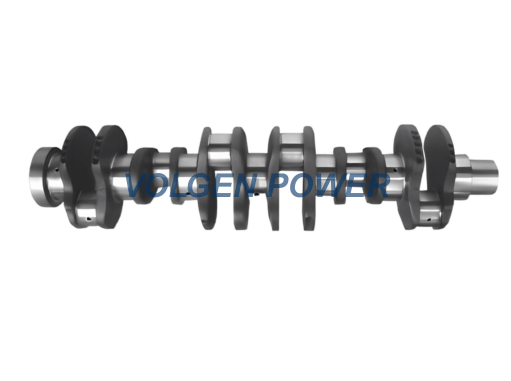
1340620 Crankshaft for Scania 3-Series – OEM Engine Component for Heavy-Duty Diesel Applications
Request a Quote -
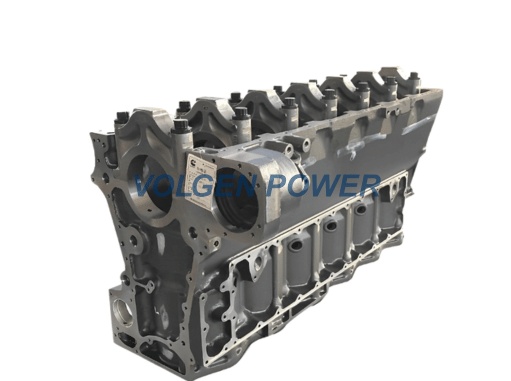
3088303 Cummins KTA19 Cylinder Block
Request a Quote -
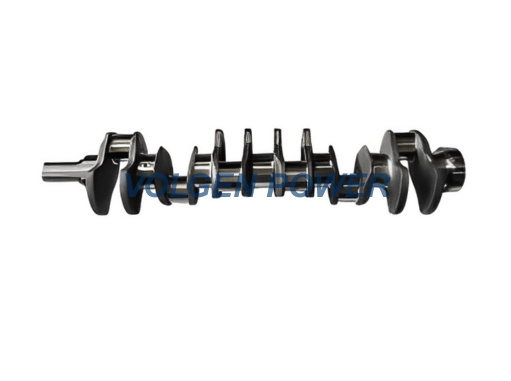
342060 Crankshaft for Scania DS11 / DSC11 – OEM Forged Component for Diesel Engine Overhauls
Request a Quote -

3660104008 Mercedes-Benz OM366 OEM Cylinder Block
Request a Quote
Why Volgen Power? Engineering the Future of Fleet Maintenance
Volgen Power is not just a trader; we are an engineering partner.
Our Quality Assurance Process
Every Scania D13 Cylinder Head and Block leaving our facility undergoes:
- Hydrostatic Pressure Testing: Pressurized with hot water to simulate engine temps and check for leaks.
- Vacuum Testing: Testing valve seats to ensure a perfect seal.
- CMM Dimensional Check: Coordinate Measuring Machines verify that bolt holes and oil galleries are aligned to within microns.
Our Promise to Malaysian Operators
- Identification: We help you identify the right part using your Chassis/VIN or Engine Serial Number.
- Warranty: We stand behind our quality with a comprehensive warranty against manufacturing defects.
- Support: We provide technical data sheets (torque specs, clearance data) upon request.
Conclusion: Stop Overpaying, Stop Compromising
The Malaysian trucking industry is competitive. Margins are tight. You cannot afford to throw money away on overpriced genuine parts, nor can you afford the risk of cheap fakes.
Your Scania DC12 and DC13 engines are capable of running for over 1.5 million kilometers—if you feed them the right parts.
Volgen Power offers the bridge between quality and cost. We empower Malaysian fleets to maintain European standards at Asian prices.
Ready to Optimize Your Fleet Maintenance?
Do not wait for the next breakdown. Secure your supply chain today.
Contact Volgen Power
- Sales & Technical Support: +86 18827435225 (WhatsApp Available)
- Email: [email protected]
- Website: www.volgenpower.com
Special Offer for Malaysian Fleets: Mention this article for a complimentary "D13 Engine Overhaul Consultation" and special pricing on your first Cylinder Head order.