Is your Volvo truck's I-Shift transmission leaking fluid or causing erratic shifts? For professional drivers and fleet managers, this isn't just an annoyance—it's lost revenue from costly downtime. The culprit? Often, a worn top cover gasket (Part No. 21233514). But fixing it doesn't have to be a nightmare of stripped bolts and repeat repairs.
Why this guide? It's your no-BS, expert-backed roadmap to a leak-free fix in 2-3 hours, saving up to $500 in shop fees. Based on Volvo service manuals and real-world tech insights, we'll cover tools, removal, prep, install, and pitfalls. By the end, your rig will be road-ready and earning again.
Quick TL;DR: Clean surfaces are key; use a quality gasket like Volgen Power's OEM-grade option; torque bolts in sequence. Let's dive in.
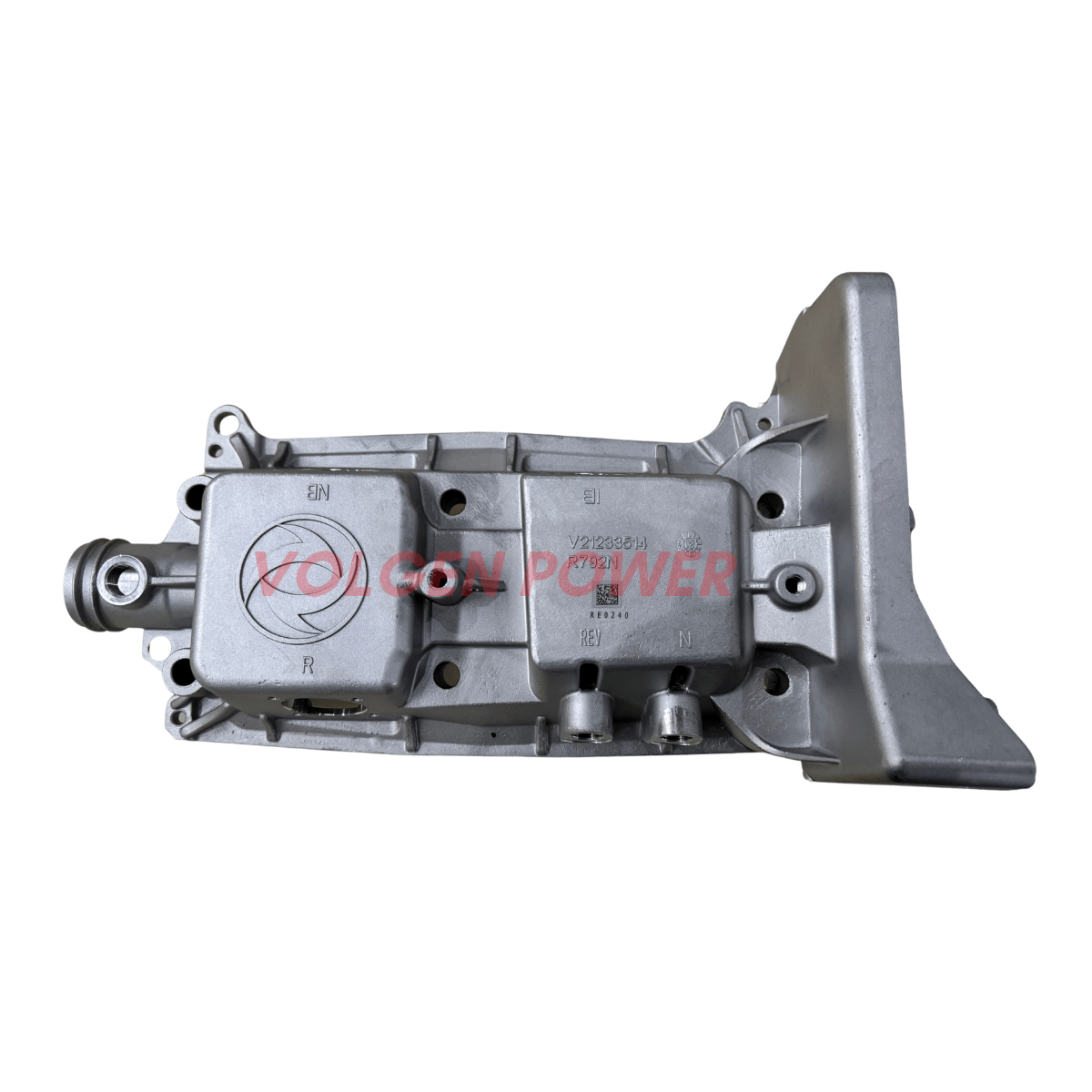
21233514 Top Cover Assembly for Volvo Truck Transmission Gearbox
High-quality top cover assembly designed for Volvo truck transmission systems, offering superior protection for internal components. Available in genuine, OEM, and aftermarket options with fast shipping and customizable packaging.
Table of Contents
Let's get that truck back in service with a transmission that's sealed, secure, and ready for the long haul.

Part 1: Pre-Job Checklist: Tools and Parts
Preparation is 90% of the job. Having every tool and part ready before you begin will transform a frustrating task into a smooth, efficient process.
Required Tools:
- Socket Set (Metric): A comprehensive set including various socket sizes (e.g., 10mm, 13mm) and extensions.
- Torque Wrench: This is non-negotiable. Proper torque is essential for a leak-proof seal and to prevent damage to the transmission housing. Ensure your torque wrench is calibrated and covers the required range (typically in Newton-meters or foot-pounds).
- Gasket Scraper (Plastic or Brass): Never use a steel scraper on an aluminum transmission housing, as it can gouge the surface.
- Brake Cleaner or Solvent: For cleaning the mating surfaces.
- Clean, Lint-Free Rags: For wiping down surfaces.
- Pry Tool (Optional but Recommended): A small, flat pry bar can help gently break the seal of the old cover.
- Drain Pan: To catch any residual transmission fluid.
- Safety Glasses and Gloves: Always prioritize safety.
Required Parts:
- Volvo Transmission Top Cover Gasket (21233514-G): This is the star of the show. Do not reuse the old gasket. The cost of a new, high-quality gasket is minuscule compared to the cost of redoing the job due to a leak.
- Volvo Transmission Top Cover (Part No. 21233514): Only replace the cover itself if it is cracked, warped, or if he bolt holes are damaged.
A Note on Part Quality
When it comes to critical components like transmission gaskets, quality is paramount. A cheap, poorly manufactured gasket can become brittle, shrink, or fail to compress properly, leading to leaks that put your entire transmission at risk. This is why sourcing parts from a trusted supplier is crucial.
Volgen Power specializes in providing OEM-quality aftermarket parts for heavy-duty trucks. Our gaskets are engineered to meet or exceed original equipment specifications, ensuring a perfect fit and a durable, long-lasting seal. When you choose Volgen Power, you're choosing reliability and peace of mind.

Part 2: Step-by-Step Removal of the Transmission Top Cover
Follow these steps carefully. Ensure the vehicle is parked on level ground, the parking brake is set, and the wheels are chocked. If necessary, disconnect the vehicle's batteries to prevent any electrical issues.
Step 1: Clean the Work Area
The top of the transmission is a magnet for dirt, grease, and road grime. Before you remove a single bolt, thoroughly clean the top cover and the surrounding area. Use a degreaser and compressed air if available. This prevents debris from falling into the sensitive internals of the transmission once the cover is off.
Step 2: Disconnect Electrical Connectors and Air Lines
The top cover assembly (also known as the gear selector housing) has several connections. Carefully disconnect all electrical connectors leading to the solenoids and sensors on the housing. Most have a locking tab that needs to be depressed. Label them with tape if you are unsure about their positions. Disconnect any relevant air lines as well.
Step 3: Loosen the Bolts in the Correct Sequence
To prevent warping the cover, do not simply start at one end and remove all the bolts in a line. Loosen the bolts in a crisscross or spiral pattern, starting from the outside and working your way in.
- First, break all bolts loose by a quarter turn in the reverse of the tightening sequence (see installation section for a visual pattern).
- Once all bolts are loose, you can proceed to remove them. Keep them organized, noting if any are of different lengths.
Step 4: Gently Break the Seal and Remove the Cover
The old gasket will likely have the cover stuck to the transmission housing.
- Do not try to force a screwdriver between the cover and the housing. You will damage the aluminum mating surface and guarantee a leak.
- Gently tap the side of the cover with a rubber mallet to break the seal.
- If it's still stuck, use a dedicated pry tool in the designated slots, if available.
- Once loose, lift the cover straight up and off the transmission. Be prepared for some residual fluid to spill.
Part 3: The Most Critical Step: Gasket Removal and Surface Preparation
This stage determines the success or failure of your entire job.
Step 1: Remove the Old Gasket
Carefully peel off the old gasket material from both the transmission housing and the bottom of the top cover (if you are reusing it).
Step 2: Scrape Away All Residue
Using your plastic or brass gasket scraper, meticulously remove every last trace of the old gasket and any sealant. The mating surfaces must be perfectly clean. Be patient; this can be time-consuming.
Step 3: Final Cleaning of Mating Surfaces
- Spray a lint-free rag with brake cleaner or a suitable solvent.
- Wipe down both the transmission housing's mating surface and the top cover's surface until they are completely free of oil, dirt, and old gasket material.
- Run your finger along the surfaces; they should feel perfectly smooth and clean. Any imperfection can become a leak path.
Expert Advice from a Master Technician:
"I've seen more comeback jobs from poor surface prep than anything else. Technicians get rushed and leave a tiny piece of old gasket on the surface. That's all it takes. My rule is simple: if you think the surface is clean enough, clean it one more time. It's the cheapest insurance you can buy against having to do the job twice."
Part 4: Installation of the New Gasket and Top Cover
With clean surfaces, you are ready for a successful installation.
Step 1: Position the New Gasket
Place your new, high-quality gasket (e.g., from Volgen Power) onto the clean transmission housing. Ensure all bolt holes line up perfectly. Do not use any additional sealant or RTV unless explicitly specified by the manufacturer for your specific model. A good quality gasket is designed to seal on its own.
Step 2: Place the Top Cover
Carefully lower the top cover straight down onto the gasket and housing, aligning the bolt holes. Be careful not to slide it around, which could damage the new gasket.
Step 3: Hand-Tighten the Bolts
Insert all the bolts and hand-tighten them until they are snug. This ensures the cover is seated evenly before you apply torque.
Step 4: Torque the Bolts in Sequence
This is the final critical step. Tightening the bolts in the correct sequence and to the correct specification ensures even clamping pressure across the gasket. Always refer to the official Volvo service manual for the exact torque value.
While the exact sequence can vary slightly, a general best practice is a spiral pattern starting from the center bolts and working your way outward.
Example of a Center-Out Spiral Torque Sequence:
- First Pass (Snug Torque): Torque all bolts in sequence to approximately half of the final specified value (e.g., if final spec is 24 Nm, torque to 12 Nm).
- Final Pass (Final Torque): Torque all bolts again in the same sequence to the final, full manufacturer-specified torque value.
Using a torque wrench is not optional. Over-tightening can crush the gasket and warp the cover, while under-tightening will cause a leak.
Step 5: Reconnect and Final Checks
- Reconnect all electrical connectors and air lines you removed earlier. Ensure they "click" into place securely.
- Double-check that no tools, rags, or parts have been left on the transmission.
- If you disconnected the batteries, reconnect them.

Part 5: Common Errors to Avoid
- Error 1: Using a Metal Scraper. This is the fastest way to gouge the aluminum housing and create a permanent leak. Use plastic or brass only.
- Error 2: Not Cleaning the Surfaces Properly. Any residual oil or old gasket material will compromise the seal. Be meticulous.
- Error 3: Reusing the Old Gasket. Gaskets are single-use items. They compress and deform to create a seal; they cannot do this effectively a second time.
- Error 4: "Guesstimating" the Torque. Not using a torque wrench is a recipe for failure. Both over- and under-tightening will cause problems.
- Error 5: Using RTV/Sealant Unnecessarily. A quality gasket is designed to work dry. Adding sealant can sometimes interfere with the seal and cause blobs to break off inside the transmission.
Conclusion: A Professional Repair for a Professional Vehicle
By following this guide, you have done more than just replace a gasket; you have performed a professional-grade repair that protects the integrity of a very expensive transmission. You've ensured a proper seal that will prevent leaks, protect sensitive internal components from contamination, and keep that truck earning money on the road.
Remember, the success of this job hinges on three things: meticulous surface preparation, a high-quality replacement gasket, and adherence to the correct torque sequence.
Don't let a simple gasket replacement turn into a major headache. For your next repair, ensure you have the parts you can trust. Volgen Power offers a full range of OEM-quality gaskets and components for Volvo trucks, giving you the confidence to do the job right, every time.
[Browse the Volgen Power Catalog for Your Truck's Needs]
FAQs.
Q: Can I reuse the bolts for the transmission top cover?
A: In most cases, yes, the bolts are reusable provided they are in good condition (no stripped threads or head damage). However, some manufacturers specify single-use torque-to-yield bolts for certain applications. Always consult the service manual for your specific vehicle.
Q: My new gasket is leaking. What did I do wrong?
A: The most common causes are, in order: 1) Improperly cleaned mating surfaces, 2) Incorrect or uneven torque on the bolts, or 3) A damaged/scratched mating surface on the housing or cover. Re-check your work, focusing on cleanliness and torque sequence.
Q: How do I know if the top cover itself is bad and needs replacing?
A: Inspect the old cover for any visible cracks, especially around the bolt holes. Place it on a certified flat surface (like a piece of thick glass) to check for warpage. If it rocks or you can see light under it, it needs to be replaced.
Q: Why is the bolt torque sequence so important?
A: A torque sequence ensures the cover is pulled down onto the housing evenly. If you tighten one side completely before the other, the cover will tilt, pinching the gasket on one side and not compressing it enough on the other, creating a guaranteed leak path.