A crankshaft packing check should connect the ordered reference and quantity to the package and its records. Before dispatch, agree on what information and photographs will be provided for the specific order. When the shipment arrives, record the package condition before opening it, then compare the visible labels, received count, and documents with the order records. Keep any discrepancy open until it has been reviewed.
This is a buyer-side documentation checklist. It does not prescribe a universal crankshaft packing method, certify product condition, replace a technical inspection, or imply that Volgen Power provides standalone freight or inspection services. The packing approach and any order-specific requirements must be confirmed by the buyer and supplier for the actual shipment.
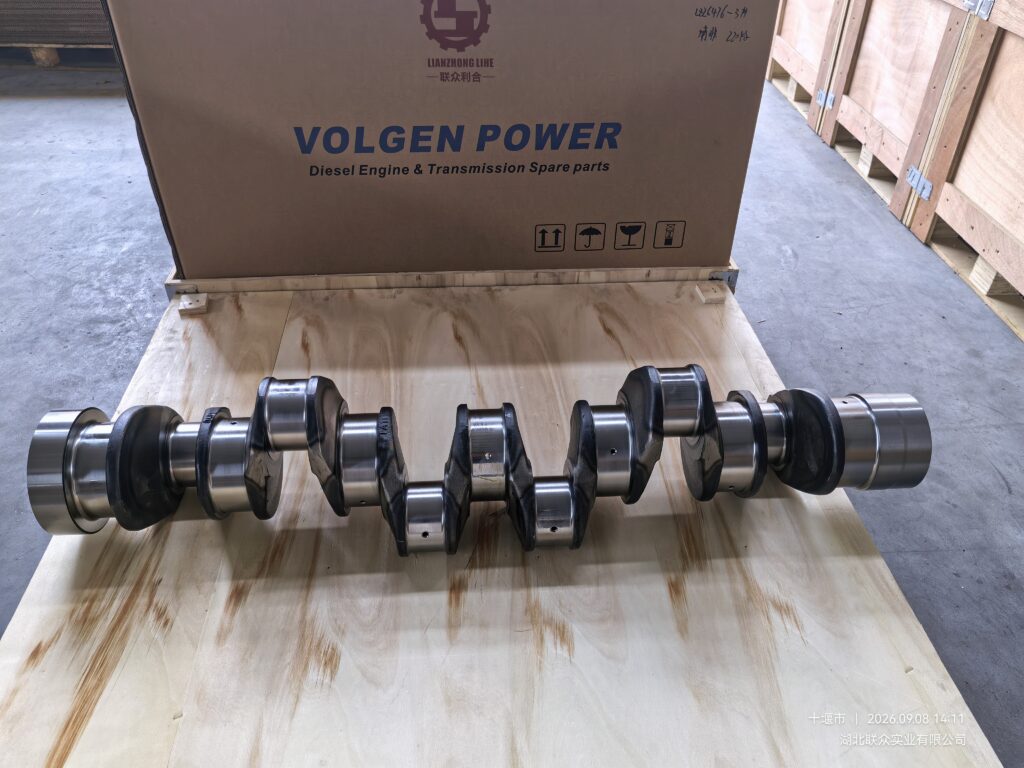
Match the shipment record to the crankshaft order
Start with the purchase order or quotation lines that define the shipment. A package can be carefully prepared and still be difficult to identify later if its label, photos, and documents cannot be connected to the requested item.
Before dispatch, record the information available for each crankshaft line:
- buyer’s line number and purchase-order reference;
- part name and the reference exactly as recorded in the quotation or approved order;
- the source of that reference, such as a nameplate, old part, drawing, supplier document, or buyer record;
- engine make and model or other application details supplied for the enquiry;
- ordered quantity and unit; and
- any open identification question that remains unresolved.
Do not silently treat a casting mark, handwritten number, drawing reference, and requested part number as interchangeable. Keep the original characters and record where each reference came from. If the application or reference is still under review, mark it as open rather than presenting the packing record as proof of compatibility.
Carry that same line number through the packing and receiving record. A simple blank row can use these fields:
| Order line | Requested reference and source | Ordered quantity/unit | Package label or package number | Pre-dispatch photo filename | Received quantity and status |
|---|---|---|---|---|---|
This is a record-keeping aid, not a supplier release certificate or inspection result. If a line is split across packages, record each package identifier against that same order line.
For sourcing context, buyers can review the Volgen Power crankshaft range. The page is a product-range destination; the specific reference and application for an order still need to be stated and reviewed for that enquiry.
Agree on the packing scope for this order
“Export packing” does not describe one fixed arrangement for every crankshaft order. Before dispatch, ask the supplier to state what packing scope is proposed for the actual items and quantity, what is included in the quotation, and what remains to be confirmed.
Use a short written checklist:
- What package form is proposed for this order, and what is included in that scope?
- If the order has more than one item or package, how will the package identifiers map to the order lines?
- Which surfaces or visible identification marks have the buyer or supplier identified for protection and documentation?
- What item count and package count will appear in the agreed records?
- Is packing included, separately quoted, excluded, or still to be confirmed?
- Are any buyer, carrier, or destination-country requirements still awaiting confirmation?
These are questions for agreeing the order, not instructions for a particular support, lifting, coating, wrapping, or corrosion-control method. Do not copy a packing arrangement from another product or shipment and assume it applies to this crankshaft. If your receiving team requires a label format, package count, document, or other condition, state it before the supplier prepares the shipment and ask for written confirmation.
Where wooden packaging is proposed for international movement, check the requirements that apply to the destination and the type of wood packaging. The International Plant Protection Convention’s ISPM 15 addresses phytosanitary measures for raw-wood packaging material in international trade; it does not define a crankshaft-specific packing method. Confirm applicability and implementation with the responsible supplier, carrier, or import contact for the route. IPPC: Regulation of wood packaging material in international trade (ISPM 15)
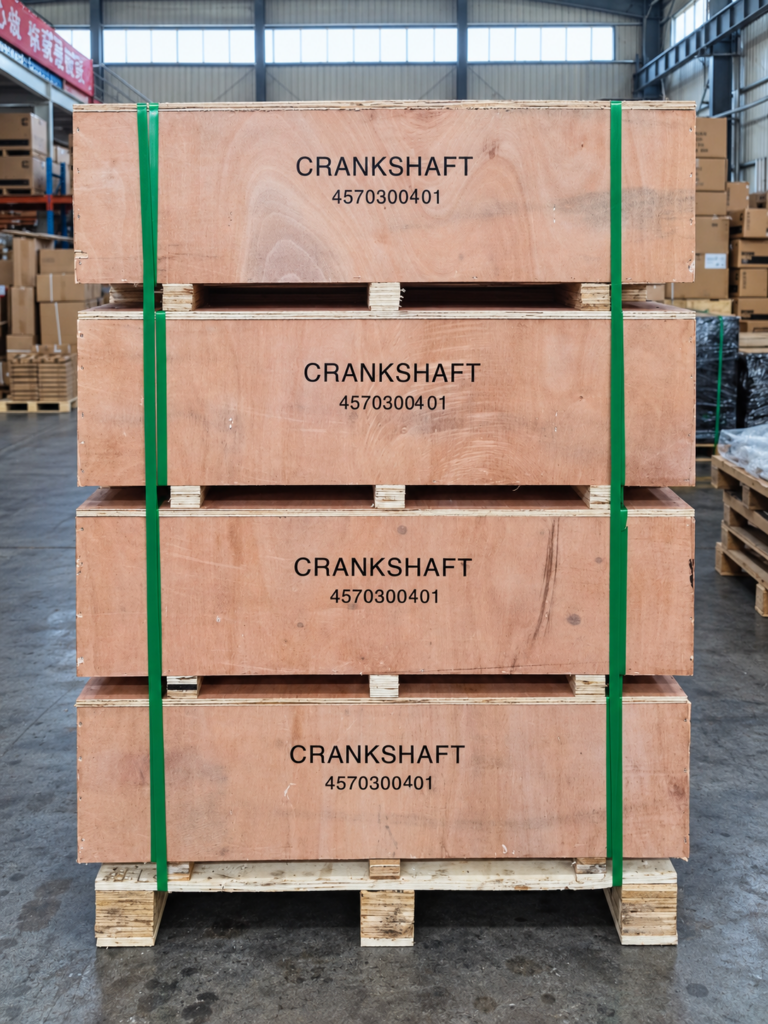
Request a shipment evidence set before dispatch
Ask which records can be provided for this order and when they will be available. A useful evidence set links the item, its package, and the order without implying that photographs alone establish technical conformity.
Depending on the agreed scope, request:
- A clear photograph of each item or grouped line before packing, where practical.
- A readable image of visible identification marks, with characters transcribed separately when they can be read.
- Photographs showing the agreed packing arrangement before the package is closed, if the buyer needs that record.
- A photograph of the closed package and its external label.
- The final package count and the relevant packing-list or order-line reference.
- The document list agreed for the order, with any unavailable item identified rather than assumed.
Keep the original image files unchanged when they serve as evidence. Use a consistent filename that ties the image to the order or line number, and keep a copy with the quotation, purchase order, and shipment documents. If a photograph does not show the relevant feature clearly, record that limitation and ask for a clearer record; do not infer an unseen detail.
A pre-dispatch photograph documents what it shows at that time. It does not, by itself, prove hidden condition, material, dimensional conformity, compatibility, or what happened during transport.
Record the shipment condition when it arrives
Use the receiving process required by your company and purchase terms. Before opening the package, record its external condition and the information that identifies it. This helps keep the shipment evidence connected to the order if a question arises later.
| Receiving step | What to note |
|---|---|
| Identify the delivery | Date received, carrier or delivery reference, package count, and purchase-order reference. |
| Photograph the unopened package | Overall views of each package and close views of visible damage, wetting, broken closures, or unclear labels, if present. |
| Compare external labels | Buyer line or order reference, stated item reference, destination details, and package number where shown. |
| Open and compare records | Received quantity and package contents against the purchase order, quotation scope, and packing list. |
| Record an exception | Exact line, observed difference, supporting photo or document, and the next action assigned by the buyer’s receiving team. |
This checklist is for recording and routing observations. It is not a technical acceptance procedure. Do not attempt an unapproved test, installation, lifting operation, or dimensional check based on this article. Follow the applicable workplace safety instructions, purchase terms, and any inspection plan agreed for the order.
Keep discrepancies specific and traceable
If an item, label, package, count, or document does not match the order record, record what you observed rather than guessing at the cause. Keep the original order reference visible and separate verified facts from questions.
A clear exception note can include:
- receiving date and delivery reference;
- purchase-order and line number;
- package label and item reference as received;
- expected and observed quantity, using the same unit;
- a short description of the visible discrepancy;
- filenames of the supporting photographs or documents; and
- the person or team responsible for the next review step.
Preserve the packaging and records as required by your own receiving procedure and the relevant purchase or transport terms. Contact the supplier or carrier through the agreed channel when a response is needed. This article does not set a universal notification deadline or determine responsibility for transport damage.
Prepare a crankshaft packing and receiving request
Before requesting a quotation or confirming an order, provide the details that let the supplier understand both the crankshaft requirement and the packing questions:
| Information to provide | Why it helps with the enquiry |
|---|---|
| Crankshaft reference and its source | Shows exactly which recorded number is being discussed. |
| Engine make/model and available application details | Provides context for reviewing the request. |
| Quantity and unit | Defines the requested supply scope. |
| Destination country and city | Identifies the destination context for the commercial response. |
| Packing, marking, photo, and document requests | Makes the buyer’s requested scope visible before it is confirmed. |
| Open questions | Keeps unresolved identification or packing details from being treated as agreed. |
Request crankshaft sourcing and quotation support
Send Volgen Power the crankshaft reference, where it came from, available engine details, quantity, destination, and any packing or document requirements you need reviewed. Volgen Power’s contact page provides the current parts request form and contact channels. The page asks buyers to submit the request and send available identification photos through the displayed Email or WhatsApp channel; keep the same contact details so the files can be associated with the enquiry. The form’s attachment capability and message delivery have not been tested as part of this editorial draft.
If you are still organizing a multi-item engine overhaul request, use the Diesel Engine Overhaul Parts RFQ Checklist to separate each requested item, reference source, quantity, and open question. For this article, the RFQ is limited to crankshaft sourcing and order-specific packing requirements; it does not imply a separate freight, logistics, or third-party inspection service.
Sources
- International Plant Protection Convention (IPPC), Regulation of wood packaging material in international trade — ISPM 15. Supports the narrowly stated point about phytosanitary measures for raw-wood packaging in international trade; it is not crankshaft-specific packing guidance.
- Volgen Power, Crankshaft range. Used as the relevant commercial destination, not as independent evidence for technical packing methods or universal supply claims.
- Volgen Power, Contact page. Used to describe the currently visible enquiry route and displayed contact options; form delivery and file matching are not tested here.
- Volgen Power, Diesel Engine Overhaul Parts RFQ Checklist. Supporting buyer workflow link for multi-item requirements; not a technical packaging source.