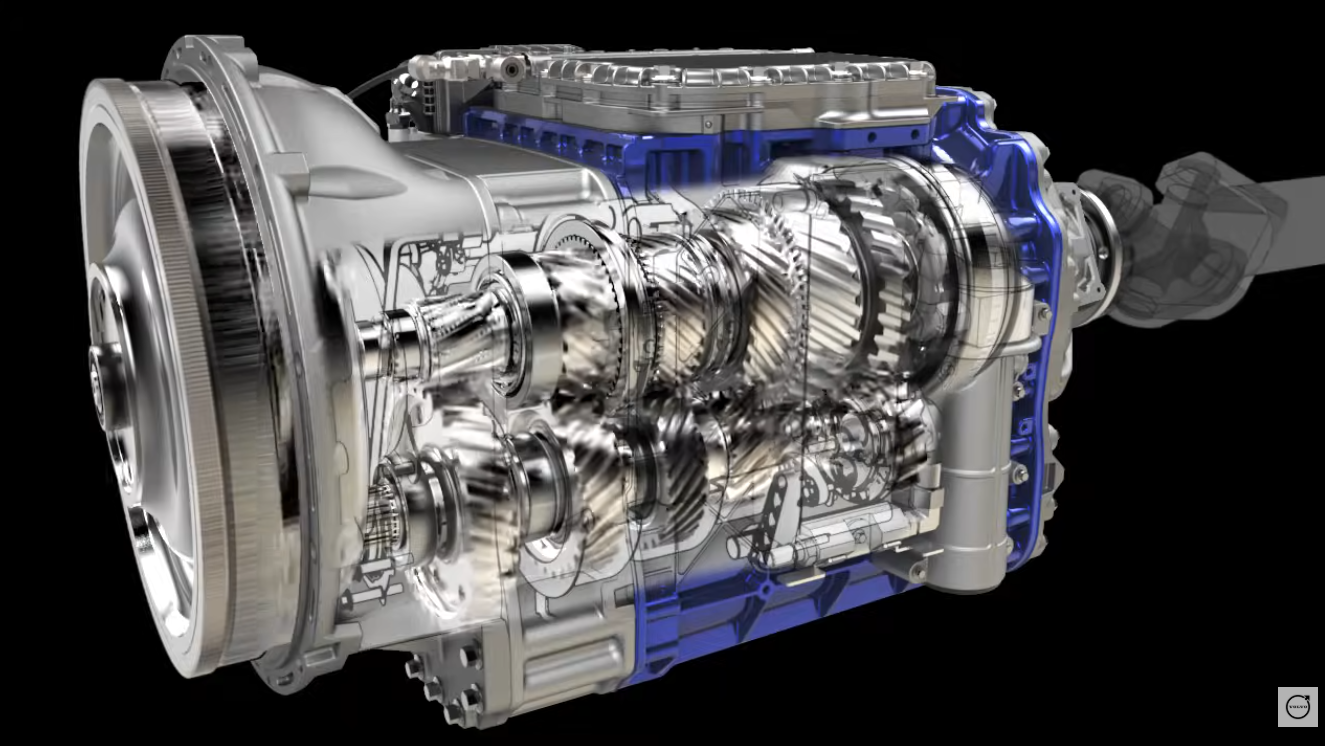
A Volvo transmission parts supplier should be evaluated by the quality of its part-identification process, evidence handling, product data and written quotation—not by unsupported claims of authorization, inventory size or delivery speed. Before placing an order, a B2B buyer should confirm how the supplier reviews gearbox and part identifiers, what documentation is actually available, which commercial terms are order-specific, and how uncertainty is recorded.
This guide is for importers, distributors, transmission rebuilders, repair networks, fleets and international procurement teams. It provides a neutral evaluation framework. It does not rank suppliers, compare competitors or claim that Volgen Power holds any unverified authorization, certification, inventory or factory status.
Quick supplier-evaluation checklist
Before approving a supplier, ask whether it can:
- Record the complete gearbox model and suffix.
- Review nameplate and serial photographs.
- Trace an OEM or part number to its source.
- Compare old-part photographs and requested dimensions.
- Separate confirmed facts from references that still require verification.
- State the exact product identity and matching basis in the quotation.
- Confirm quantity, destination, packaging and available documents.
- Confirm stock, MOQ and lead time for the specific quotation.
- Put warranty and after-sales terms in the quotation or contract.
- Identify unresolved compatibility questions before an order.
A “yes” should be supported by a document, example workflow or written quotation field—not a marketing adjective.
Seven evidence-led supplier evaluation criteria
1. Part-identification and matching process
A supplier should ask for evidence before suggesting a product. Useful inputs include the complete gearbox model and suffix, nameplate and serial information, OEM or part number, old-part photographs, quantity and destination.
| Evaluation question | Strong evidence | Warning sign |
|---|---|---|
| How is the transmission identified? | Complete model/suffix and nameplate record | Truck model or generic part name only |
| How is the old part identified? | Source photograph, markings and requested measurements | Typed number with no source |
| How is a proposed match recorded? | Written matching basis and unresolved questions | Verbal assurance of “same part” |
| How are conflicts handled? | Verification request before quotation | Selection based on the closest-looking code |
The truck model or VIN can support a review, but neither should be treated as sole proof of exact component fitment. Buyers needing a detailed evidence workflow can use the Volvo transmission identification guide.
2. Product-data quality
Product data should distinguish facts from discovery records. A published page may help locate a product group, but it does not automatically prove OEM validity, cross-reference, fitment, stock or warranty.
Review whether the supplier can state:
- The exact description used in the quotation.
- The source of any OEM or part-number claim.
- Whether a cross-reference is confirmed or still requires verification.
- Which dimensions, configuration or connector details were checked.
- Whether photographs correspond to the quoted item.
- Which claims are unavailable or unknown.
Avoid suppliers that turn incomplete catalog data into definitive compatibility claims.
Multi-SKU sourcing and order consolidation
For a multi-SKU enquiry, assess whether the supplier can keep identification, evidence and commercial status separate for every line item. A large catalogue or a consolidated shipment does not prove that every requested item is compatible, available or supported by the same evidence.
| Multi-SKU buyer check | Evidence to request |
|---|---|
| Line-item identity | Separate description and reference for each requested item |
| Matching status | Evidence used, unresolved questions and any proposed substitution per line |
| Quantity status | Requested and quoted quantity for each line |
| Supply status | Order-specific availability, MOQ and lead-time confirmation per line |
| Packaging and documents | Mapping of agreed packaging and available documents to the applicable items |
Judge multi-SKU capability from a structured, line-level quotation and traceable decision record—not from catalogue size alone.
3. Evidence and documentation handling
Certification, inspection, traceability and test-document claims must be evaluated individually. A buyer should not assume that a logo, standards link or generic quality statement proves that a supplier, facility or product has a particular approval.
| Document or claim | Buyer check |
|---|---|
| Certification | Request the actual certificate, holder, scope, issuer and validity period |
| Inspection report | Confirm the item/order, characteristics checked, date and responsible party |
| Material or test report | Confirm it applies to the quoted product and agreed requirement |
| Batch or lot record | Confirm the identifier appears in order and shipment documents |
| Product photograph | Confirm it shows the quoted item and relevant markings |
| Authorization claim | Require direct, current evidence for the exact relationship claimed |
If a document is unavailable, the supplier should say so. Lack of a document must not be disguised as a confirmed claim.
4. Quality and inspection process
Buyers should define what must be checked for the specific order. Do not assume that every supplier performs the same inspection or that every product requires the same test.
Ask:
- What visual or dimensional checks are agreed?
- Which characteristics will be recorded?
- Are pre-shipment photographs available for this order?
- Can labels, quantities and packaging be confirmed?
- Is any test report actually available for the quoted item?
- How will a nonconforming result be handled?
- Which acceptance criteria are written in the order?
These questions evaluate process discipline without inventing a universal inspection capability.
5. Packaging and export support
Packaging and export requirements vary by product, quantity, route and buyer specification. Evaluate whether the quotation identifies the agreed method rather than promising a generic “export package.”
Confirm:
- Unit and outer packaging method.
- Label content and language requirements.
- Quantity per package.
- Gross/net weight and dimensions when available.
- Moisture, corrosion or impact protection if required and agreed.
- Required commercial documents.
- Incoterm, destination and responsible party.
- Whether special packaging or documentation changes the quotation.
Export support should be assessed from the written order and shipment plan, not from a broad country-count claim.
6. Quotation completeness and commercial terms
A complete quotation makes comparison easier and reduces late-stage assumptions.
| Quotation field | Required review |
|---|---|
| Product identity | Exact description and reference |
| Matching basis | Model/suffix, nameplate, part number, photos and open questions |
| Quantity and unit | Requested versus quoted units |
| Included items | Especially for kits or assemblies |
| Product condition/category | Clearly described without unsupported quality status |
| Stock and MOQ | Confirmed at quotation |
| Lead time | Confirmed at quotation |
| Packaging | Method and labeling agreed |
| Documentation | Only documents actually available |
| Warranty | Confirmed in quotation or contract |
| Delivery terms | Destination, Incoterm and commercial responsibilities |
| Payment terms | Written and agreed |
A low unit price is not a complete comparison if product identity, included items, packaging, documentation or delivery responsibilities differ.
7. References, issue handling and accountability
Reputation should be checked through evidence that the buyer can independently review. Marketing claims, follower counts or an unsupported “industry leader” label are not enough.
Buyers may request:
- References relevant to a similar product or transaction type, where legitimately available.
- A sample quotation showing how matching evidence is recorded.
- The process for correcting a wrong or incomplete shipment.
- The contact responsible for technical clarification and commercial follow-up.
- Written escalation and claim requirements.
- Business identity and payment details that can be independently verified.
Do not rely on invented customer stories, undisclosed relationships or claims of official status.
Supplier evidence scorecard
Score each category only after reviewing the evidence.
| Criterion | 0 — Missing | 1 — Partial | 2 — Clear |
|---|---|---|---|
| Identification workflow | No defined inputs | Some inputs requested | Complete model/plate/part/photo workflow |
| Product data | Generic descriptions | Mixed fact and assumption | Sources and uncertainty clearly labelled |
| Documentation | Broad claims only | Selected documents available | Scope and availability stated per order |
| Inspection | No agreed check | Informal description | Order-specific checks documented |
| Packaging/export | Generic promise | Basic method described | Order-specific method and responsibilities |
| Quotation | Key fields missing | Most fields present | Identity, evidence, terms and exclusions complete |
| Issue handling | No process | Contact available | Written escalation and claim steps |
The score is an internal procurement aid, not proof that a supplier is approved or compatible with every request.
Common supplier-selection mistakes
Choosing by catalog size
A large catalog can help discovery, but it does not prove current supply, verified fitment or data quality.
Accepting a similar number as a cross-reference
Similar characters are not evidence of interchange. Require the source and matching basis.
Treating certification language as product proof
Even a valid management-system certificate does not automatically prove a specific product’s fitment, material or performance.
Comparing price without scope
Check included items, condition/category, packaging, documentation, delivery responsibilities and payment terms.
Assuming inspection or traceability
Write the required inspection records, photographs, labels or lot information into the order.
Accepting verbal stock or delivery promises
Stock, MOQ and lead time should be confirmed for the quoted item, quantity and destination.
Ordering before resolving uncertainty
An unresolved suffix, unreadable number or conflicting photograph should trigger verification—not a guess.
What buyers should send for a supplier review and RFQ
Prepare:
- Complete gearbox model and suffix.
- Nameplate and serial photographs.
- OEM or part number with its source photograph.
- Old-part photographs and requested dimensions.
- Required product scope and quantity.
- Destination country and preferred commercial terms.
- Packaging, labeling and documentation requirements.
- Every unresolved compatibility question.
Use the Volvo I-Shift Parts Buying Guide for the ordering workflow. The Volvo Transmission Hub is the primary product and commercial destination. Product pages under Volvo Transmission Parts remain discovery records until the inquiry is reviewed.
Request a documented quotation
Send the evidence through the contact page and request a quotation that states product identity, matching basis, quantity, included items, packaging, available documents, destination and commercial terms.
Compatibility, stock, MOQ, lead time, warranty, certification, authorization and other order-specific claims require written evidence. A published product record or general supplier statement does not confirm them.
Procurement FAQ
What evidence should a transmission-parts supplier request?
The supplier should request the complete gearbox designation and suffix, nameplate/serial evidence, OEM or part number source, old-part photographs, quantity and destination.
Does a large online catalog prove current stock?
No. A catalog supports discovery. Stock must be confirmed for the exact quoted item and quantity.
How should a buyer verify an OEM or cross-reference claim?
Ask for the source reference, proposed match, matching basis and any open verification requirements. Do not accept shared wording or similar numbers alone.
When should MOQ, lead time and warranty be confirmed?
MOQ and lead time should be confirmed in the quotation. Warranty should be confirmed in the quotation or contract.
What inspection or packaging documents should buyers request?
Request only documents relevant to the order, such as agreed inspection records, product/label photographs, package details or shipment documents. Confirm availability before ordering.
What belongs in a supplier RFQ?
Include the complete identification evidence, product scope, quantity, destination, packaging/document needs and all unresolved questions.